Beef Tallow for Deep Frying: Top Tips for 2026 Success
Beef tallow for deep frying is a hidden gem for achieving crispy, flavorful results in your kitchen. Unlike many cooking oils, beef tallow boasts a high smoke point and rich taste that make it perfect for deep frying. Here’s why it’s a fantastic choice:
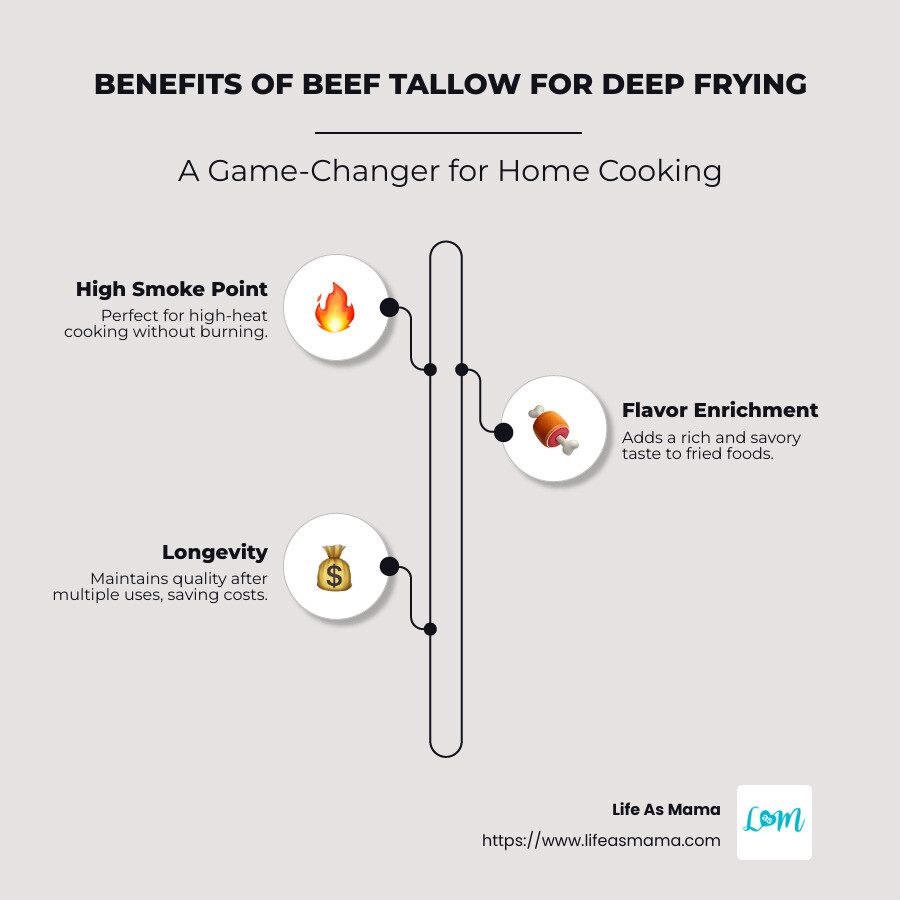
- High Smoke Point: Ideal for high-heat cooking without burning.
- Flavor Enrichment: Adds a delectable, savory taste to fried foods.
- Longevity: Retains quality after multiple uses, making it cost-effective.
Beef tallow is a versatile and reliable option for anyone eager to lift home-cooked meals with less effort and maximum taste.
I’m Amanda Schmitt. With years of experience as an Occupational Therapist and now a full-time family-oriented mom, I’ve learned the value of quick yet scrumptious meals. My exploration of beef tallow for deep frying stems from a passion for finding practical, health-conscious cooking solutions that create unforgettable family moments. Let’s explore beef tallow cooking!
What is Beef Tallow?
Beef tallow is the rendered fat from beef, typically from the suet, which is the hard fat surrounding the kidneys. Rendering is the process of slowly cooking and melting down the fat to separate it from any impurities. Once rendered, beef tallow becomes a smooth, creamy substance that can solidify at room temperature.
High Smoke Point
One of the standout features of beef tallow is its high smoke point. This means it can withstand high temperatures without breaking down, making it perfect for deep frying. When oils break down, they can produce off-flavors and potentially harmful compounds. With beef tallow, you can fry foods to a perfect crisp without worrying about these issues.
Saturated Fat
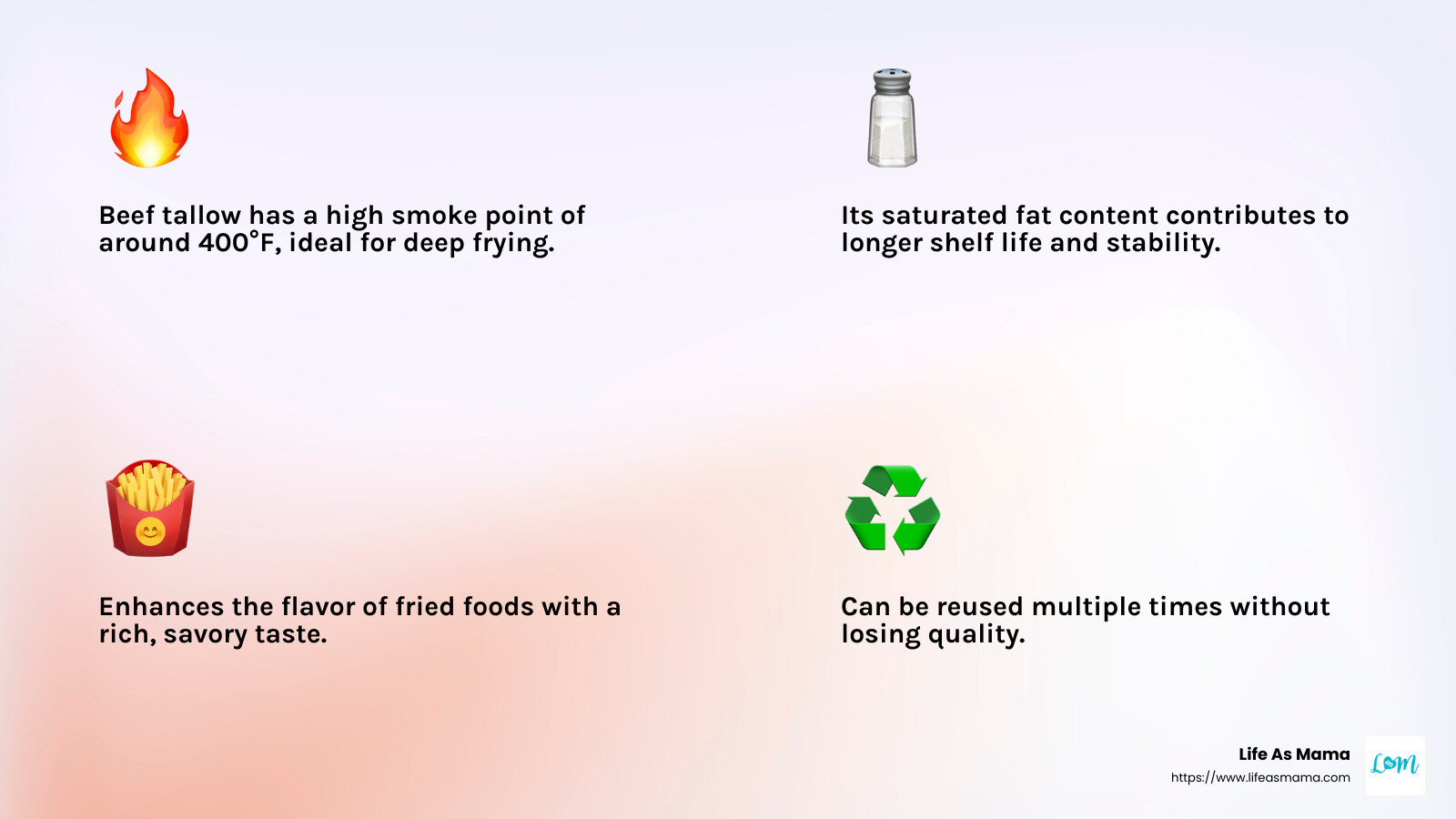
Beef tallow is a saturated fat, which contributes to its stability and long shelf life. Saturated fats are less likely to oxidize and become rancid compared to unsaturated fats. This makes beef tallow a reliable choice for cooking, as it maintains its quality over multiple uses.
Rich Flavor
Beyond its technical advantages, beef tallow offers a rich, savory flavor that improves the taste of fried foods. Its unique taste profile is one reason why many chefs and home cooks prefer it over other oils. Whether you’re frying potatoes or searing a steak, beef tallow adds a depth of flavor that is hard to replicate with vegetable oils.
In summary, beef tallow is a versatile, high-performing fat that brings both culinary and practical benefits to your kitchen. Whether you’re a seasoned chef or a home cook, incorporating beef tallow into your cooking routine can lift your dishes with minimal effort.
Benefits of Using Beef Tallow for Deep Frying
High Smoke Point
Beef tallow stands out for its high smoke point, which is crucial for deep frying. This high smoke point means it can handle the heat without breaking down. When oils break down, they can release off-flavors and harmful compounds. With beef tallow, you can fry foods to a golden crisp without worrying about these issues.
Rich Flavor
The rich, savory flavor of beef tallow is another reason why it’s preferred for deep frying. It improves the taste of fried foods, giving them a depth of flavor that vegetable oils can’t match. Whether you’re frying french fries or chicken, beef tallow adds a unique taste that lifts your dishes.
Longevity
Beef tallow is known for its longevity. Its high saturation means it’s less likely to oxidize and go rancid compared to unsaturated fats. This stability allows you to reuse beef tallow multiple times, making it a cost-effective choice for deep frying. As long as you store it properly in an airtight container, it can last for many uses.
Health Benefits
While beef tallow is a saturated fat, it also contains beneficial nutrients. It’s high in niacin, a vitamin many people lack. Plus, its stable nature means fewer free radicals are produced when cooking, which is better for your health.
Incorporating beef tallow for deep frying not only improves the taste and texture of your food but also offers practical benefits like longevity and health advantages.
How to Render Your Own Beef Tallow
Beef Fat and Suet
To start making your own beef tallow for deep frying, you’ll need beef fat. The best fat for this is called suet. Suet is a special type of beef fat that comes from around the kidneys and loins of the cow. It’s dense and clumpy, which makes it perfect for rendering into pure tallow. You might find it at a local butcher or slaughterhouse. If you can’t get suet, regular beef fat from cuts like prime rib roasts will work too.
Rendering Process
Once you have your beef fat or suet, you’ll need to render it. This means melting the fat to separate it from any impurities. Here’s a simple way to do it:
- Prepare the Fat: If your butcher hasn’t already done so, grind the fat. If you don’t have a grinder, you can chop it into small pieces. Make sure the fat is cold—partially frozen is best—to make cutting easier.
- Slow Cook: Place the chopped fat in a slow cooker or a heavy pot. Cook on low heat. You want to melt the fat slowly to avoid burning. Stir occasionally to help the fat melt evenly.
- Strain: Once the fat is fully melted, strain it through a fine mesh sieve or cheesecloth to remove any bits of meat or impurities. This will leave you with a clear, liquid tallow.
- Cool and Store: Pour the liquid tallow into a clean, airtight container. Let it cool to room temperature. It will solidify into a creamy white block. Store it in a cool, dark place or in the fridge for longer shelf life.
Storage Tips
Proper storage is key to maintaining the quality of your beef tallow. Keep it in an airtight container to prevent oxidation, which can make the tallow go rancid. If stored correctly, beef tallow can be reused multiple times for frying.
By following these steps, you can create your own beef tallow for deep frying. This gives you a flavorful, high-quality cooking fat that’s perfect for achieving crispy, delicious fried foods.
Beef Tallow for Deep Frying: Tips and Techniques
Temperature Control
When using beef tallow for deep frying, maintaining the right temperature is crucial. Beef tallow has a high smoke point, around 400°F (204°C), making it ideal for deep frying. To achieve the perfect crispiness without burning, keep your oil temperature between 350°F (177°C) and 375°F (190°C). Use a deep-fry thermometer to monitor the temperature. If the oil gets too hot, it can break down, affecting the flavor and safety of your food.
Reuse
One of the great benefits of beef tallow is its ability to be reused. Thanks to its high saturation, it doesn’t break down as quickly as other oils. After frying, let the tallow cool slightly, then strain it through a fine mesh sieve to remove food particles. Store it in a clean, airtight container. You can reuse tallow several times, but keep an eye (and nose) out for any off smells, which indicate it’s time to replace it.
Storage
Proper storage extends the life of your beef tallow. Keep it in an airtight container to prevent oxidation. Store it in a cool, dark place, like a pantry, or refrigerate it for even longer shelf life. When stored correctly, beef tallow can last for several months without going rancid.
Safety
Safety is key when deep frying. Always have a lid nearby to smother any potential grease fires. Never leave hot oil unattended, and avoid overcrowding the frying pot to prevent oil from spilling over. Make sure to dry foods thoroughly before frying to minimize oil splatters.
Using these tips and techniques, you can make the most of beef tallow’s unique qualities, ensuring safe and delicious frying every time.
Frequently Asked Questions about Beef Tallow for Deep Frying
Can you deep fry beef tallow?
Absolutely, you can deep fry with beef tallow! Its high smoke point, around 400°F (204°C), makes it perfect for deep frying and even searing. This means you can achieve that golden, crispy texture without worrying about the oil smoking up your kitchen. Plus, the rich flavor of beef tallow adds an extra layer of deliciousness to your fried foods.
How many times can you reuse tallow for deep frying?
One of the standout features of beef tallow is its reusability. Because it’s highly saturated, it doesn’t break down as quickly as other oils. After each use, let the tallow cool a bit, then strain it to remove any leftover food bits. Store it in an airtight container to keep it fresh. You can reuse beef tallow several times, but always check for any off smells before each use. If it starts to smell rancid, it’s time to replace it.
Is beef tallow better than peanut oil for deep frying?
When comparing beef tallow for deep frying with peanut oil, there are a few things to consider. First, the smoke point: both have high smoke points, but beef tallow’s rich flavor often wins over those who love a savory taste. Additionally, beef tallow has a longer longevity due to its saturated fat content, meaning it doesn’t degrade as quickly as the unsaturated fats in peanut oil. This makes it a more cost-effective choice if you’re planning to reuse your frying oil multiple times.
Overall, if you’re looking for flavor and longevity, beef tallow is a fantastic choice for deep frying.
Key Takeaways and Conclusion on Using Beef Tallow for Frying
At Life As Mama, we believe in bringing family-friendly cooking to your kitchen with practical and easy-to-follow guides. Using beef tallow for deep frying is a wonderful way to improve the flavor of your dishes while benefiting from its high smoke point and longevity. Whether you’re preparing a special meal for a family gathering or just trying out new recipes, beef tallow can be your go-to choice for deep frying.
Our goal is to provide you with practical cooking tips that make your culinary trips enjoyable and stress-free. With beef tallow, you can achieve crispy, flavorful results that your family will love. Plus, its reusability means you can enjoy these benefits time and time again, making it a smart choice for both taste and budget.
For more delicious recipes and family-friendly cooking ideas, check out our Ultimate BBQ Meatball Recipe. Let’s make everyday cooking a delightful experience for the whole family!
Related Images:

Amanda Schmitt
Latest posts by Amanda Schmitt (see all)
- 20+ First Day of School Traditions to Make the Day Special - August 23, 2026
- Fruit Infused Waters That Make Summer Hydration Fun - July 1, 2025
- Light Up Your Life: Home Lighting Decoration Ideas - June 30, 2025