If you want your lawn to be the jewel of the neighborhood, proper fertilization is key. However, with so many different products and techniques available, it can be challenging to know when to fertilize your lawn and how to do it best. No need to worry, we’ve got you covered. In this section, we’ll share expert tips on the best time to fertilize your lawn and create a schedule that will promote healthy, lush growth.
Key Takeaways
- Proper fertilization is essential for a vibrant, healthy lawn.
- Timing your lawn fertilization schedule according to the seasons is crucial.
- Over-fertilization can harm your lawn, so be sure to follow recommended application rates.
- Avoid common fertilization mistakes to achieve optimal results.
- By following our expert tips, you’ll be on the way to maintaining a beautiful, thriving lawn.
Understanding Lawn Fertilization Importance
Proper lawn care is essential to maintaining a vibrant and healthy lawn. One critical aspect of lawn maintenance is fertilization. Fertilization provides your lawn with the proper nutrients needed to grow strong and resilient, ensuring its longevity and aesthetic appeal.
Without proper fertilization, your lawn may struggle to grow and be more susceptible to diseases, pests, and other environmental stressors. Proper fertilization techniques, coupled with regular lawn care maintenance, is crucial to ensure your lawn stays healthy and thriving.
One of the key benefits of properly fertilizing your lawn is the promotion of root growth. Strong root systems can make your lawn resilient to drought and pests while also increasing its ability to absorb moisture and nutrients. Proper fertilization can also improve the color and density of your lawn, making it more visually appealing.
However, it’s essential to note that over-fertilization can harm your lawn. Applying fertilizer too frequently or in excessive amounts can cause the grass to grow too quickly, leading to thatch buildup, and making it more prone to diseases and pests.
By understanding the basic principles of fertilization and following proper lawn care techniques, you can maintain a lush and healthy lawn. In the next section, we’ll discuss the proper lawn fertilization techniques and how to time it appropriately for optimal lawn health.
Factors Influencing Fertilizing Timing
Proper fertilization timing is crucial for maintaining a healthy lawn. Several factors can influence when you should fertilize your lawn. Here are the key factors to consider:
- Climate and weather patterns
- Grass type and condition
- Soil composition and fertility
- Time of year and growing season
Understanding these factors can help you develop an optimal fertilizing schedule. For example, if you live in an area with mild winters, you may need to fertilize your lawn differently than if you live in an area with harsh winters. Similarly, if your lawn has poor soil quality or is prone to disease, you may need to adjust your fertilization schedule accordingly.
It’s crucial to pay attention to your lawn’s condition and adapt your fertilization schedule accordingly to ensure optimal growth.
Spring Fertilization Tips
Spring is the ideal time to give your lawn the nutrition it needs to grow thick and green. Seasonal lawn fertilization is key to keeping your lawn healthy and vibrant throughout the year.
When it comes to fertilizing in the spring, it is best to use a product with a higher nitrogen content. This will give your lawn the extra boost it needs to recover from the harsh winter months and promote healthy growth. Avoid fertilizers with high phosphorus content, as they can promote excessive root growth and make your lawn less drought-tolerant.
It is recommended to apply the fertilizer to a damp lawn to help the granules stick better to the blades of grass. Use a spreader to apply the fertilizer evenly, taking care not to overlap the areas where it has already been applied. Water your lawn thoroughly after application to help the fertilizer soak into the soil and begin nourishing your grass.
| Product Name | Nitrogen Content | Recommended Application Rate |
|---|---|---|
| Scotts Turf Builder Lawn Food | 30-0-4 | 4 lbs. per 1,000 sq. ft. |
| GreenView Fairway Formula Spring Fertilizer | 24-0-6 | 5 lbs. per 1,000 sq. ft. |
| Pennington UltraGreen Lawn Fertilizer | 30-0-6 | 4.5 lbs. per 1,000 sq. ft. |
Remember to follow the recommended application rate for the fertilizer you choose, and be sure to read the label instructions carefully. Too much fertilizer can cause damage to your lawn, so it’s essential to apply it correctly. With these lawn care tips, you can ensure your lawn has the best start to the growing season and thrives throughout the summer.
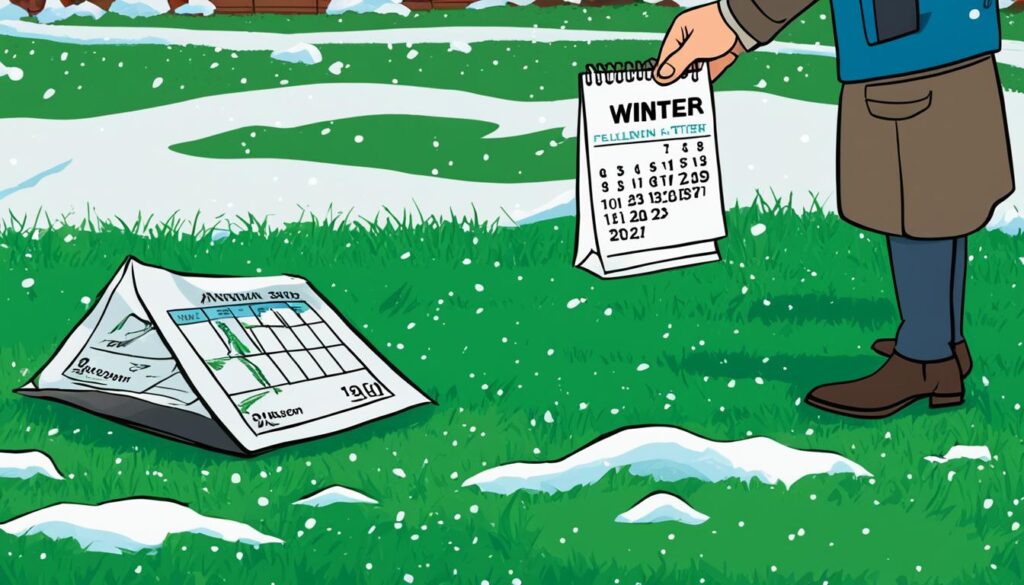
Winter fertilization for your lawn ensures that it remains healthy, vibrant, and ready for optimal growth in the spring. By following these tips and taking appropriate care of your lawn during all seasons, you’ll enjoy a lush, green yard throughout the year.
Additional Considerations for Fertilizing
While following a proper lawn fertilization schedule is essential, there are other factors and techniques to consider for optimal lawn health. Here are some expert lawn care tips to keep in mind:
Soil Quality
A healthy lawn starts with healthy soil. Before fertilizing, you should test your soil’s pH level to determine any potential nutrient deficiencies. If your soil is lacking in essential nutrients, consider supplementing your fertilization routine with soil amendments like lime or sulfur.
Watering
Proper watering is crucial to allow for optimal fertilizer uptake. Watering your lawn deeply and infrequently will encourage deep root growth and allow for nutrients to be absorbed more efficiently.
Mowing
Regular mowing practices can impact your lawn’s nutrient needs. Maintaining a consistent mowing height can help prevent stress and nutrient depletion while ensuring even growth.
Environmental Factors
Weather conditions and other environmental factors can also impact your lawn’s fertilization needs. During periods of excessive heat or drought, for example, your lawn may require additional watering and more frequent fertilization.
Product Selection
Choosing the right lawn fertilizer product is critical for promoting proper growth and resilience. Consider the nutrient content, product quality, and any potential environmental impact when selecting a fertilizer.
Application Techniques
The way you apply your fertilizer can also impact its effectiveness. Proper application includes even distribution, precise measuring, and use of appropriate equipment.
By considering these additional factors and techniques, you can ensure your lawn receives the nutrients it needs to thrive.
Signs of Over-fertilization and Remedies
Over-fertilization may seem like a good idea to achieve a lush green lawn quickly, but it can harm your lawn and prevent healthy growth. Here are some signs to look for:
- Yellowing or browning of grass
- Stunted growth
- Thinning of grass
- Burnt patches of grass
If you notice any of these signs, the best thing to do is to stop fertilizing and follow some remedies:
Watering
The simplest remedy for over-fertilization is to heavily water your lawn for a few days to help dilute the fertilizer. Aim for a slow and steady watering to avoid further damage to your lawn.
Core Aeration
Core aeration is another effective remedy for over-fertilization. It involves removing small plugs of soil from your lawn, allowing oxygen, water, and nutrients to penetrate deep into the soil, breaking up any crusting and compaction that the fertilizer may have caused.
Using Organic Fertilizer
If you’re looking for a long-term solution to over-fertilization, consider using organic fertilizer. Organic fertilizers release nutrients slowly, reducing the risk of over-fertilization and providing your lawn with a steady stream of nutrients.
By recognizing the signs of over-fertilization and taking the necessary precautions, you can get your lawn back on track to optimal health and avoid future problems.
Common Lawn Fertilization Mistakes to Avoid
Proper fertilizer use is key to a healthy lawn, but even small mistakes can cause big problems. Here are some common lawn fertilization mistakes to avoid:
1. Over-Fertilizing
Over-fertilizing your lawn can lead to nutrient burn and unsightly brown spots. Follow the manufacturer’s instructions for the amount and frequency of application and avoid adding extra fertilizer, even if you think your lawn needs it.
2. Under-Fertilizing
Conversely, failing to fertilize enough can leave your lawn deficient in essential nutrients, resulting in weak growth. Use a soil test kit to determine the appropriate amount of fertilizer needed for your specific lawn and adjust your schedule accordingly.
3. Fertilizing at the Wrong Time
The right timing is critical for optimal fertilization results. Be sure to fertilize your lawn during the right season and avoid doing it during drought conditions or before a heavy rainstorm.
4. Not Watering Enough (or Too Much) After Fertilizing
Water facilitates nutrient absorption, so it’s important to water your lawn sufficiently after applying fertilizer. However, over-watering can lead to nutrient runoff and under-watering can limit nutrient uptake. Follow the recommended watering guidelines for your specific fertilizer product.
5. Using the Wrong Type of Fertilizer
Choosing the wrong fertilizer for your lawn’s needs can be detrimental to its health. Use a product designed specifically for your grass type and consider factors like soil pH and nutrient levels when selecting products.
By avoiding these common mistakes, you can help ensure your lawn is healthy and vibrant year-round.
Essential Takeaways and Final Thoughts on Lawn Fertilizing
Caring for your lawn is an essential part of keeping your property looking beautiful. Proper lawn maintenance involves many factors, including optimal fertilization scheduling. By following the tips provided in this article, you can ensure that your lawn receives the nutrients it needs to grow lush and vibrant.
Remember to consider the specific needs of your lawn based on its size, the type of grass, and other factors. Additionally, be sure to avoid common fertilization mistakes and pay attention to signs of over-fertilization.
Regular fertilization is just one part of a comprehensive lawn care regimen. Other factors to keep in mind include proper mowing, watering, and weed control. By taking a holistic approach to lawn maintenance, you can enjoy a healthy, thriving lawn for years to come.
Implementing these lawn care tips may take some effort, but the payoff is well worth it. A beautiful, well-maintained lawn not only adds curb appeal to your property but also provides a welcoming space for you and your family to enjoy. So get out there and give your lawn the attention it deserves!
FAQ
What is the best time to fertilize my lawn?
The best time to fertilize your lawn depends on several factors, including the type of grass, climate, and region. In general, early spring and fall are optimal times for fertilization. It’s important to follow a fertilization schedule that aligns with the specific needs of your lawn.
Why is lawn fertilization important?
Fertilization is crucial for maintaining a healthy and vibrant lawn. It provides essential nutrients that promote growth, strengthen roots, and improve overall lawn health. Regular fertilization also helps prevent weed invasion, disease, and drought stress.
What factors influence the timing of lawn fertilization?
Several factors influence the timing of lawn fertilization, including grass type, climate, soil conditions, and lawn care practices. It’s important to consider these factors when determining the best time to fertilize your lawn and adjust your schedule accordingly.
What are some spring fertilization tips for my lawn?
During spring, it is recommended to use a slow-release nitrogen fertilizer to promote healthy growth. Apply the fertilizer early in the season when the soil temperature reaches around 55-60°F. Follow the product’s instructions for application rates and techniques.
When is the best time to fertilize my lawn in summer?
The best time to fertilize your lawn during summer is early in the season or in late summer. It’s important to avoid fertilizing during periods of extreme heat or drought as it can harm the grass. Water the lawn before and after fertilization to ensure proper absorption.
What are the ideal strategies for fall fertilization?
Fall is the ideal time to fertilize your lawn to promote root growth and prepare it for the winter. Apply a fertilizer with higher potassium content to enhance the lawn’s cold tolerance. Aim to fertilize approximately six weeks before the first expected frost in your area.
Should I fertilize my lawn during winter?
While lawn growth slows down in winter, it’s still beneficial to provide essential nutrients. Consider using a winterizing fertilizer with a slow-release formula. Apply it before the ground freezes to ensure proper absorption. Follow the product’s instructions for specific winter fertilization guidelines.
Are there any additional considerations for lawn fertilization?
Yes, there are several additional considerations for lawn fertilization. These include mowing at the appropriate height, soil testing to determine nutrient needs, and using the correct fertilizer ratios for your grass type. It’s also important to water the lawn adequately and avoid over-fertilization.
What are the signs of over-fertilization and how can I remedy them?
Signs of over-fertilization include yellowing grass, stunted growth, and increased susceptibility to disease. If you suspect over-fertilization, water the lawn thoroughly to flush out excess nutrients from the soil. Adjust your fertilization practices and follow recommended application rates to avoid future issues.
What are some common lawn fertilization mistakes to avoid?
To achieve optimal lawn care, it’s essential to avoid common fertilization mistakes. These include over-application of fertilizer, using incorrect ratios, applying fertilizer before heavy rainfall, and neglecting to adjust the fertilization schedule based on grass type and regional climate. Proper research and adherence to best practices will help you avoid these errors.
Related Images:

Amanda Schmitt
Latest posts by Amanda Schmitt (see all)
- Healthy and Quick Back to School Breakfast Ideas - August 27, 2026
- 20 DIY Easter Centerpieces That Aren’t Just for Kids - October 9, 2025
- 18 Adult Birthday Party Themes for a Sophisticated Celebration - October 3, 2025