Planning for a Successful New Year: 7 Essential Tips
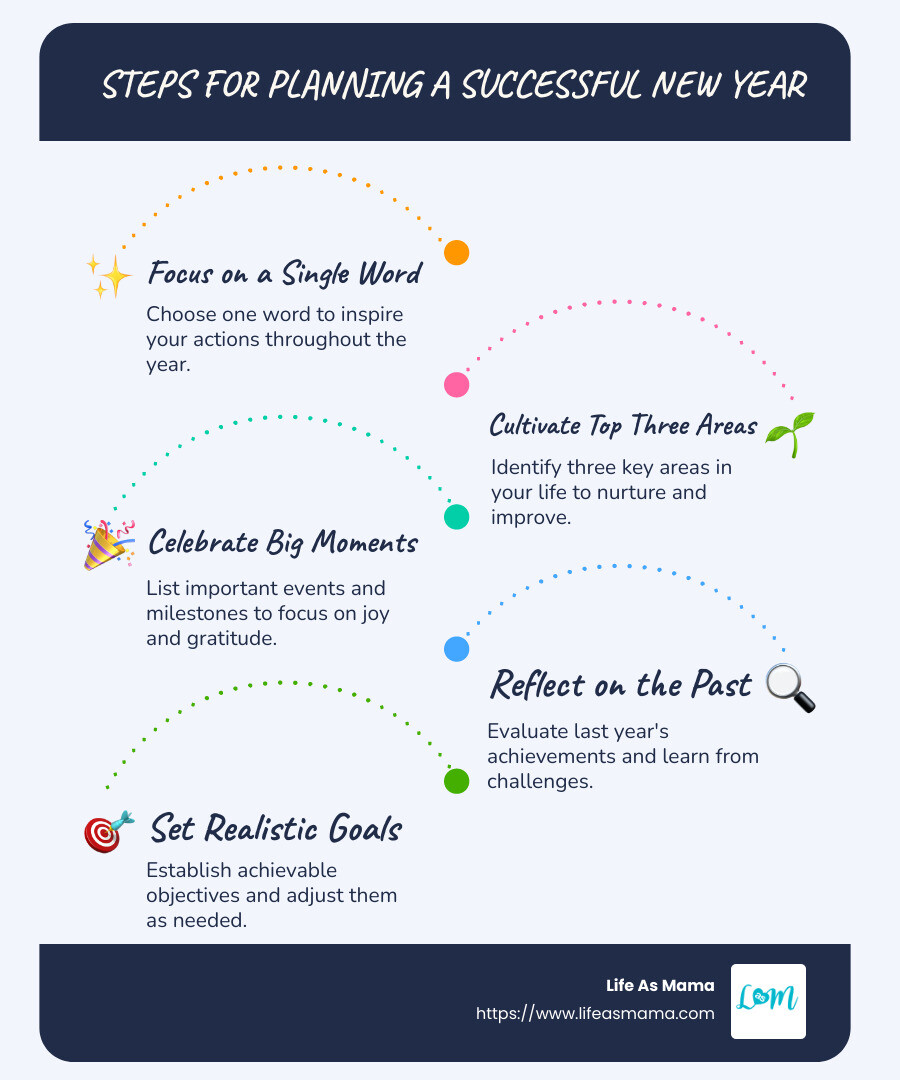
Planning for a successful new year can truly set the tone for the months ahead. To get started on the right foot, keep these key steps in mind:
- Focus on a Single Word: Choose one word to inspire and guide your actions throughout the year.
- Cultivate Top Three Areas: Identify three key areas in your life to nurture and improve.
- Celebrate Big Moments: List important events and milestones to focus on joy and gratitude.
- Reflect on the Past: Evaluate your previous year’s achievements and learn from challenges.
- Set Realistic Goals: Establish achievable objectives and adjust them as you progress.
Planning for a successful new year is about making intentional choices that align with your aspirations and commitments.
As a former Occupational Therapist turned full-time blogger, I’ve helped many steer life’s challenges. With over a decade of experience assisting families, I’ve honed impactful strategies for planning for a successful new year.
Basic planning for a successful new year glossary:
– new year resolutions for men
– new year resolutions for your home
– new year resolution thoughts
Review and Reflect on the Past Year
Before diving into the hustle and bustle of the new year, take a moment to pause and reflect. Self-reflection is your first step towards growth and improvement. It’s like holding a mirror up to your past year, allowing you to see what worked and what didn’t.
Self-Reflection
Ask yourself some key questions:
- What were my biggest achievements this past year?
- Where did I face challenges, and how did I handle them?
- Are there any patterns or habits that held me back?
Reflecting on these can provide valuable insights into your personal and professional life. It helps you understand your motivations and desires, which can guide you in the coming year.
Evaluate Your Progress
Once you’ve reflected, it’s time to evaluate. This means looking at your goals from the past year and assessing how you did. Did you meet your objectives? If not, what were the obstacles? This process isn’t about criticizing yourself; it’s about learning.
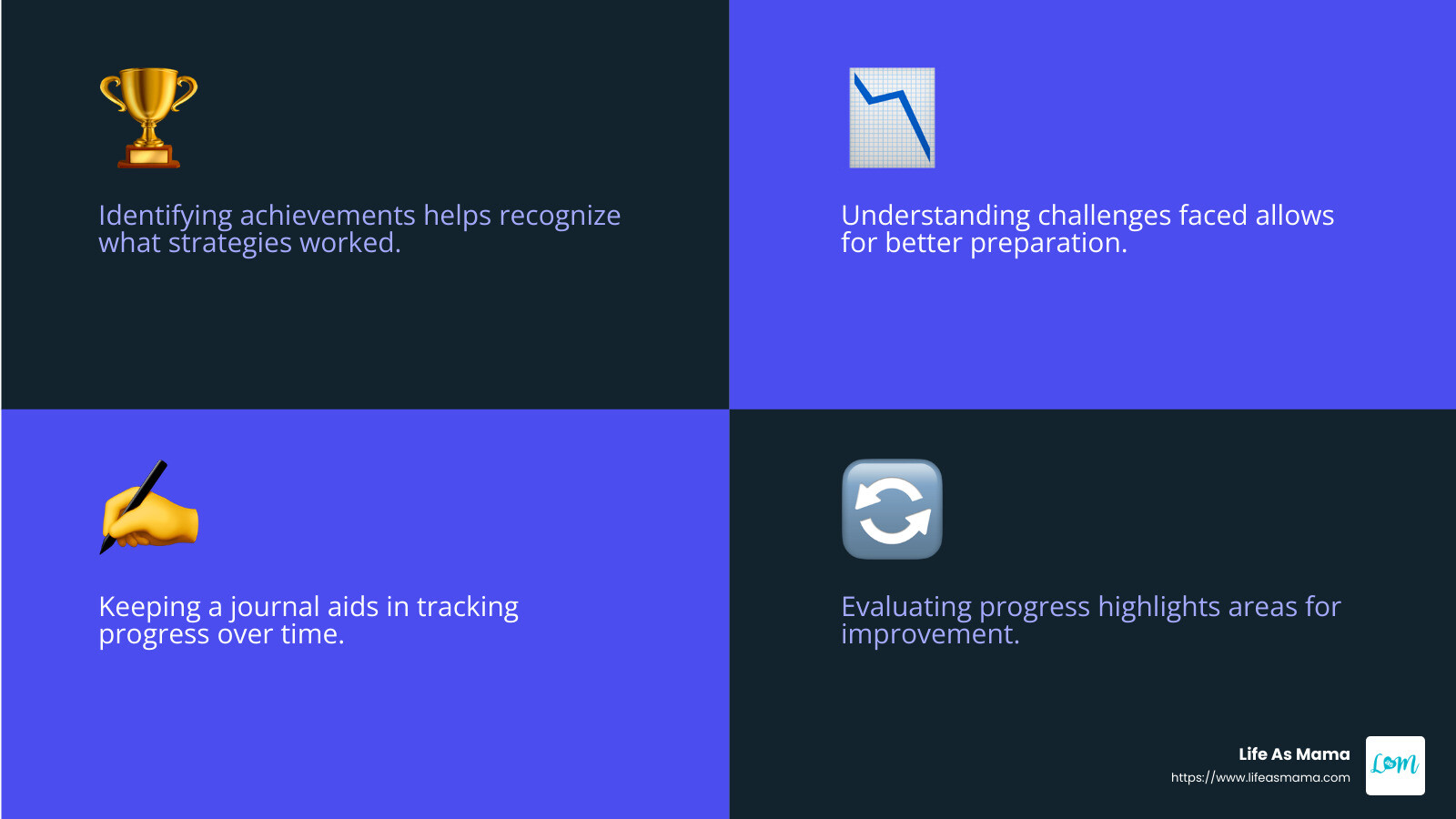
Consider keeping a journal or notes throughout the year. It can be a powerful tool to track your progress and see how far you’ve come. Many find it motivating to look back and see their journey, complete with triumphs and setbacks.
Progress Tracking
Progress tracking is essential for staying on course. It involves setting benchmarks and checking in regularly. This way, you can adjust your plans as needed and celebrate small wins along the way.
Here’s a simple way to track progress:
- Set Milestones: Break down your goals into smaller, manageable parts.
- Review Regularly: Schedule monthly or quarterly reviews to assess your progress.
- Adjust as Needed: Be flexible. If something isn’t working, tweak your approach.
By consistently tracking your progress, you create a roadmap that keeps you focused and motivated.
Planning for a successful new year starts with understanding your past. By reflecting, evaluating, and tracking progress, you lay a strong foundation for the year ahead. Now, let’s move on to defining your vision and theme for the upcoming year.
Define Your Vision and Theme for the Year
Planning for a successful new year involves more than just setting goals. It’s about crafting a clear vision and choosing a guiding theme that aligns with your priorities. This step helps you focus your efforts and stay motivated throughout the year.
Craft Your Vision
Your vision is like a roadmap for the year. It paints a picture of where you want to be by year’s end. Imagine it’s December 31st and you’ve had a fantastic year. What have you accomplished? How do you feel? What does your day-to-day life look like?
Write this vision in the present tense, as if it’s already happened. This can make it feel more real and achievable. Think about the areas of your life that matter most—family, career, health, personal growth—and incorporate these into your vision.
Choose a Theme Word
A theme word acts as a compass, guiding your decisions and actions. It’s a single word or short phrase that encapsulates how you want to approach the year. This word should resonate deeply with you and reflect your vision.
For example, if your vision involves growth and learning, your theme word might be “EXPLORE.” If you’re focusing on stability and routine, “BALANCE” could be your word.
Choose a word that inspires you and serves as a reminder of your priorities. Whenever you’re faced with a decision, ask yourself if it aligns with your theme word.
Prioritize Your Focus
With your vision and theme word in place, it’s time to set priorities. These are the key areas you want to focus on throughout the year. Limiting yourself to a few priorities ensures you don’t spread yourself too thin.
Consider what truly matters to you. Is it spending more quality time with family? Advancing in your career? Improving your health? Choose three main priorities and let them guide your actions.
Action Steps
- Visualize: Spend time imagining your ideal year. Write down your vision in detail.
- Select a Theme Word: Choose a word that captures your goals and desires for the year.
- Identify Priorities: Decide on the top three areas you want to focus on.
By defining your vision and theme, you’re setting the stage for a purposeful and fulfilling year. Next, we’ll explore how to translate these into SMART goals to keep you on track.
Set SMART Goals for the New Year
Now that you’ve defined your vision and theme for the year, it’s time to set SMART goals. This method ensures that your goals are clear, achievable, and aligned with your overall vision.
What Are SMART Goals?
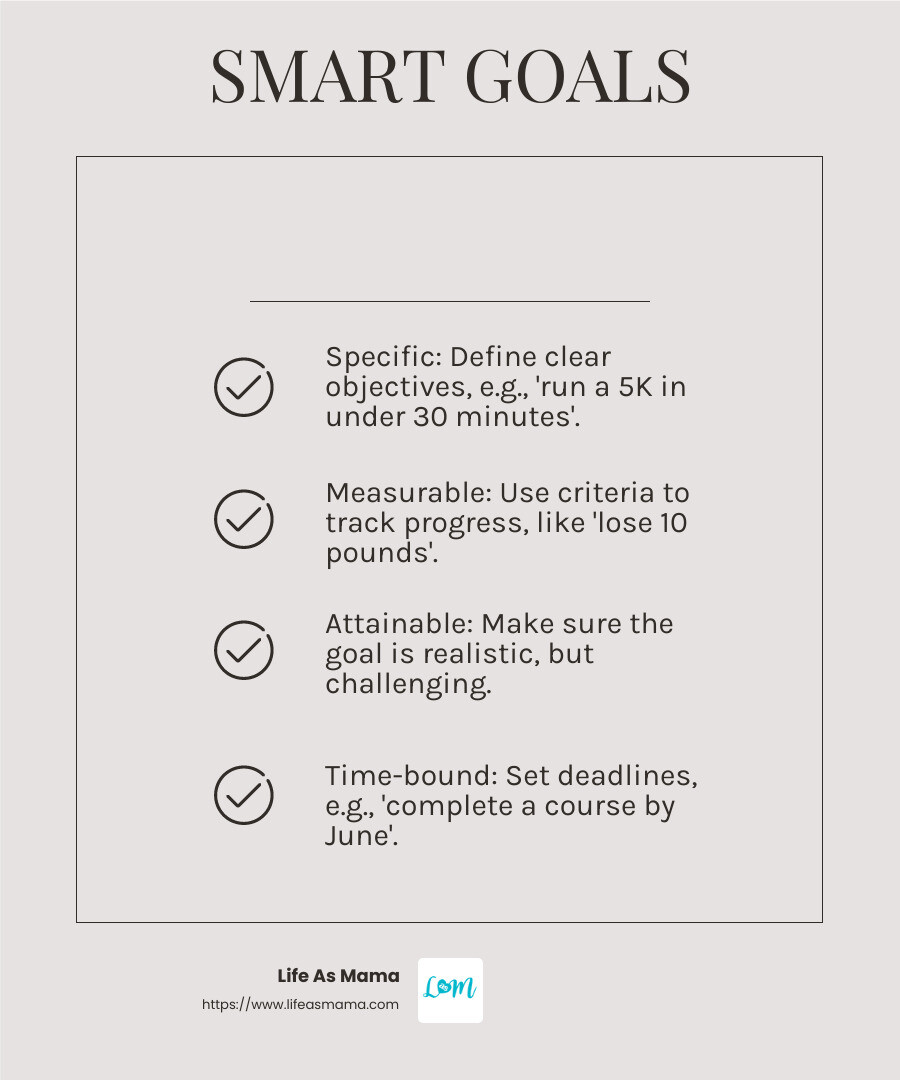
SMART is an acronym that stands for:
- Specific: Clearly define what you want to achieve. Avoid vague goals like “get fit.” Instead, try “run a 5K in under 30 minutes.”
- Measurable: Include criteria to track your progress. For example, “lose 10 pounds” is measurable, while “lose weight” is not.
- Attainable: Ensure your goal is realistic. It should stretch your abilities but still be possible. If you’re new to running, completing a marathon in a month might not be attainable.
- Relevant: Your goal should matter to you and align with your vision and theme. If your theme word is “BALANCE,” a relevant goal might be “dedicate one weekend a month to family activities.”
- Time-bound: Set a deadline to create a sense of urgency. Instead of saying “learn a new skill,” specify “complete an online coding course by June.”
Crafting Your SMART Goals
Using the SMART framework, transform your vision and priorities into actionable goals. For example, if one of your priorities is career advancement, a SMART goal might be:
- Specific: “Earn a promotion to team leader.”
- Measurable: “Receive positive feedback in quarterly reviews and complete a leadership training program.”
- Attainable: “Build on my current project management skills.”
- Relevant: “Aligns with my career vision of becoming a manager.”
- Time-bound: “Achieve this by the end of Q3.”
Why SMART Goals Work
SMART goals provide clarity and focus, making it easier to track progress and stay motivated. They break down your vision into manageable steps, increasing your chances of success.
Action Steps
- Write Down Your Goals: Document your SMART goals and keep them visible.
- Track Progress: Regularly review your goals to assess progress and make adjustments if needed.
- Celebrate Milestones: Recognize and reward yourself for achieving smaller steps along the way.
By setting SMART goals, you’re creating a clear path to achieving your vision for the year. In the next section, we’ll discuss how to create a detailed yearly plan that integrates these goals into your daily life.
Create a Detailed Yearly Plan
Now that you’ve set your SMART goals, it’s time to map them out with a detailed yearly plan. This plan will guide you through the year, ensuring you stay on track and make steady progress.
Use a Calendar to Visualize Your Year
Start by grabbing a calendar. Whether it’s digital or paper, a calendar helps you see the big picture. Mark important dates, deadlines, and events related to your goals. This visual tool will help you manage your time effectively and prevent last-minute surprises.
- Highlight Key Dates: Include birthdays, holidays, and work deadlines.
- Block Time for Goals: Set aside specific days for goal-related tasks, like attending a workshop or starting a new project.
- Plan Breaks: Don’t forget to schedule downtime to recharge.
Break Down Goals into Quarterly Milestones
Instead of tackling everything at once, divide your goals into quarterly milestones. This approach helps maintain focus and makes large tasks feel more manageable.
- Q1: Choose 1-2 goals to focus on. For example, if one goal is to “read 12 books this year,” aim to finish three books by the end of Q1.
- Q2: Review Q1 progress. Adjust your plan if needed and add new goals or milestones.
- Q3: Evaluate mid-year achievements. Celebrate wins and identify areas for improvement.
- Q4: Push towards completing your annual goals. Prepare for a final review and reflection.
Develop a Weekly Schedule
Translate your quarterly plan into a weekly schedule. This helps you maintain consistency and ensures that you’re dedicating enough time to each goal.
- Weekly Review: Set aside time each week to review your progress. This keeps you accountable and allows for timely adjustments.
- Daily Tasks: Break weekly goals into daily tasks. Small, daily actions add up to significant progress over time.
- Flexibility: Life happens. Be prepared to adjust your schedule as needed, but keep your goals in sight.
Action Steps
- Create Your Calendar: Fill in key dates and deadlines.
- Set Quarterly Goals: Break down your annual goals into quarterly milestones.
- Plan Weekly: Develop a weekly routine that supports your goals.
- Stay Flexible: Be ready to adapt, but remain focused on your vision.
By creating a detailed yearly plan, you’re setting the stage for a successful year. This structured approach helps you manage time, track progress, and achieve your goals. Up next, we’ll explore how to establish supportive habits and systems to keep you on track.
Establish Supportive Habits and Systems
You’ve got your yearly plan, but how do you make sure you stick to it? The answer lies in establishing supportive habits and systems. These are the routines and structures that will keep you moving towards your goals, even when motivation dips.
Build Consistent Habits
Habits are the small actions you repeat regularly. They form the foundation of your daily routine and can significantly impact your ability to achieve your goals.
- Start Small: Begin with tiny habits that are easy to maintain. For example, if your goal is to exercise more, start with a 5-minute walk each day.
- Use Triggers: Link new habits to existing ones. If you already have a morning coffee, use that time to read a book related to your goals.
- Track Progress: Use a habit tracker to monitor your progress. Seeing streaks can be motivating and help you stay on track.
Create a Routine that Works
Routines are sequences of habits that you perform consistently. They help you manage your time efficiently and ensure that important tasks don’t fall through the cracks.
- Morning Routine: Dedicate the first part of your day to activities that set a positive tone. This could include exercise, meditation, or planning your day.
- Evening Routine: Wind down with habits that prepare you for the next day. Reflect on your achievements and plan any adjustments needed.
- Weekly Review: Set aside time each week to review your goals and routines. This allows you to make changes and stay aligned with your yearly plan.
Implement Systems for Success
Systems are the structures that support your habits and routines. They make it easier to stay organized and focused on your goals.
- Digital Tools: Use apps or software to manage tasks, track habits, and set reminders. This keeps everything in one place and accessible.
- Physical Systems: Create environments that support your goals. For example, if you’re aiming to eat healthier, stock your kitchen with nutritious foods.
- Accountability: Share your goals with a friend or join a group with similar objectives. Regular check-ins can provide motivation and support.
Action Steps
- Identify Key Habits: Decide which habits will have the biggest impact on your goals.
- Design Your Routine: Craft morning and evening routines that support your objectives.
- Set Up Systems: Choose tools and environments that make it easy to stick to your habits.
- Review Regularly: Schedule weekly reviews to assess progress and make adjustments.
By embedding supportive habits and systems into your daily life, you’re creating a reliable framework that keeps you aligned with your goals. This approach not only makes goal achievement more manageable but also improves your overall productivity and well-being.
Next, we’ll dive into some frequently asked questions about planning for a successful new year.
Frequently Asked Questions about Planning for a Successful New Year
How can I make my new year successful?
Success in the new year starts with a solid plan. Begin by setting clear goals and breaking them down into manageable steps. Creating a routine is essential. It helps you stay organized and focused. Incorporate side projects that excite you. These can offer a creative outlet and contribute to your personal growth.
- Example: If you’re aiming to learn a new skill, dedicate a specific time each week to practice it. This builds consistency and keeps you on track.
How to make a plan for a new year?
To make a plan, start by defining your goals. Use the SMART criteria: specific, measurable, attainable, relevant, and time-bound. Next, decide on a theme for the year. This acts as your guiding principle. Plan for significant events that align with your goals.
- Tip: Use a calendar to map out important dates and deadlines. This visual aid helps in managing time effectively.
How to plan your year for success?
Review the past year to understand what worked and what didn’t. This reflection informs your planning process. Establish supportive habits that align with your goals. These habits should fit seamlessly into your daily routine. Develop a support structure. This could be a mentor, a friend, or a community group that encourages you.
- Advice: Regularly check in with your progress. Adjust your strategies as needed to overcome obstacles.
By focusing on these elements, you create a roadmap for a successful year. Accept flexibility, as plans may need adjustments along the way.
Conclusion: Key Takeaways for Your Successful New Year as a Parent
At Life As Mama, we know that planning for a successful new year involves more than just setting goals—it’s about creating a life that’s fulfilling and enjoyable for you and your family. Our mission is to provide you with family-friendly, practical guides that make this process easier and more enjoyable.
We believe that every family deserves to celebrate life’s moments with joy and ease. Whether it’s crafting the perfect birthday party or finding simple recipes that bring everyone together, our content aims to make your life more manageable and fun.
The key to success is not just in the planning, but in the execution. Use the tools and strategies we’ve discussed to build a year that reflects your values and aspirations. And don’t forget to lean on your support systems, whether it’s family, friends, or community groups that share your goals.
For more tips and inspiration on making this year your best yet, visit our guide on planning for a successful new year.
Here’s to a year full of growth, happiness, and memorable moments. Let’s make it a great one together!
Related Images:

Amanda Schmitt
Latest posts by Amanda Schmitt (see all)
- 20+ First Day of School Traditions to Make the Day Special - August 23, 2026
- Fruit Infused Waters That Make Summer Hydration Fun - July 1, 2025
- Light Up Your Life: Home Lighting Decoration Ideas - June 30, 2025