Summer salad recipes healthy: 15 Best Refreshing Ideas 2025
Why Summer Salads Are Your Secret Weapon This Season
Looking for summer salad recipes healthy enough to satisfy your family while keeping meals light and nutritious? Here are the essentials:
- Quick & Easy: Most summer salads come together in 15 minutes or less
- Nutrient-Dense: Packed with vitamins A, C, potassium, and antioxidants
- Refreshing: High water content vegetables help with hydration during hot months
- Versatile: Easily adaptable for different dietary needs (vegan, gluten-free, etc.)
- Protein Options: Add beans, grilled chicken, or feta to make a complete meal
Summer salad recipes healthy enough to make you forget you’re eating vegetables are a game-changer during the hot months. When temperatures rise, the last thing anyone wants is a heavy meal that leaves you feeling sluggish. That’s where these vibrant, refreshing dishes come in – they’re light enough to keep you comfortable but substantial enough to satisfy.
One of my favorite things about summer is hosting backyard BBQs where I can catch up with neighbors over a colorful spread of fresh salads. There’s something magical about combining garden-fresh produce at its peak flavor – juicy tomatoes, crisp cucumbers, sweet corn, and ripe berries – into dishes that make everyone say “ooohs and ahhs” when they reach the table.
As a mom of two young daughters, I’ve finded that summer salads are not just healthy but also an opportunity to get my kids excited about vegetables. We recently planted a raised garden bed together, and watching them eagerly harvest ingredients for our meals has been incredibly rewarding.
I’m Amanda Schmitt, a former Occupational Therapist turned full-time mom who loves creating summer salad recipes healthy enough for my picky eaters while still being satisfying for adults. My family-friendly approach focuses on simple preparation methods that preserve the natural flavors of seasonal produce.
Quick Summer salad recipes healthy terms:
– Healthy summer dessert ideas
– Summer picnic dessert ideas
Why Healthy Summer Salads Belong on Every Summer Table
Have you ever noticed how your appetite changes when summer rolls around? There’s a reason for that! When temperatures climb, our bodies naturally gravitate toward lighter, more refreshing foods. It’s not just preference—it’s actually our body’s clever way of helping us stay cool and hydrated during those sweltering months. Summer salad recipes healthy enough to serve as complete meals deliver exactly what our bodies crave when the heat is on.
I love sharing this little nutrition nugget with friends at our backyard gatherings: a typical serving of summer vegetable salad contains just 140 calories, 10g of healthy fats, 4g of fiber, and 5g of protein. That’s a nutrient powerhouse that won’t leave you feeling sluggish when the mercury rises! But the benefits of these colorful bowls go way beyond simple calorie counting.
Summer produce truly shines at its nutritional peak, which means every bite delivers maximum vitamins, minerals, and antioxidants. Those gorgeous leafy greens, sun-ripened tomatoes, crisp cucumbers, and rainbow-colored bell peppers are bursting with vitamins A and C, potassium, and all sorts of disease-fighting compounds that support your immune system while keeping you hydrated.
When my family started incorporating more bean-based summer salads into our meal rotation, I was amazed at how much longer we stayed satisfied. Adding beans or lentils significantly boosts both protein and fiber content—a typical bean-based salad provides around 7g of fiber per serving, which covers about a quarter of your daily needs!
The budget-friendly aspect of summer salads is another huge win. Even our modest backyard garden yields enough tomatoes, cucumbers, and herbs to significantly trim our grocery bill during peak growing season. Don’t have a green thumb? (Trust me, we didn’t either when we first started!) Farmers’ markets are treasure troves of peak-season produce, often at prices that beat the supermarket.
Research shows that beta-carotene, found abundantly in summer veggies like carrots and bell peppers, provides numerous health benefits, particularly for eye health and immune function. Making simple dietary shifts to include more of these nutrient-rich foods is one of the 8 simple changes you can make to be healthier.
What Makes a Summer Salad “Healthy”?
Let’s be honest—not all salads deserve their health halo. That restaurant Caesar loaded with creamy dressing, buttery croutons, and a mountain of parmesan might be delicious, but it’s not delivering the same nutritional punch as a thoughtfully constructed summer salad.
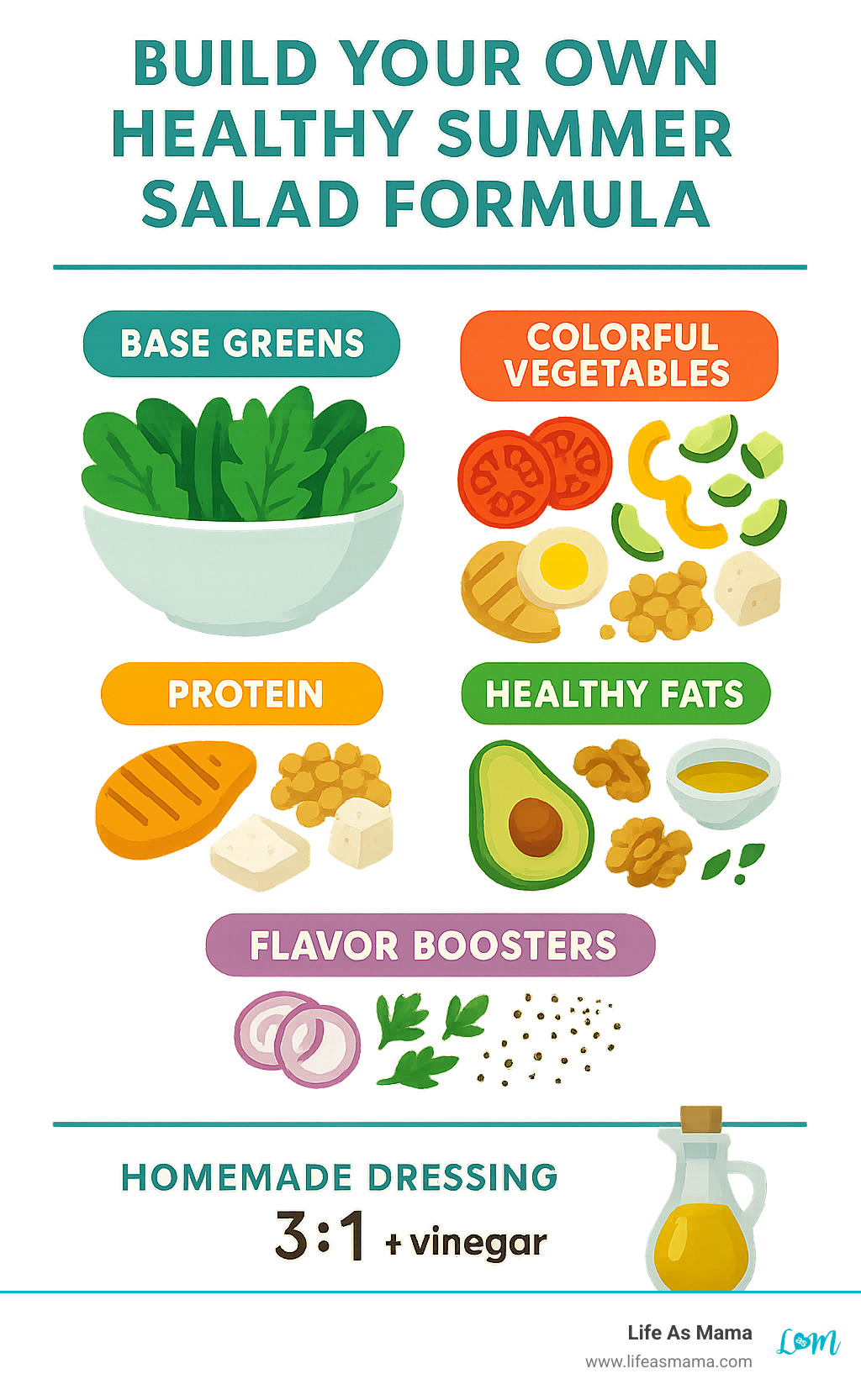
A truly healthy summer salad recipe strikes the perfect balance of flavors and nutrients. It includes balanced macronutrients—think complex carbs from whole grains and fresh produce, lean proteins like beans or grilled chicken, and healthy fats from avocados or olive oil. The visual appeal matters too! Different colored vegetables and fruits provide different phytonutrients and antioxidants, so aim for a rainbow on your plate.
Heart-healthy fats are essential components—olive oil, avocados, nuts, and seeds provide the monounsaturated and polyunsaturated fats that support cardiovascular health and help your body absorb all those fat-soluble vitamins. What you won’t find in a truly healthy salad? Loads of added sugar. Instead, rely on the natural sweetness of summer fruits and vegetables rather than sugary dressings.
My family’s salads always include plenty of fiber-rich components like beans, whole grains, and fresh vegetables. Not only does this keep us feeling satisfied longer, but it also supports digestive health—something we all appreciate!
The real beauty of summer salads is how naturally they align with these healthy principles. When produce is in season and at peak ripeness, it’s bursting with so much natural flavor that you need less dressing and seasoning to create something truly delicious.
Best Seasonal Ingredients to Stock Up On
The foundation of any healthy summer salad recipe starts with what’s fresh and in season. Here’s what I look for at our local farmers’ market each week:
Tomatoes are summer’s crown jewels. Those sun-warmed, garden-fresh tomatoes bear little resemblance to their pale winter counterparts! From multi-colored heirlooms to sweet little cherry tomatoes, they’re packed with lycopene, an antioxidant linked to reduced heart disease and cancer risk. My kids will actually eat them straight from our garden like candy!
Cucumbers are nature’s hydration helper with their impressive 96% water content. They’re also surprisingly nutritious, offering vitamin K and several B vitamins. For our family salads, I prefer English or Persian cucumbers for their thinner skin and fewer seeds—no bitter flavors to turn off picky eaters.
Peaches might seem unexpected in salads, but trust me on this one! Their sweet, juicy flesh creates magical contrast when paired with peppery arugula, tangy goat cheese, and grilled proteins. Plus, they’re loaded with vitamins A and C.
Berries of all kinds reach their magnificent peak in summer. One cup of strawberries provides a whopping 140% of your daily vitamin C needs. I love how their natural sweetness balances the slight bitterness of greens like kale or arugula.
Sweet Corn freshly cut from the cob adds the most satisfying crunch and natural sweetness to summer salads. It’s also rich in lutein and zeaxanthin—antioxidants that support eye health. My little trick? Grill the corn first for a subtle smoky flavor that lifts the entire salad.
Fresh Herbs like basil, mint, cilantro, and dill flourish in summer gardens and can transform even the simplest salad into something special. They’re packed with antioxidants and add tremendous flavor without extra calories or sodium.
Bell Peppers in all their colorful glory are vitamin C powerhouses (one red bell pepper contains more vitamin C than an orange!). Their sweet crunch and vibrant colors make any salad more appealing.
Avocados, while available year-round, seem particularly creamy and delicious in summer. Half an avocado contains 6.5g of fiber (26% of daily needs) and those wonderful heart-healthy monounsaturated fats that help you absorb all the other nutrients in your salad.

15 Summer Salad Recipes Healthy Enough to Make You Forget It’s Salad
Let’s explore the good stuff – my collection of summer salad recipes healthy enough to make even the most dedicated veggie-avoiders ask for seconds! I’ve created these recipes with busy families in mind, which means they all come together in 20 minutes or less. Many don’t require turning on the stove at all (your air conditioning bill will thank you).
Fruit & Herb Combos: Summer salad recipes healthy for sweet cravings
1. Watermelon Basil Feta Salad
This refreshing combination has become my go-to for neighborhood potlucks. The sweet juicy watermelon against salty feta and aromatic basil creates magic in your mouth.
Ingredients:
– 4 cups cubed watermelon
– 1/4 cup fresh basil leaves, torn
– 2 oz crumbled feta cheese
– 1 tablespoon extra virgin olive oil
– 1 tablespoon lime juice
– Pinch of flaky sea salt
– Optional: 2 tablespoons toasted pine nuts
Directions:
Combine watermelon, basil, and feta in a bowl. Drizzle with olive oil and lime juice, then sprinkle with salt. Toss gently and serve immediately.
2. Strawberry Spinach Salad with Poppyseed Dressing
My daughters call this “princess salad” because of its pretty pink berries. The slightly sweet poppyseed dressing converts even the most reluctant salad eaters.
Ingredients:
– 6 cups baby spinach
– 1 pint strawberries, hulled and sliced
– 1/4 cup thinly sliced red onion
– 1/3 cup crumbled goat cheese
– 1/4 cup sliced almonds, toasted
– For the dressing: 3 tablespoons olive oil, 2 tablespoons apple cider vinegar, 1 tablespoon honey, 1 teaspoon Dijon mustard, 1/2 teaspoon poppyseeds
Directions:
Whisk together dressing ingredients. Combine salad ingredients in a large bowl, drizzle with dressing, and toss gently.
3. Peach, Kale, and Avocado Salad
This nutrient powerhouse tastes like summer sunshine. The key is massaging the kale – don’t skip this step! It transforms the tough leaves into silky greens that beautifully complement the sweet peaches.
Ingredients:
– 1 bunch kale, stems removed and chopped
– 2 ripe peaches, sliced
– 1 avocado, diced
– 1/4 cup toasted pistachios
– 2 tablespoons olive oil
– 1 tablespoon lemon juice
– 1 teaspoon honey
– Salt and pepper to taste
Directions:
Massage kale with 1 tablespoon olive oil and a pinch of salt for 2-3 minutes until softened. Add remaining ingredients and toss gently.
Protein-Packed Bowls: Summer salad recipes healthy enough to be dinner
4. Grilled Chicken and Corn Salad with Chipotle Dressing
When my husband asks “what’s for dinner?” and I answer “salad,” this is the one that prevents any complaints. It’s substantial without being heavy – perfect for those evenings when you want something filling but it’s too hot to eat anything warm.
Ingredients:
– 2 grilled chicken breasts, sliced
– 2 ears corn, grilled and kernels removed
– 1 pint cherry tomatoes, halved
– 1 avocado, diced
– 4 cups romaine lettuce, chopped
– 1/4 cup cilantro, chopped
– For the dressing: 3 tablespoons olive oil, 1 tablespoon lime juice, 1 teaspoon honey, 1/2 teaspoon chipotle powder, salt to taste
Directions:
Arrange lettuce in a bowl. Top with chicken, corn, tomatoes, avocado, and cilantro. Whisk dressing ingredients together and drizzle over salad.
5. Shrimp and Avocado Salad with Citrus Vinaigrette
This protein-rich salad feels fancy enough for company but comes together in just 15 minutes. I often use pre-cooked frozen shrimp that I’ve thawed – just one more way to keep the kitchen cool.
Ingredients:
– 1 pound cooked shrimp
– 2 avocados, diced
– 1 cucumber, diced
– 1/4 cup red onion, thinly sliced
– 4 cups mixed greens
– For the dressing: 3 tablespoons olive oil, 2 tablespoons orange juice, 1 tablespoon lime juice, 1 teaspoon honey, salt and pepper to taste
Directions:
Arrange greens in a bowl. Top with shrimp, avocados, cucumber, and red onion. Whisk dressing ingredients together and drizzle over salad.
6. Chopped Broccoli and Chickpea Salad
This vegan protein powerhouse has become my meal-prep staple. It actually tastes better the next day as the flavors meld, making it perfect for make-ahead lunches.
Ingredients:
– 4 cups broccoli florets, chopped small
– 1 can (15 oz) chickpeas, drained and rinsed
– 1/2 cup diced red onion
– 1/2 cup sunflower seeds
– 1/2 cup dried cranberries
– For the dressing: 1/4 cup tahini, 2 tablespoons lemon juice, 1 tablespoon maple syrup, 2 tablespoons water, 1/2 teaspoon salt
Directions:
Combine all salad ingredients in a large bowl. Whisk dressing ingredients together until smooth, then pour over salad and toss well.

Grain & Legume Medleys for Long-Lasting Energy
7. Mango Black Bean Quinoa Salad
This rainbow-colored bowl is what I pack when we’re heading to the beach for the day. The complex carbs from quinoa and protein from black beans provide lasting energy for swimming and sandcastle building.
Ingredients:
– 2 cups cooked quinoa, cooled
– 1 can (15 oz) black beans, drained and rinsed
– 1 mango, diced
– 1 red bell pepper, diced
– 1/4 cup red onion, finely diced
– 1/4 cup cilantro, chopped
– For the dressing: 3 tablespoons lime juice, 2 tablespoons olive oil, 1 teaspoon cumin, 1/2 teaspoon salt
Directions:
Combine all salad ingredients in a large bowl. Whisk dressing ingredients together and pour over salad. Toss well and refrigerate for at least 30 minutes before serving.
8. Summer Farro Salad with Roasted Vegetables
Farro’s chewy texture and nutty flavor make this salad incredibly satisfying. My kids call the farro “chewy rice” and actually request this dish regularly – a miracle in my household!
Ingredients:
– 2 cups cooked farro, cooled
– 1 zucchini, diced and roasted
– 1 yellow squash, diced and roasted
– 1 pint cherry tomatoes, halved
– 1/4 cup fresh basil, chopped
– 2 oz crumbled feta cheese
– For the dressing: 3 tablespoons olive oil, 2 tablespoons balsamic vinegar, 1 teaspoon Dijon mustard, 1/2 teaspoon honey, salt and pepper to taste
Directions:
Combine farro, roasted vegetables, tomatoes, basil, and feta in a large bowl. Whisk dressing ingredients together and pour over salad. Toss gently to combine.
9. Barley Walnut Salad with Maple Dijon Vinaigrette
This hearty grain salad features barley, which might be my most underrated pantry staple. Its chewy texture and mild flavor make it perfect for salads that need to stand up to bold dressings.
Ingredients:
– 2 cups cooked barley, cooled
– 1/2 cup walnuts, toasted and chopped
– 1/2 cup dried cherries
– 1/4 cup red onion, finely diced
– 2 cups arugula
– For the dressing: 3 tablespoons olive oil, 1 tablespoon Dijon mustard, 1 tablespoon maple syrup, 1 tablespoon apple cider vinegar, 1/4 teaspoon salt
Directions:
Combine barley, walnuts, cherries, red onion, and arugula in a large bowl. Whisk dressing ingredients together and pour over salad. Toss well to combine.
10. Raw Apple, Fennel & Broccoli Salad
Inspired by this creative combination, this unexpected trio delivers amazing crunch and freshness. Don’t be put off by the raw broccoli – chopping it finely transforms its texture completely.
Ingredients:
– 2 cups broccoli florets, finely chopped
– 1 fennel bulb, thinly sliced
– 1 apple, diced
– 1/4 cup sunflower seeds
– For the dressing: 3 tablespoons olive oil, 2 tablespoons apple cider vinegar, 1 teaspoon Dijon mustard, 1 teaspoon honey, salt and pepper to taste
Directions:
Combine broccoli, fennel, apple, and sunflower seeds in a large bowl. Whisk dressing ingredients together and pour over salad. Toss well to combine.
No-Lettuce Crunch Fix
11. Cucumber Snap Pea Sesame Salad
When the temperatures hit the 90s, this no-cook, water-rich salad becomes my dinnertime savior. It pairs beautifully with simple grilled proteins or can stand alone as a light lunch.
Ingredients:
– 2 English cucumbers, thinly sliced
– 2 cups sugar snap peas, strings removed and halved
– 3 tablespoons rice vinegar
– 1 tablespoon sesame oil
– 1 teaspoon honey
– 1 tablespoon toasted sesame seeds
– 1/4 teaspoon salt
Directions:
Combine cucumbers and snap peas in a bowl. Whisk together rice vinegar, sesame oil, honey, and salt. Pour over vegetables, toss, and sprinkle with sesame seeds.
12. Green Tomato Peanut Salad
Got unripe tomatoes or an abundance of green ones at the farmers’ market? This unique salad transforms them into something special with a delightful crunch and tangy flavor.
Ingredients:
– 4 green tomatoes, diced
– 1/2 red onion, thinly sliced
– 1/4 cup crushed peanuts
– 2 tablespoons fresh cilantro, chopped
– 1 tablespoon lime juice
– 1 tablespoon olive oil
– 1/2 teaspoon sugar
– Salt to taste
Directions:
Combine tomatoes, onion, peanuts, and cilantro in a bowl. Mix lime juice, olive oil, sugar, and salt, then pour over salad and toss gently.
13. Carrot-Dill Oil-Free Salad
For those watching their fat intake or who simply prefer lighter dressings, this oil-free salad proves you don’t need added fats for amazing flavor. The natural juiciness of the vegetables creates its own dressing.
Ingredients:
– 4 large carrots, julienned or shredded
– 2 cucumbers, sliced into sticks
– 1 cup fresh sweet corn kernels
– 2 tablespoons fresh dill, chopped
– 2 tablespoons lemon juice
– 1 clove garlic, minced
– 2 tablespoons hemp seeds
– Salt to taste
Directions:
Combine vegetables and dill in a large bowl. Mix lemon juice, garlic, and salt, then pour over salad. Toss well and sprinkle with hemp seeds.
International Twists to Beat Salad Boredom
14. 20-Minute Asian Chopped Salad with Orange Sesame Miso Dressing
When I’m craving something with bold flavors but don’t want to order takeout, this vibrant salad hits all the right notes. The umami-rich dressing transforms simple vegetables into something extraordinary.
Ingredients:
– 4 cups Napa cabbage, thinly sliced
– 1 red bell pepper, thinly sliced
– 1 carrot, julienned
– 1 cup edamame, shelled
– 1/4 cup green onions, sliced
– 1/4 cup cilantro, chopped
– 1/4 cup sliced almonds, toasted
– For the dressing: 2 tablespoons orange juice, 1 tablespoon sesame oil, 1 tablespoon rice vinegar, 1 tablespoon white miso paste, 1 teaspoon honey, 1/2 teaspoon grated ginger
Directions:
Combine all salad ingredients in a large bowl. Whisk dressing ingredients together until smooth, then pour over salad and toss well.
15. Mediterranean Bean Salad
This protein-rich salad is my secret weapon for busy weeks. It actually improves after a day or two in the fridge, making it perfect for meal prep. I often make a big batch on Sunday for easy lunches all week.
Ingredients:
– 1 can (15 oz) chickpeas, drained and rinsed
– 1 can (15 oz) white beans, drained and rinsed
– 1 cucumber, diced
– 1 pint cherry tomatoes, halved
– 1/2 red onion, finely diced
– 1/4 cup kalamata olives, halved
– 1/4 cup fresh parsley, chopped
– 2 oz feta cheese, crumbled
– For the dressing: 3 tablespoons olive oil, 2 tablespoons lemon juice, 1 teaspoon dried oregano, 1 clove garlic, minced, salt and pepper to taste
Directions:
Combine all salad ingredients in a large bowl. Whisk dressing ingredients together and pour over salad. Toss well and refrigerate for at least 30 minutes before serving.
These summer salad recipes healthy options have transformed how my family eats during the hot months. I’d love to know which one you try first! For more summer inspiration, check out our healthy summer dessert ideas or summer picnic dessert ideas to complete your seasonal menu.
Meal Prep, Storage & Picnic Hacks
Let me tell you a little secret – summer salad recipes healthy enough to be complete meals can actually save you tons of time during busy weeks. I learned this the hard way after too many nights of staring blankly into my fridge at 6 PM, wondering what to feed my family!
When I started prepping salad components on Sunday afternoons, our weekday meals became so much easier. My kids even got into the habit of building their own lunch salads before school – a parenting win I never expected!
How to Keep Summer Salads Fresh All Week
The magic of meal prepping salads is understanding which ingredients can handle a few days in the fridge and which need to be added last-minute. Trust me, nothing’s more disappointing than opening your lunch container to find a sad, soggy salad.
You can prep hearty ingredients like cooked quinoa, roasted sweet potatoes, or chickpeas up to 5 days ahead. Hard vegetables like carrots, bell peppers, and cabbage also maintain their crunch beautifully. I like to store homemade dressings in small mason jars – they keep for nearly a week and taste so much better than store-bought.
Save your avocados, tender greens, and fresh herbs for the day you’ll eat the salad. Nothing ruins a beautiful meal faster than brown avocado! If your greens start looking a bit sad, try my favorite revival trick: a quick 5-minute ice water bath works wonders for wilted lettuce and spinach.
Mason jar salads have completely transformed my lunch routine. The layering technique is genius – dressing on the bottom, followed by sturdy veggies, then proteins and grains, with delicate greens at the top. Everything stays perfectly fresh until you’re ready to shake it up and enjoy. My daughters think these are the coolest lunches ever, especially when we make rainbow-colored layers.

For more beautiful presentation ideas, check out our collection of 9 Amazing Looking Salads that will impress even your pickiest guests.
Serving Safely at Picnics & BBQs
Summer gatherings call for special attention to food safety, especially with summer salad recipes healthy enough to share with friends and family. Nobody wants their backyard party remembered as “that time everyone got food poisoning”!
Temperature control is crucial – keep cold salads below 40°F by nestling serving bowls in larger bowls filled with ice. I learned the hard way that salads containing mayonnaise, dairy, or proteins shouldn’t sit out longer than 2 hours (or just 1 hour when it’s above 90°F outside). Now I transport everything in insulated coolers with plenty of ice packs.
Individual mason jar salads have become my go-to for outdoor gatherings. They eliminate shared serving utensils (hello, pandemic lessons) and look adorable on the table. When I do serve family-style, I always provide tongs rather than spoons for leafy salads – they’re much easier to use and create less mess.
Setting up your salad station in a shaded area isn’t just about keeping food safe – it also preserves the beautiful colors and textures of your carefully crafted dishes. I’ve started bringing certain components separately and assembling on site for maximum freshness. My tomatoes and cucumbers thank me every time!
For BBQ buffets, I’ve finded a little psychological trick: place salads at the beginning of the line, and guests naturally fill more of their plate with vegetables before reaching the heavier options. I always offer at least three different salad options to accommodate various preferences, and clearly label ingredients for those with allergies or dietary restrictions.

Last summer, I hosted a neighborhood potluck where everyone brought a different salad to share. We ended up with an incredible spread of colors and flavors, and not a single hot oven needed on that 95-degree day. The kids even found favorites among the vegetable options – a miracle my younger self would never have believed possible!
Creative Dressings & Toppings That Make Veggies Disappear
I still remember the look on my daughter’s face when she first tried my maple-dijon vinaigrette. Her eyes widened, she took another bite of salad, and whispered, “Mom, I think I actually like salad now.” The right dressing can truly transform a pile of vegetables into something magical that even the most veggie-resistant family members will enjoy.
Creating your own dressings isn’t just economical—it’s also healthier, as you control exactly what goes into them. Plus, there’s something deeply satisfying about whisking together a few simple ingredients and watching them transform into something greater than the sum of their parts.
DIY Dressing Formula for Endless Combos
The beauty of homemade dressings lies in their simplicity. Once you understand the basic formula, you can create endless variations to complement any summer salad recipes healthy enough to serve as your main meal.
At its core, a good dressing combines fat, acid, and flavor boosters in the right proportions—typically 3 parts oil to 1 part acid. This ratio creates the perfect balance of richness and brightness.
For oils, extra virgin olive oil offers a fruity, rich foundation that works with nearly everything. When I want something more neutral, avocado oil steps in beautifully with its heart-healthy fats. For Asian-inspired salads, a touch of sesame oil (just a teaspoon or two) adds incredible depth, while walnut oil brings a lovely nuttiness to fruit-based salads.
The acid component brightens everything up. Fresh lemon or lime juice adds a clean, vibrant note that works especially well with delicate greens. Balsamic vinegar brings a sweet richness that pairs beautifully with strawberries or peaches. Apple cider vinegar offers a pleasant tang with subtle sweetness, while rice vinegar provides a gentle acidity perfect for Asian-inspired dressings.
The magic happens when you add flavor boosters. A teaspoon of Dijon mustard not only adds tang but also helps emulsify your dressing, creating that perfect creamy consistency. A drizzle of honey or maple syrup balances acidity. Fresh minced garlic or shallots add aromatic depth, while herbs and spices—from basil and dill to cumin and ginger—create distinctive flavor profiles.
My favorite method for mixing dressings is what I call the “shake and store” approach. Simply add all ingredients to a mason jar, seal tightly, and shake vigorously until everything is beautifully combined. Any leftovers store perfectly in the refrigerator for up to a week—just give the jar another shake before using.
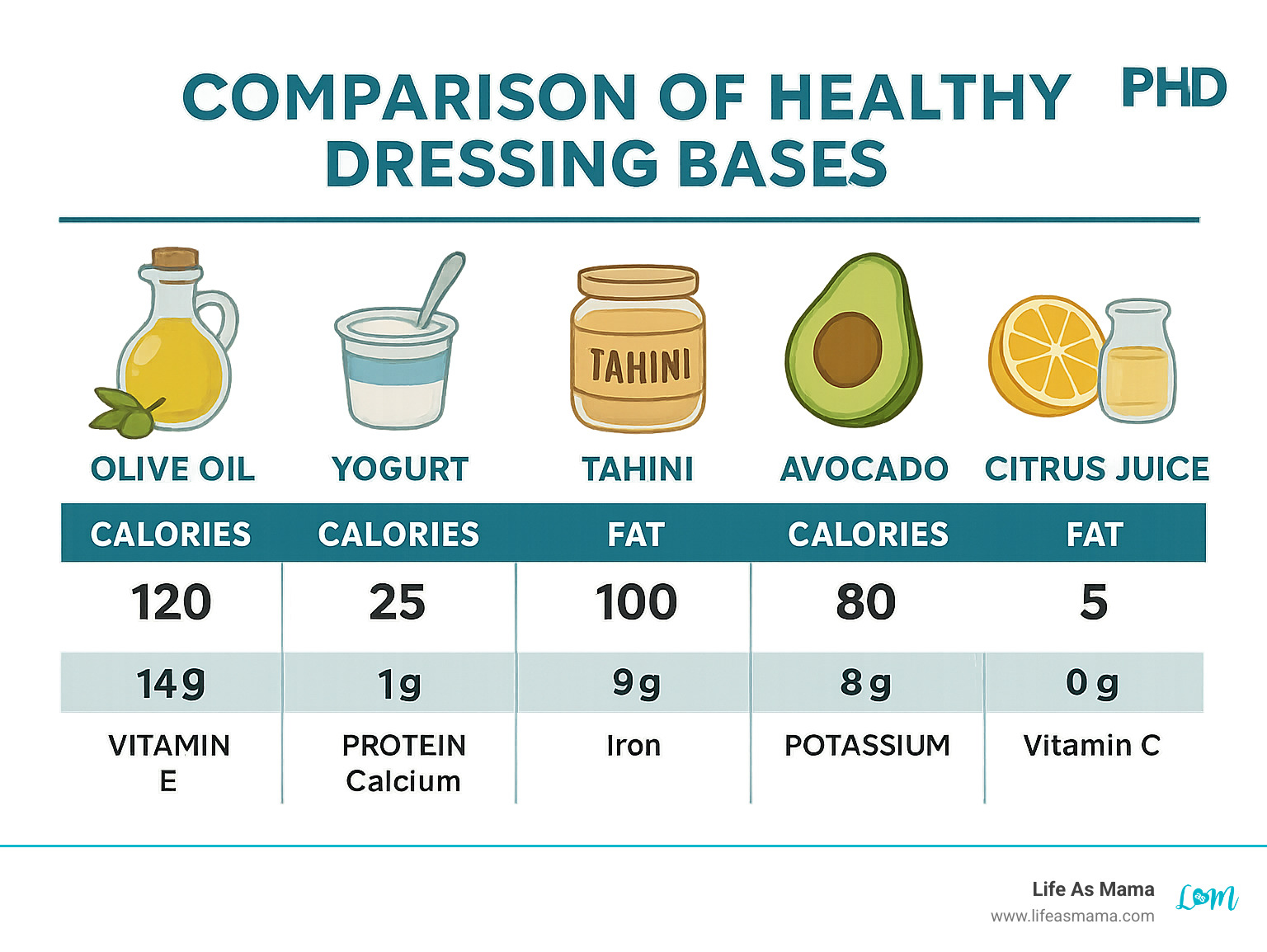
For those watching calories but still craving creamy dressings, there are wonderful alternatives to heavy, mayonnaise-based options. Greek yogurt makes an excellent base when mixed with herbs, lemon, and a touch of olive oil. Tahini thinned with water and brightened with lemon juice and garlic creates a luscious, dairy-free option. And blended ripe avocado with lime juice, cilantro, and water creates a velvety dressing that’s packed with good fats.
Kid-Friendly Crunch & Color Boosters
Getting children excited about summer salad recipes healthy enough for growing bodies often comes down to texture and presentation. My own kids were salad skeptics until I finded the power of crunchy add-ins and colorful combinations.
Texture makes all the difference for young eaters. Sunflower or pumpkin seeds add a satisfying crunch without the allergy concerns that sometimes come with tree nuts. When we have day-old bread, I cube it, toss with a bit of olive oil and herbs, and bake until crispy for homemade whole grain croutons. Crispy roasted chickpeas have become a family favorite—my daughters now request them specifically for their salads.
Fresh fruits add both sweetness and texture that kids love. Thinly sliced apples or pears provide crunch along with natural sweetness. Sugar snap peas or snow peas offer that satisfying snap that makes eating salad more interactive and fun.
Color creates visual appeal that draws children in. We often talk about “eating the rainbow” at our house, which turns healthy eating into a game. Rainbow cherry tomatoes in yellow, orange, and red, bright orange bell peppers, vibrant purple cabbage, sunny yellow corn kernels, and ruby-red strawberries or raspberries all contribute to creating a visually exciting plate.
How you present salad can be just as important as what’s in it. When my youngest was going through a particularly picky phase, I started serving components separately and letting her build her own salad. This simple shift in approach gave her control and ownership over her food choices. For special occasions, I’ve been known to use cookie cutters to create fun shapes from cucumbers or bell peppers, arrange vegetables in rainbow rows, or serve individual portions in colorful mason jars with dressing on the side.
Children may need multiple exposures to new foods before accepting them—sometimes as many as 15-20 tries! Keep offering salads in different forms without pressure, and eventually, they’ll find combinations they enjoy. My older daughter now proudly creates her own salad combinations and recently announced she wanted to grow lettuce in our garden this year—a victory I couldn’t have imagined when I first started introducing salads to our family meals.
For more inspiration on making family meals healthier, check out 8 simple changes you can make to be healthier that won’t overwhelm your busy schedule.
Frequently Asked Questions about Healthy Summer Salads
How can I adapt recipes for vegan, gluten-free, or dairy-free diets?
I remember when my sister-in-law went vegan last year – suddenly our family BBQs required some creative thinking! The good news is that summer salad recipes healthy enough for everyone are totally doable with a few simple swaps.
For plant-based eaters, cheese is usually the first thing that needs replacing. I’ve found that creamy avocado chunks provide that rich mouthfeel that cheese normally delivers. Nutritional yeast flakes give that savory, almost cheesy flavor, especially in dressings. For sweetening dressings, maple syrup or agave work beautifully instead of honey. And don’t forget protein! Beans, lentils, marinated tofu, or tempeh add staying power to vegan salads.
When my neighbor was diagnosed with celiac disease, I learned how to make gluten-free versions of our favorite dishes. For summer salad recipes healthy and safe for gluten-sensitive folks, be vigilant about ingredients. Swap barley or farro with certified gluten-free quinoa, millet, or rice. I once accidentally used regular soy sauce (which contains wheat) in a dressing – now I always keep tamari on hand instead. And rather than croutons, I toast up some pumpkin seeds or slivered almonds for that essential crunch factor.
Dairy-free adaptations have become second nature in our house since my daughter developed lactose intolerance. Beyond simply omitting cheese, we’ve finded creamy dressings made from blended cashews soaked in water, tahini, or even avocado bases. The richness these alternatives provide means you honestly don’t miss the dairy!
What proteins boost a salad into a full meal?
The difference between a side salad and a satisfying dinner often comes down to protein content. When creating summer salad recipes healthy enough to be your main meal, aim for about 15-20 grams of protein.
My family loves grilled chicken breast on our salads – just 3 ounces packs a whopping 26 grams of protein. On busy weeknights, I often reach for canned tuna or salmon (22g protein per 3oz) for a no-cook option. Hard-boiled eggs are another staple in our fridge – two eggs add 12g of protein plus that gorgeous golden yolk color.
For plant-based options, chickpeas and black beans are my go-to choices. A half-cup serving provides around 7-8 grams of protein, and their firm texture holds up well in salads. My teenage daughter, who’s experimenting with vegetarianism, loves edamame in her salads – a half cup adds 8g of protein plus a beautiful pop of green.
I’ve found that combining different protein sources creates more interesting textures and flavors. A handful of toasted walnuts (7g protein per quarter cup) alongside some quinoa (8g protein per cooked cup) makes for a satisfying meatless meal with plenty of staying power.
Can I use leftovers or garden surplus in these recipes?
Last summer, our cherry tomato plants went absolutely wild – we were harvesting bowlfuls every day! Summer salad recipes healthy enough to use daily became essential, and I finded the joy of “clean out the fridge” salads.
Leftover proteins find new life in creative salads. That half rotisserie chicken from yesterday? Shred it onto a bed of greens with some quinoa for an instant meal. Sunday’s grilled salmon can be flaked into a cucumber-dill salad for Monday’s lunch. Even that last bit of steak can be sliced thin and tossed with arugula, blue cheese, and a simple vinaigrette.
Garden surplus practically begs to become salad ingredients. When my basil threatens to take over the garden bed, I make big batches of pesto to drizzle over tomato salads. Cucumber overload? I quick-pickle some in vinegar, sugar, and salt for a tangy addition to future salads. And when the zucchini plants are producing more than we can eat, I spiralize them into noodles for a refreshing base instead of lettuce.
The secret to great leftover salads is thinking about complementary flavors and textures. Those roasted sweet potatoes from dinner can add wonderful sweetness to tomorrow’s lunch salad with some peppery arugula and goat cheese. Leftover rice or quinoa becomes the perfect foundation for a grain bowl topped with whatever veggies need using up.
In our house, we’ve turned “whatever’s on hand” salad night into a weekly tradition. It reduces food waste, saves money, and often results in surprising new favorite combinations we might never have thought to try!
Conclusion
I still remember the first time my daughter actually asked for seconds of a salad. It was our strawberry spinach creation with that sweet-tangy poppyseed dressing, and watching her little face light up as she finded vegetables could actually taste amazing was one of those quiet parenting victories I’ll never forget.
That’s the magic of summer salad recipes healthy enough to win over even the most vegetable-suspicious family members. When nature gives us produce at its peak sweetness and flavor, we hardly need to do anything but get out of the way and let those ingredients shine.
Throughout this guide, we’ve explored how summer salads can transform your warm-weather meals from an afterthought into the star of the show. From protein-packed dinner bowls to refreshing fruit and herb combinations, these recipes prove that “healthy” and “delicious” aren’t opposing concepts – they’re perfect partners.
What I love most about these recipes is their flexibility. No strawberries at the market? Swap in blueberries or peaches. Don’t eat dairy? Avocado provides that same creamy richness. The best summer salads evolve with what’s fresh, what’s on hand, and what your family enjoys.
These dishes aren’t just good for your body – they’re good for your schedule too. Most come together in minutes, require minimal cooking (if any), and many components can be prepped ahead for easy assembly on busy weeknights. When the temperature climbs and the last thing you want is to stand over a hot stove, these cool, crisp creations become your kitchen’s best friend.
For more seasonal inspiration that celebrates summer’s bounty, browse our collection of summer recipes that will keep your family nourished and happy. And because balance makes life sweeter, check out our healthy summer dessert ideas for the perfect finish to your fresh meals.
I’d love to know what combinations have won over your family! Is it the watermelon-feta magic? The hearty grain bowls? Or maybe you’ve created your own signature summer salad that deserves to be shared. Drop us a comment below – our community grows stronger when we share our kitchen triumphs and findies.
Here’s to a season filled with colorful plates, satisfied smiles, and the simple joy of meals that make you feel as good as they taste.
Related Images:

Amanda Schmitt
Latest posts by Amanda Schmitt (see all)
- 20+ First Day of School Traditions to Make the Day Special - August 23, 2026
- Fruit Infused Waters That Make Summer Hydration Fun - July 1, 2025
- Light Up Your Life: Home Lighting Decoration Ideas - June 30, 2025