Vernal Equinox: 5 Fascinating Facts for 2025!
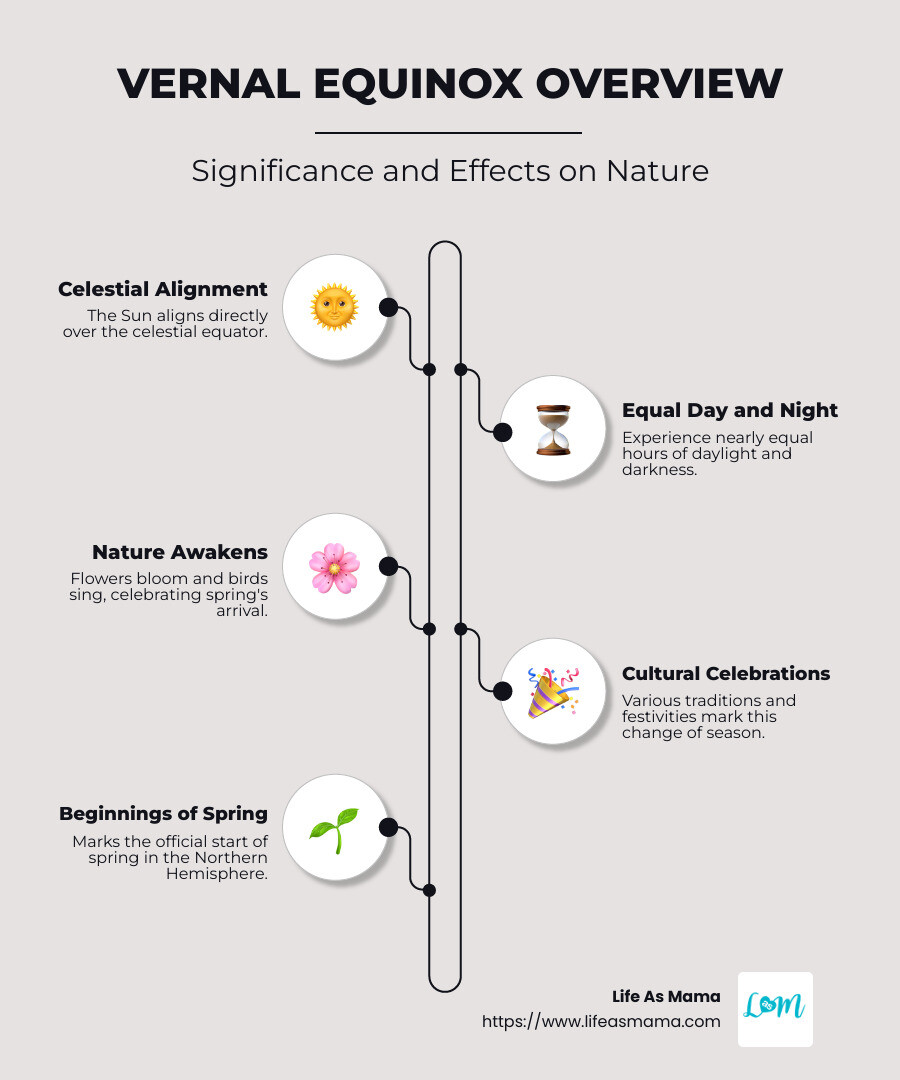
Vernal equinox marks the official beginning of spring in the Northern Hemisphere. During this time, the Sun aligns perfectly over the celestial equator, resulting in almost equal day and night. Here’s a quick rundown:
- Date: Around March 20 or 21
- Celestial Alignment: Sun directly over the celestial equator
- Day & Night: Nearly equal duration
The vernal equinox is more than an astronomical event; it signifies new beginnings and the promise of warmer days. It’s when nature awakens, bringing flowers, singing birds, and a burst of life and color to the world. People across cultures celebrate this event with various traditions and festivities, acknowledging the shift from winter’s harshness to spring’s renewal.
Greetings! I’m Amanda Schmitt, a dedicated mom and former occupational therapist. With years of diverse experience, I now bring you insights into events like the vernal equinox to help you create memorable moments for your family.
Stay with me as we dig deeper into the wonders of the vernal equinox.
What is the Vernal Equinox?
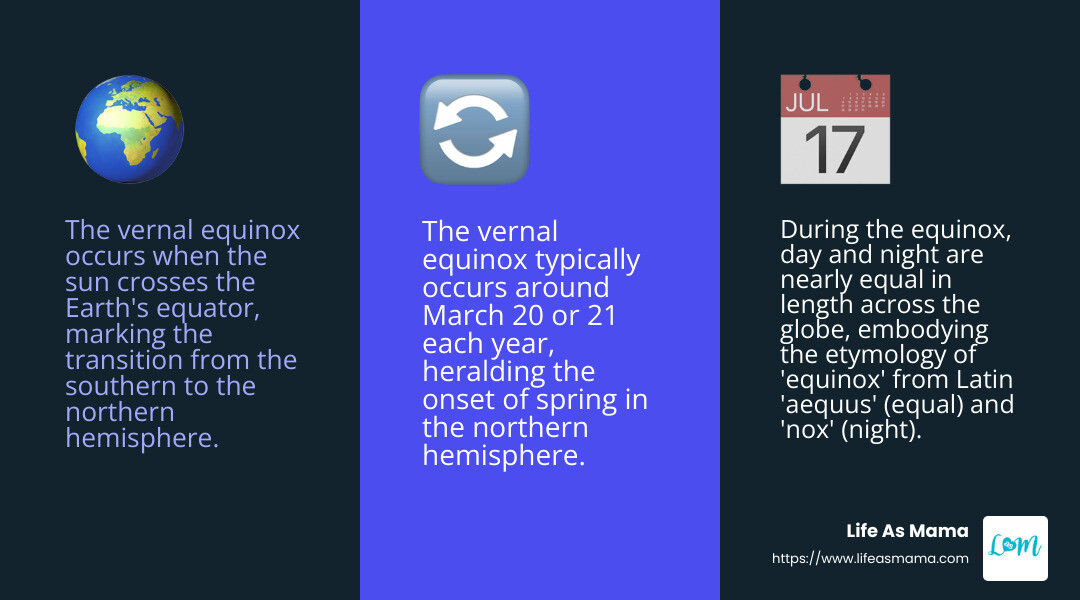
The vernal equinox is a fascinating celestial event that marks a pivotal moment in our planet’s journey around the sun. It’s when the sun crosses directly over the Earth’s equator, moving from the southern to the northern hemisphere. This crossing is significant because it results in nearly equal day and night across the globe, a balance that is deeply rooted in the term “equinox” itself, derived from the Latin words aequus (equal) and nox (night).
Sun’s Crossing and Earth’s Equator
Around March 20 or 21 each year, the sun reaches a point in the sky where it is positioned directly above the equator. This alignment is known as the celestial equator, an imaginary line that extends Earth’s equator into space. As the sun crosses this line, it signals the official start of spring in the Northern Hemisphere and autumn in the Southern Hemisphere.
Equal Day and Night
While the equinox is often celebrated for its equal day and night, it’s important to note that this balance isn’t perfect. The way we measure sunrise and sunset, which includes the time it takes for the sun to fully appear and disappear on the horizon, means that day and night aren’t exactly the same length. However, the difference is minimal enough that our ancestors perceived it as equal, and the tradition continues today.
The vernal equinox is a powerful reminder of the Earth’s tilt and orbit, which together create the changing seasons. This moment of balance heralds a time of growth and renewal, as longer daylight hours begin to warm the Earth and awaken nature from its winter slumber.
The Science Behind the Equinox
The vernal equinox is not just a day of equal sunlight and darkness; it’s a result of the Earth’s unique position and movement in space. To understand why this happens, we need to look at the Earth’s axial tilt and how it affects our seasons.
Earth’s Tilt and Axial Tilt
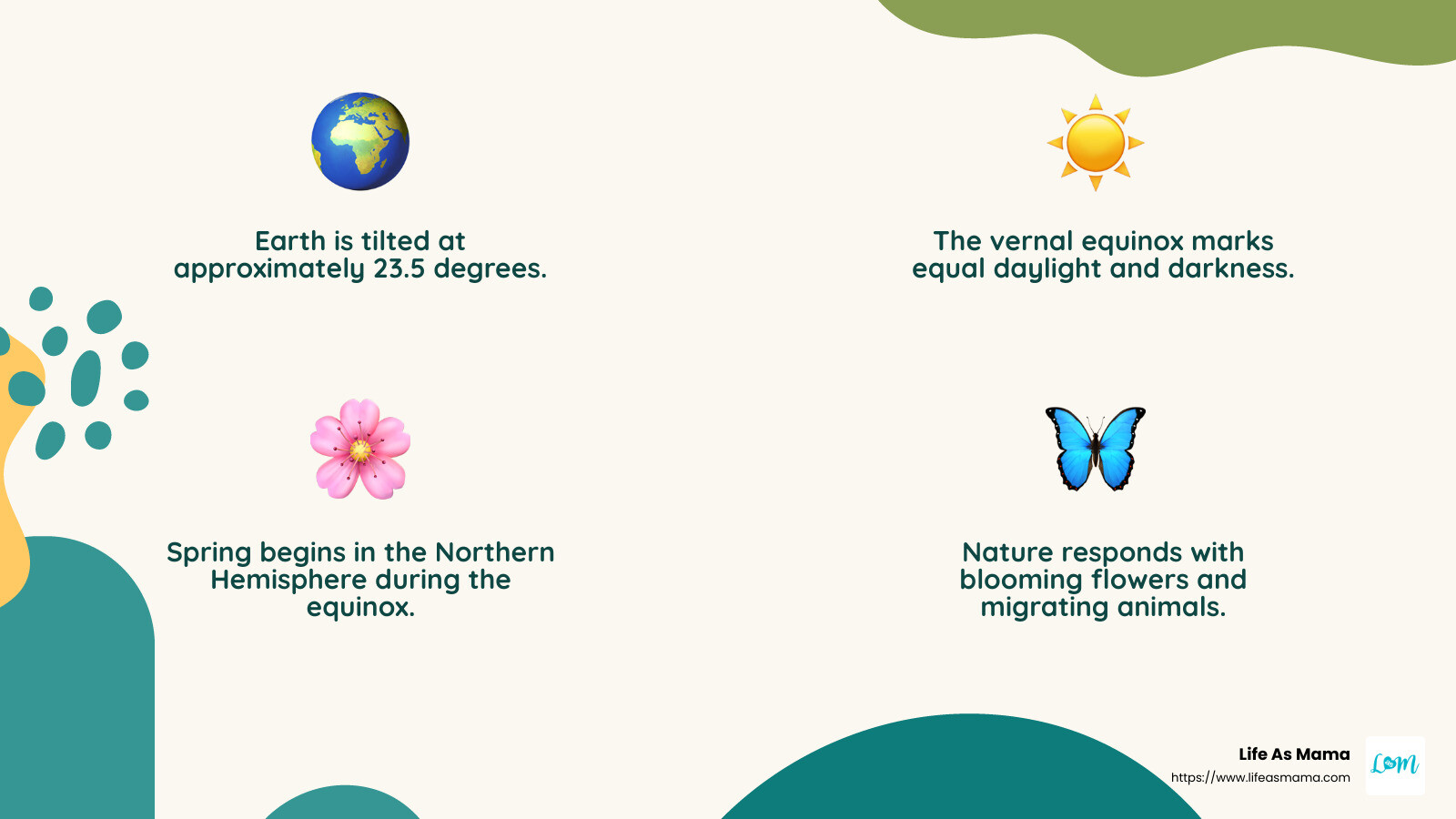
The Earth is tilted on its axis by approximately 23.5 degrees. This tilt is crucial because it means that as the Earth orbits the sun, different parts of the planet receive varying amounts of sunlight throughout the year. This tilt is what gives us our seasons, as it changes the angle and intensity of sunlight hitting different parts of the Earth.
For example, when the Northern Hemisphere is tilted toward the sun, it experiences summer, with longer days and more direct sunlight. Conversely, when it is tilted away, it experiences winter, with shorter days and less direct sunlight.
Seasonal Changes
The vernal equinox marks the transition from winter to spring in the Northern Hemisphere. During this time, the Earth’s axial tilt is such that the sun shines directly on the equator. This results in nearly equal amounts of daylight and darkness across the globe.
As the Earth continues its orbit, the Northern Hemisphere will gradually tilt more toward the sun, increasing daylight hours and bringing warmer temperatures. This change prompts nature to respond with blooming flowers, budding trees, and migrating animals. Meanwhile, in the Southern Hemisphere, the opposite occurs, with days shortening and temperatures cooling as they move toward winter.
Understanding the science behind the vernal equinox helps us appreciate the intricate dance between our planet and the sun. It’s a reminder of how the Earth’s tilt and orbit work together to create the seasons we experience and enjoy.
Vernal Equinox Effects
The vernal equinox brings noticeable changes in our daily lives, especially in terms of daylight and nature’s behavior.
Sunrise and Sunset
During the equinox, the sun rises exactly in the east and sets precisely in the west. This is a unique occurrence that happens only twice a year—during the vernal and autumnal equinoxes. The rapid transition of the sun across the sky also means we experience the fastest sunrises and sunsets of the year.
Daylight Increase
One of the most exciting effects of the vernal equinox is the noticeable increase in daylight hours. As the days lengthen, we enjoy more sunlight and the temperature gradually warms. This increase in daylight is due to the Earth’s tilt, which allows the Northern Hemisphere to receive more direct sunlight as spring progresses.
Nature’s Response
With more sunlight, nature begins to wake up from its winter slumber. In the Northern Hemisphere, plants start to sprout and flowers begin to bloom. Animals, like birds, respond by migrating northward, following the path of the sun. This time of year is also when many animals come out of hibernation, and you might notice more activity in your garden or local parks.
The vernal equinox is a time of renewal and growth. It’s when the world around us starts to come alive, offering a fresh start and a chance to enjoy the beauty of spring.
Next, we’ll dive into some common questions people have about this fascinating event.
Frequently Asked Questions about the Vernal Equinox
Is day and night equal on the equinox?
The term equinox comes from the Latin words aequus (equal) and nox (night), suggesting that day and night are of equal length. However, in reality, they’re not exactly equal. Daytime starts when any part of the sun peeks above the horizon and ends when it fully sets. Because the sun appears as a disk rather than a point and the atmosphere bends its light, the day is slightly longer than the night. This means that the day is about 14 minutes longer than the night at the equator.
Can you balance an egg on the equinox?
There’s a popular belief that you can balance a raw egg on its end during the vernal equinox. This folklore gained traction from a 1945 LIFE magazine article and is often linked to ancient Chinese traditions. While it’s true that you can balance an egg on the equinox, it’s not exclusive to that day. With patience and a rough surface, you can balance an egg any day of the year.
When does spring officially begin?
Spring in the Northern Hemisphere starts with the March equinox, also known as the astronomical spring. This event occurs when the sun crosses the celestial equator, moving from south to north. In 2025, this crossing happens at 9:01 UTC on March 20. This celestial event not only marks the official start of spring but also signals a shift in seasons across the globe.
Conclusion
At Life As Mama, we believe in making every moment special, especially when it comes to celebrating the changing seasons. The vernal equinox is more than just an astronomical event—it’s a time to accept renewal and joy with our families.
Our platform offers family-friendly guides that make it easy to enjoy the beauty of spring. Whether you’re looking to start a new garden, explore fresh recipes, or simply spend quality time outdoors, we’ve got you covered.
We provide practical celebration tips that are perfect for families. From organizing a spring picnic to crafting seasonal decorations, our guides are designed to create lasting memories. And as the days grow longer, there’s more time to enjoy these activities together.
As we welcome spring, let’s make the most of this vibrant season. Check out our spring salad recipes to kick off your culinary trips. Here’s to a joyful and rejuvenating spring with Life As Mama!
Related Images:

Amanda Schmitt
Latest posts by Amanda Schmitt (see all)
- 20+ First Day of School Traditions to Make the Day Special - August 23, 2026
- Fruit Infused Waters That Make Summer Hydration Fun - July 1, 2025
- Light Up Your Life: Home Lighting Decoration Ideas - June 30, 2025