Winter can be a challenging season for succulent owners, as cold temperatures and harsh conditions can put their plants at risk. But with the right care and protection, succulents can indeed survive winter and continue to thrive throughout the colder months.
In this comprehensive guide, we’ll explore everything you need to know about caring for your succulents during winter. From understanding their winter hardiness and assessing their survival chances to adjusting their watering and light requirements, we’ll provide you with essential tips and techniques for protecting your beloved succulents during the colder months.
Key Takeaways:
- With proper care and protection, succulents can survive winter.
- Understanding your succulent’s winter hardiness and assessing its survival chances is crucial.
- Adjusting watering and light requirements, creating the right environment, and providing insulation and shelter are all essential for protecting succulents in winter.
- Indoor succulents also require special care during the colder months.
- Choosing winter-hardy succulent varieties can be beneficial for those living in areas with harsh winters.
Understanding Succulents and Winter Hardiness
If you’ve been wondering whether succulents can survive the winter, the answer is yes, but it depends on the type of succulent and the conditions they are exposed to. Some succulents are more cold-hardy than others and can tolerate freezing temperatures, while others require more warmth. Understanding your succulents’ winter hardiness is crucial for ensuring their survival during the colder months.
Cold hardy succulents are those that can tolerate cold temperatures. These succulents have evolved to thrive in regions with harsh winters, such as mountainous areas and high altitudes. Examples of cold-hardy succulents include Sedum, Sempervivum, and Agave.
Succulents that tolerate cold temperatures are those that can survive light frosts but may need some protection from freezing temperatures. These succulents can typically withstand temperatures as low as 25-30 degrees Fahrenheit. Examples of succulents that tolerate cold temperatures include Echeveria, Kalanchoe, and Aloe.
Frost protection for succulents is essential for vulnerable succulents that cannot tolerate freezing temperatures. Frost can damage or kill succulents by freezing the moisture inside their leaves and stems. To protect your succulents from frost, you can use various methods, such as covering them with frost cloths, moving them to a sheltered area, or applying a protective spray.
Understanding Succulents and Winter Hardiness Table
| Succulent type | Winter hardiness | Examples |
|---|---|---|
| Cold hardy succulents | Can tolerate freezing temperatures | Sedum, Sempervivum, Agave |
| Succulents that tolerate cold temperatures | Can survive light frosts | Echeveria, Kalanchoe, Aloe |
By understanding your succulents’ winter hardiness and providing them with the right amount of protection, you can ensure their survival during the colder months. In the next section, we will explore how to assess your succulent’s chances of surviving winter and how to provide the necessary care and protection.
Assessing Your Succulent’s Winter Survival Chances
As winter approaches, it’s essential to assess your succulent’s ability to survive. Some succulents are more tolerant of cold temperatures than others, so it’s important to know what you’re dealing with. Here’s how to evaluate your succulent’s winter survival chances:
- Consider the type of succulent: As mentioned earlier, some succulents are more cold-hardy than others. For example, Sempervivum and Sedum varieties can survive temperatures as low as -20°F (-29°C), while Echeveria and Aloe are more sensitive to the cold. If you’re unsure about your succulent’s tolerance, consult a plant expert or do some research.
- Check for signs of stress: Look for any signs of damage or stress on your succulent, such as wilting, discoloration, or leaf drop. If your succulent is showing signs of stress, it may not survive the winter without proper care.
- Assess the growing conditions: The conditions your succulent has been growing in can affect its winter survival. If your succulent has been in poor health for a while, it may not have the strength to survive the winter. On the other hand, if your succulent has been thriving in ideal growing conditions, it’s more likely to make it through the winter.
Once you’ve assessed your succulent’s ability to survive the winter, you can take action to ensure its survival. The next section will cover essential winterizing techniques to keep your succulent healthy and happy during the colder months.
Preparing Your Succulents for Winter
Winter can be a challenging time for succulent owners, especially those who live in areas with harsh winter climates. However, proper preparation can ensure your succulents survive and thrive during the colder months. Here are some essential tips for winter care for succulents:
Move Succulents Indoors
If you’re growing outdoor succulents, consider moving them indoors to protect them from the harsh winter conditions. Indoor succulents still need proper lighting and ventilation, so place them in a bright, airy room.
Provide Adequate Lighting
During winter, succulents need more light than usual to ensure they receive the necessary nutrients for growth. Consider supplementing natural lighting with artificial light sources, such as grow lights, to ensure your plants receive adequate light.
Water Sparingly
Succulents are adapted to store water in their leaves, making them drought-tolerant plants. During winter, water your succulents sparingly to prevent overwatering and root rot. Check the soil moisture level before watering, and only water when the soil is completely dry.
Protect from Cold Temperatures
Cold hardy succulents can tolerate low temperatures, but not all succulent varieties are winter-hardy. If you’re growing succulents that are not cold-hardy, protect them from the cold with frost protection techniques such as:
- Covering plants with a frost blanket or burlap
- Moving plants under an overhang or other sheltered area
- Providing additional insulation with mulch or straw
Remember, winter care for succulents requires careful attention to their individual needs and environmental conditions. By taking these steps, you can ensure your succulents survive and thrive throughout the colder months.
Adjusting Watering and Light Requirements
As winter arrives, succulents require less water and more sunlight than during the summer months. Overwatering during winter can lead to root rot, which can be fatal to your succulents. Therefore, it’s important to adjust your watering schedule accordingly.
Typically, succulents need to be watered less frequently during winter, and the amount of water they receive should be reduced. A general rule of thumb is to water your succulents only when the soil is completely dry. As temperatures drop and the air becomes drier, this may mean watering your succulents less often than you did during the warmer months.
Additionally, because the days are shorter during winter, your succulents may need more sunlight exposure to thrive. Consider moving them closer to a window or providing artificial lighting if natural light is limited in your home.
If your succulents start to look stretched or leggy, this can be a sign that they aren’t getting enough light. To remedy this, move them to a sunnier spot or provide supplemental lighting.
Winter Watering Tips
Here are some winter watering tips to keep your succulents healthy:
| Do | Don’t |
|---|---|
| Water your succulents only when the soil is completely dry | Water your succulents on a schedule or without checking the soil first |
| Water your succulents in the morning to allow excess moisture to evaporate before temperatures drop at night | Water your succulents in the evening or at night where they will remain damp and be more susceptible to root rot |
| Use room-temperature water to avoid shocking your succulents | Use cold water straight from the tap |
By adjusting your watering and light requirements, you can help your succulents survive and thrive during winter. Stay tuned for more tips on protecting your succulents during the colder months.
Understanding Temperature and Humidity Needs
Temperature and humidity are crucial factors in determining whether your succulents will survive the winter. While most succulents are hardy to a degree, they still require specific conditions to thrive.
When winter comes, the combination of low temperatures and dry air can be problematic for succulents. Cold, dry air can sap moisture from the soil, leaving succulents vulnerable to dehydration. Sudden drops in temperature can also damage or kill succulents, especially those that are not adapted to colder climates.
To protect your succulents from the cold, it’s important to insulate them. Providing a layer of mulch or blankets around the base of the plants can help to retain heat and moisture in the soil, while also shielding the roots from the cold. You can also create a makeshift greenhouse around your succulents using plastic sheeting or even an upside-down cardboard box.
Humidity is also crucial to succulent health. While succulents are adapted to survive in dry environments, they still require some level of humidity. Dry winter air can make it difficult for succulents to retain moisture, leading to dehydration and other health problems.
To increase humidity levels around your succulents, you can create a humidifying tray by filling a shallow dish with water and placing it nearby. As the water evaporates, it will increase the moisture level in the air, benefiting your succulents. You can also mist your succulents with water, especially during periods of low humidity.
Protecting Succulents from Frost
Frost is a serious threat to succulents during the winter months. Frost can damage or even kill succulents, especially those that are not adapted to colder climates. To protect your succulents from frost, you can:
- Cover them with frost blankets or burlap when frost is expected.
- Move them to a sheltered location, like a covered porch or garage.
- Water them on sunny days so that they can store up more moisture. This extra moisture can help protect them from frost damage.
Protecting your succulents from cold temperatures, low humidity, and frost can be challenging, but it’s important to take steps to ensure their survival. With proper care and attention, your succulents can thrive even in the colder months.
Essential Techniques for Insulating Succulents During Winter
Insulation and sheltering are crucial for safeguarding outdoor succulents from harsh winter conditions. With the right techniques, you can protect your succulents from frost, wind, and freezing temperatures.
Creating Insulation
Insulating your succulents is essential for protecting them from the cold. You can use a variety of materials to create insulation, including:
| Materials | Pros | Cons |
|---|---|---|
| Blankets and old sheets | Cheap and easy to find | Can get wet and heavy, need to be removed during the day to avoid overheating |
| Bubble wrap | Lightweight and easy to wrap around plants | Can be costly if you have many plants to insulate |
| Straw or hay | Natural and biodegradable | Can attract pests like rodents if used in large quantities |
When creating insulation, make sure to wrap the material tightly around the plant, covering as much of the soil as possible. You can also use stakes or hoops to create a frame around the plant and drape the insulation over it.
Providing Shelter
In addition to insulation, providing shelter can protect succulents from harsh winter winds. Here are some ways to provide shelter:
- Plant succulents near a south-facing wall or fence, which can provide some insulation and protection from the wind.
- Use a portable greenhouse or cold frame to shield succulents from the elements.
- Create a windbreak using a tarp or burlap to shield your plants from strong winds.
It’s important to remember that while shelter can protect succulents from wind and snow, it can also limit their exposure to sunlight. Be sure to monitor their light and water needs to avoid overwatering or underwatering.
Using Frost Protection
Frost can be especially damaging to succulents, causing them to rot or freeze. Here are some techniques to protect your succulents from frost:
- Use frost cloth or blankets to cover your plants during periods of frost.
- Water your plants a few days before the frost is expected. Plants that are well-hydrated are less likely to freeze.
- Apply a layer of mulch around the base of your plants to insulate them from the cold.
Remember to remove the frost protection during the day to allow the plants to receive sunlight and air circulation.
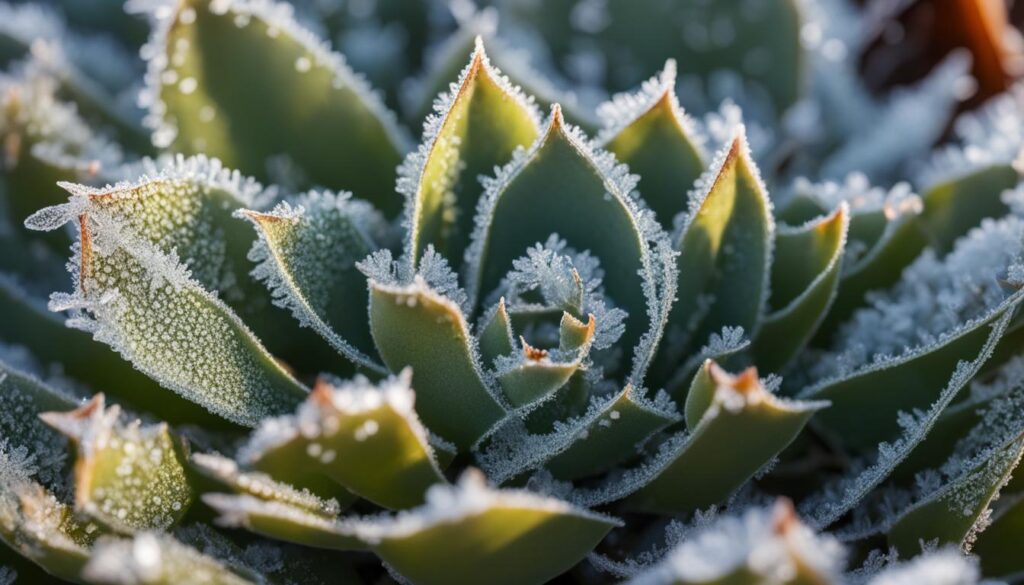
With the right techniques, you can protect your succulents from harsh winter conditions. By creating insulation, providing shelter, and using frost protection, you can ensure your plants survive the winter and thrive in the spring.
Indoor Winter Care for Succulents
If you’re keeping your succulents indoors during winter, they still require specialized care. Keep the following tips in mind:
- Adjust watering: During winter, succulents should be watered less frequently than during the growing season. Ensure the soil is completely dry before watering. Use a moisture meter to determine soil moisture levels.
- Provide adequate lighting: Succulents require bright, indirect light to thrive. During winter, they may not receive enough light from natural sources, so supplement with artificial light sources like grow lights.
- Regulate temperature: Succulents prefer temperatures between 60 and 75°F. Ensure they are not placed near drafty windows or doors that can cause temperature fluctuations.
- Monitor humidity levels: Indoor environments tend to be drier during winter due to heating systems. Consider using a humidifier to maintain humidity levels.
By following these tips, you can ensure your indoor succulents survive and thrive during winter.
Common Winter Problems for Succulents
Winter can prove to be a challenging season for succulent owners. Although these plants are known for their ability to thrive in extreme weather conditions, succulents can still fall prey to several issues during winter. Learning how to protect your succulents in winter is crucial to keeping them healthy. Here are some common winter problems for succulents and how to address them:
1. Overwatering
Overwatering is one of the most common issues that arise during winter. With less sunlight and cooler temperatures, succulents enter a dormant period and require less water. Overwatering can lead to root rot, which can be fatal for your succulents. To avoid this, reduce your watering frequency during winter and only water when the soil is completely dry.
2. Frost Damage
Frost can cause severe damage to your succulents during winter. When the temperature drops below freezing, ice crystals form inside the plant cells, causing them to burst. To prevent frost damage, provide your succulents with adequate insulation. Cover them with a frost cloth or blanket and move them indoors if necessary.
3. Pests and Diseases
Pests and diseases can also pose a threat to your succulents during winter. Insects like mealybugs and spider mites thrive in warm, humid conditions and can quickly infest your plants. To prevent pest infestations, keep your succulents clean and dry, and avoid overcrowding them. If you notice signs of pest or disease, isolate the affected plants and treat them with a suitable insecticide or fungicide.
4. Lack of Sunlight
During winter, succulents receive less sunlight, which can cause them to become leggy or elongated. This happens when the plant stretches to reach the available light source. To prevent this, move your succulents to a sunnier location or supplement their light with a grow lamp.
5. Temperature Fluctuations
Temperature fluctuations can also pose a challenge to your succulents during winter. Drastic changes in temperature can cause stress and damage to the plant. To avoid this, keep your succulents in a stable environment with consistent temperatures.
By addressing these common winter problems, you can keep your succulents healthy and thriving throughout the colder months.
Choosing Winter-Hardy Succulent Varieties
If you live in an area with harsh winters, it’s crucial to select cold-hardy succulent varieties that can survive the colder temperatures. These hardy succulents can tolerate cold temperatures and frost, making them ideal for gardeners who want to grow succulents year-round.
Some of the best cold-hardy succulent varieties that can withstand winter weather conditions include:
| Succulent Variety | Tolerance to Cold Temperatures |
|---|---|
| Sempervivum (Hens and Chicks) | Able to survive freezing temperatures down to -20°F |
| Sedum (Stonecrop) | Can tolerate temperatures as low as -30°F |
| Agave | Cold-hardy species can survive temperatures down to 10°F |
| Yucca | Some cold-hardy varieties can tolerate temperatures as low as -20°F |
When selecting winter-hardy succulent varieties, it’s essential to keep in mind the specific temperatures and weather conditions of your area.
Choosing hardy succulent varieties is not only crucial for outdoor gardening but also for indoor plants that may be exposed to colder temperatures if placed near windows or doors.
By selecting the right cold-hardy succulent varieties, you can ensure your plants survive winter and continue to thrive throughout the year.
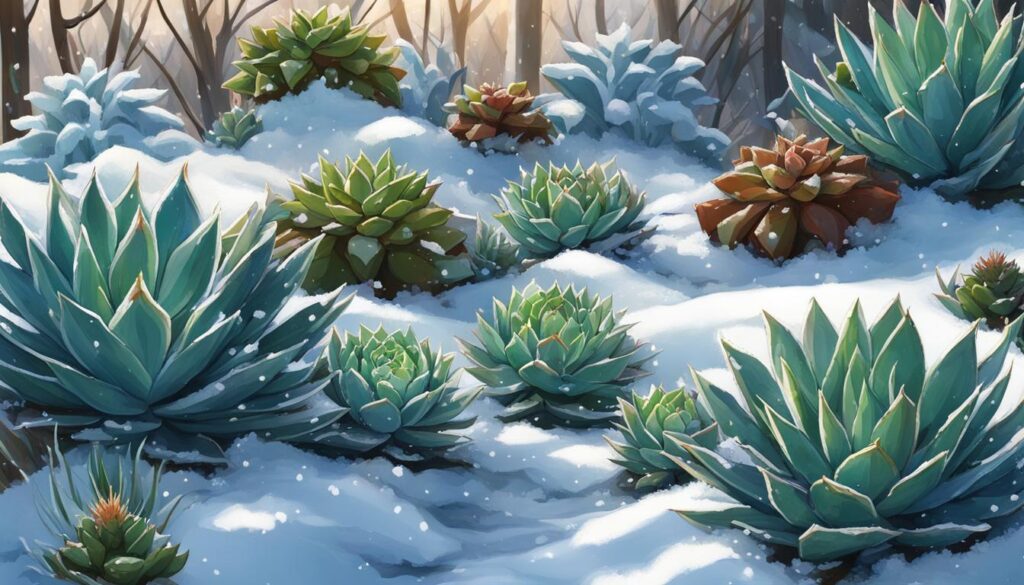
Seasonal Transitions: Preparing for Spring
As the winter season draws to a close, it’s time to start thinking about how to transition your succulents back to their regular care routines.
Firstly, it’s important to gradually increase watering as the temperatures start to rise. Begin by watering your succulents once a week and gradually increase the frequency as the weather warms up.
Next, it’s time to remove any insulation or sheltering you provided during the colder months. Take care when removing any materials so as not to damage your succulents.
As you remove the winter protection, it’s also a good time to check for any damage caused by the winter weather. Look for signs of frost damage, such as discolored leaves, and trim away any dead or damaged parts of the plant.
If you kept your succulents indoors during winter, now is the time to transition them back outside. Start by moving them to a shaded or partially shaded area before gradually increasing the amount of sunlight they receive each day.
Remember to acclimate your succulents slowly to avoid shock, by moving them outside for a few hours a day initially, then gradually increasing the duration of their time outside.
By providing the right care and attention, you can ensure your succulents thrive during the transition from winter to spring.
Conclusion
In conclusion, succulents can indeed survive winter with proper care and protection. By understanding their needs, selecting winter-hardy varieties, assessing their chances of survival, and providing adequate insulation, watering, and light, you can ensure your succulents’ health and longevity throughout the colder months.
It’s essential to address common winter problems promptly and transition your succulents back to their typical care routines as spring approaches. Whether you keep your succulents indoors or outdoors, our go-to seasonal guide provides all the information you need to keep them thriving even in winter.
FAQ
Can succulents survive winter?
Yes, with proper care and protection, succulents can survive winter.
What are some winter care tips for succulents?
To care for succulents during winter, adjust watering and light requirements, provide adequate insulation, and shelter them from harsh conditions.
How do I protect succulents in winter?
Protect succulents in winter by adjusting their care routine, providing insulation, and shielding them from frost and extreme cold.
How do I assess my succulent’s chances of survival in winter?
Before winter arrives, assess your succulent’s ability to survive by considering its hardiness, age, and overall health.
How do I prepare my succulents for winter?
Prepare succulents for winter by gradually reducing watering, relocating them to a sheltered area, and ensuring proper insulation.
How do I adjust watering and light requirements for succulents during winter?
During winter, water succulents less frequently and provide them with bright, indirect light to meet their seasonal needs.
What temperature and humidity do succulents need in winter?
Succulents generally prefer temperatures between 50-60°F (10-15°C) and lower humidity levels during winter.
How do I properly insulate and shelter my succulents in winter?
Insulate and shelter outdoor succulents by using protective coverings, creating windbreaks, and providing additional heat sources if necessary.
How do I care for succulents indoors during winter?
Indoors, provide succulents with bright, indirect light, maintain proper humidity levels, and avoid overwatering during winter.
What are common winter problems for succulents and how can I address them?
Common winter problems for succulents include overwatering, frost damage, and pest infestations. Address these by adjusting care routines, providing proper insulation, and promptly treating pests.
What are some cold-hardy succulent varieties that can tolerate winter?
Cold-hardy succulent varieties include sedum, sempervivum, and hens and chicks (Echeveria).
How do I transition my succulents from winter to spring?
Transition succulents from winter to spring by gradually increasing watering, reintroducing direct sunlight, and preparing them for new growth.
Related Images:

Amanda Schmitt
Latest posts by Amanda Schmitt (see all)
- Healthy and Quick Back to School Breakfast Ideas - August 27, 2026
- 20 DIY Easter Centerpieces That Aren’t Just for Kids - October 9, 2025
- 18 Adult Birthday Party Themes for a Sophisticated Celebration - October 3, 2025