At Home Balance Exercises: Top 5 Essential Tips 2025
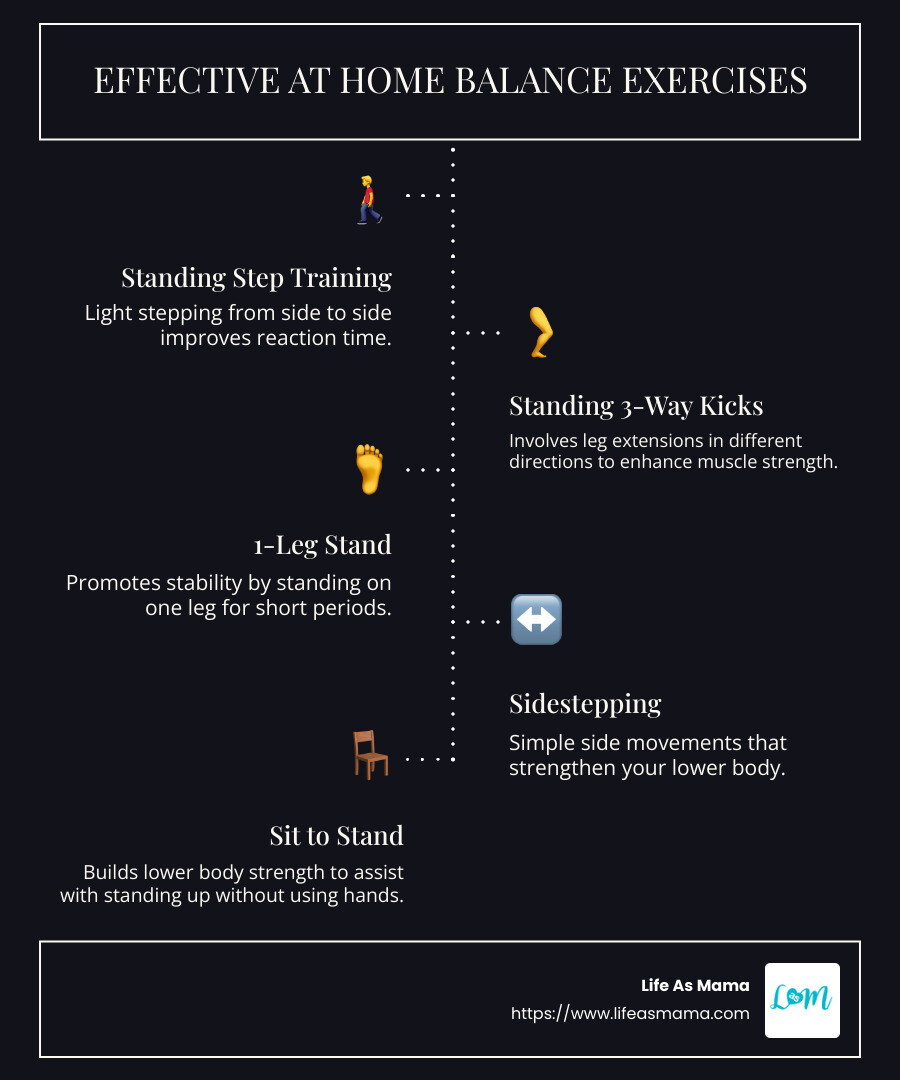
At home balance exercises are crucial for maintaining stability and preventing falls, especially as we age. These exercises help boost your balance, keep you steady, and improve your independence in day-to-day activities. Here’s a quick look at some effective exercises you can do at home:
- Standing Step Training: Light stepping from side to side improves reaction time.
- Standing 3-Way Kicks: Involves leg extensions in different directions to improve muscle strength.
- 1-Leg Stand: Promotes stability by standing on one leg for short periods.
- Sidestepping: Simple side movements that strengthen your lower body.
- Sit to Stand: Builds lower body strength to assist with standing up without using hands.
Balancing effectively is essential to prevent falls, a common concern for older adults that often results in injuries or even a loss of independence. According to the CDC, fall-related injuries send over 3 million seniors to the ER each year, costing approximately $35,000 per fall. Thankfully, these injuries can be prevented by working on your balance.
As Amanda Schmitt, a former Occupational Therapist with over 13 years of experience, I’m here to guide you on this journey to better balance. Stay with me as we explore how “at home balance exercises” can make your daily life safer and more independent.
At home balance exercises terms to know:
– 7 exercises to do everyday at home
– 10 simple exercises to lose weight at home
– 15 minute cardio workout at home
Benefits of At Home Balance Exercises
At home balance exercises offer a host of benefits that go beyond just preventing falls. They are essential for improving stability, mobility, flexibility, coordination, and strength. Let’s break down how these exercises can make a difference in your life.
Stability
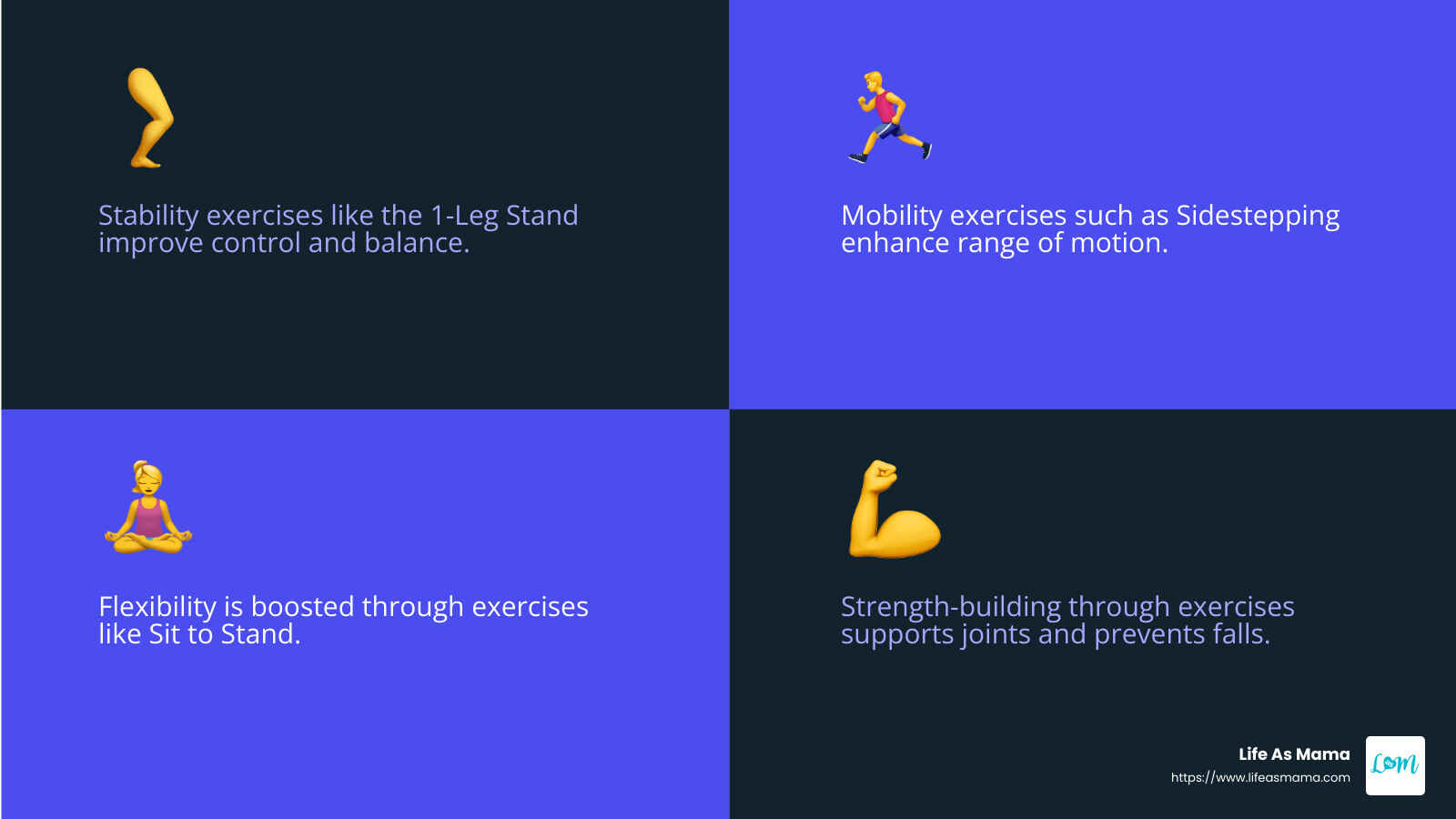
Stability is your body’s ability to maintain control while standing or moving. Think of it as your internal balance system. Regularly practicing balance exercises, like the Standing 3-Way Kicks or 1-Leg Stand, can significantly improve your stability. This is crucial for day-to-day activities, such as walking up stairs or navigating uneven surfaces.
Mobility
Mobility refers to the freedom of movement in your joints and muscles. Exercises like Sidestepping and Standing Step Training help increase your range of motion, making it easier to perform activities like bending and reaching. Improved mobility can lead to a more active lifestyle and reduce the risk of joint stiffness.
Flexibility
Flexibility is about how easily your muscles can stretch. It plays a big role in preventing injuries. Balance exercises often involve stretching and holding positions, which can improve your flexibility over time. For instance, doing a Sit to Stand not only strengthens your legs but also stretches your muscles, keeping them supple and ready for action.
Coordination
Coordination is the ability to move different parts of your body smoothly and efficiently. Exercises like the Standing 3-Way Kicks challenge your coordination by requiring your brain and body to work together. Improved coordination can improve your performance in sports and daily tasks, making movements more fluid and less awkward.
Strength
Strength is the foundation of all physical activities. Balance exercises help build muscle strength, particularly in your core and lower body. Strong muscles support your joints and improve your overall balance. For example, the Sit to Stand exercise targets your leg muscles, which are vital for maintaining balance and preventing falls.
Incorporating these at home balance exercises into your routine can lead to a more active, independent, and safer lifestyle. They not only help prevent falls but also contribute to your overall well-being by enhancing your physical capabilities.
Up next, we’ll dive into some essential exercises you can try at home to start reaping these benefits.
Essential At Home Balance Exercises
Let’s explore some at home balance exercises that are simple yet effective. These exercises are designed to improve your stability, coordination, and overall balance. You don’t need fancy equipment—just a bit of space and commitment.
Weight Shifts
Weight shifts are a great starting point for balance training.
- Stand with your feet hip-width apart.
- Slowly shift your weight onto your right foot, lifting your left foot slightly off the floor.
- Hold for a few seconds, then shift your weight back to the left foot.
Repeat this 10 times on each side. This exercise helps improve your body’s ability to maintain stability while moving.
Single-Leg Balance
This exercise challenges your balance and strengthens your leg muscles.
- Stand tall and lift your right foot off the ground.
- Hold this position for as long as you can, aiming for 10 seconds.
- Switch to your left foot and repeat.
To increase difficulty, try closing your eyes or holding the position for longer.
Tai Chi
Tai Chi is a gentle form of exercise that combines slow, flowing movements with deep breathing.
- Start in a standing position with your feet shoulder-width apart.
- Slowly shift your weight from one foot to the other while moving your arms in a circular motion.
Practicing Tai Chi regularly can improve balance, flexibility, and mental focus.
Sit-to-Stand
This exercise strengthens your legs and improves your ability to stand up from a seated position.
- Sit on a sturdy chair with your feet flat on the floor.
- Lean slightly forward and stand up without using your hands.
- Slowly sit back down.
Aim for 10 repetitions. This exercise is particularly beneficial for seniors, helping them maintain independence.
Heel-to-Toe Walk
Heel-to-toe walking improves your balance by challenging your body’s stability.
- Stand with your feet together.
- Step forward by placing the heel of one foot directly in front of the toes of the other foot.
- Continue walking in a straight line for 10 steps.
Keep your eyes fixed ahead and your posture tall. This exercise mimics the natural walking motion and is great for improving overall balance.
Incorporating these exercises into your routine can make a noticeable difference in your balance and coordination. They are simple yet effective ways to stay steady and confident in your daily activities.
Next, we’ll explore some advanced balance exercises you can try at home to further challenge your skills.
Advanced Balance Exercises for Home
Once you’ve mastered the basics, it’s time to take your balance training up a notch. These advanced at home balance exercises are designed to further improve your stability, coordination, and strength.
Bicep Curls for Balance
Combining strength training with balance exercises can be highly effective. Bicep curls for balance not only strengthen your upper body but also improve your lower body stability.
- Stand with your feet hip-width apart, holding a dumbbell in each hand.
- Slowly perform a bicep curl while balancing on one leg.
- Hold the position for a few seconds before switching legs.
Repeat 10 times on each leg. This exercise challenges your balance while working your arm muscles.
Standing Step Training
This exercise improves your reaction time and balance by simulating stepping in various directions.
- Imagine a clock face on the floor.
- Stand in the center and step to the 12, 3, 6, and 9 o’clock positions.
- Return to the center after each step.
Have a friend call out random clock positions to increase the challenge. This exercise helps improve agility and quickness.
Standing 3-Way Kicks
Standing 3-way kicks target multiple muscle groups while enhancing balance.
- Stand on one leg with a soft knee.
- Extend the other leg forward, then to the side, and finally behind you.
- Return to the starting position after each kick.
Perform as many repetitions as comfortable, then switch legs. This exercise builds strength and stability.
Sidestepping
Sidestepping is a dynamic exercise that improves lateral movement and balance.
- Stand with your feet together near a wall or countertop for support.
- Step to the side with one foot, followed by the other.
- Continue sidestepping in one direction, then reverse.
Add a resistance band around your thighs for extra challenge. This exercise improves your ability to maintain balance during side-to-side movements.
Incorporating these advanced exercises into your routine can significantly boost your balance skills. They offer a fun and challenging way to stay agile and strong, ensuring you remain steady in all your daily activities.
Up next, we’ll discuss important safety tips for practicing balance exercises at home.
Tips for Safe Balance Training at Home
Staying safe while practicing at home balance exercises is crucial. Here are some simple tips to help you train safely and effectively.
Support Surfaces
Always perform balance exercises near a stable surface. A wall, countertop, or sturdy chair can provide the support you need if you feel unsteady. This is particularly important for beginners or those with mobility issues. Safety first!
Gradual Progression
Start slow and gradually increase the difficulty of your exercises. Begin with basic movements and, as your balance improves, incorporate more challenging exercises. This gradual progression helps prevent injuries and builds confidence.
Proper Form
Maintaining proper form is key to effective balance training. Focus on your posture and alignment during each exercise. Keep your movements controlled and deliberate. This not only ensures safety but also maximizes the benefits of your workout.
Healthcare Consultation
Before starting any new exercise routine, it’s wise to consult with a healthcare provider. They can assess your current fitness level and recommend exercises that are safe and suitable for you. This is especially important for seniors and individuals with existing health conditions.
By following these tips, you can safely enjoy the benefits of balance exercises at home. Up next, we’ll answer some frequently asked questions to help you further understand how balance training can improve your daily life.
Frequently Asked Questions about At Home Balance Exercises
How can I train my balance at home?
Training your balance at home is easier than you might think. Start with simple exercises like weight shifts and single-leg balance. These exercises require no equipment and can be done almost anywhere in your home. For a more structured routine, consider incorporating tai chi or yoga, which are excellent for improving both balance and flexibility.
Physical activity is key. Regular activities like walking or stair climbing also contribute to better balance. Try to integrate these into your daily routine. If you want to add a bit of strength training, use light weights or resistance bands during exercises to challenge your balance further.
Do balance exercises really work?
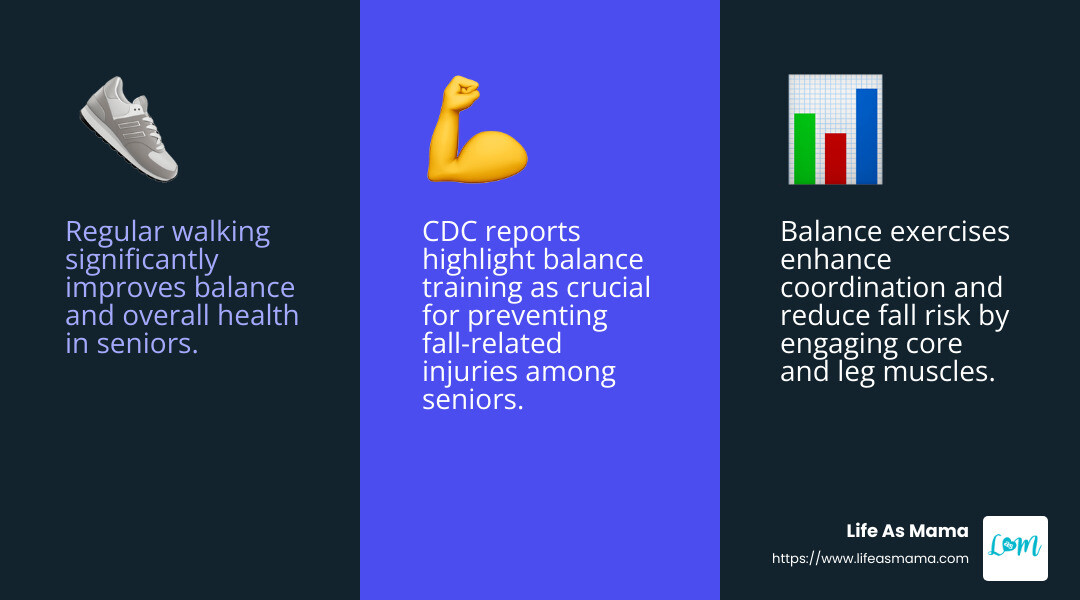
Yes, balance exercises are effective. Research shows that regular balance training can significantly improve stability and reduce the risk of falls, especially in older adults. A 2020 report by the Centers for Disease Control and Prevention highlights the importance of balance exercises in preventing fall-related injuries among seniors.
Balance exercises work by engaging your core and leg muscles, improving coordination, and enhancing proprioception (your body’s ability to sense movement and position). They help you stay steady and confident on your feet, making daily activities easier and safer.
What is the number one exercise to increase balance in seniors?
Walking is often considered the best exercise to improve balance in seniors. It’s simple, accessible, and offers multiple health benefits. Walking strengthens leg muscles, improves cardiovascular health, and boosts overall stability.
If you’re looking for variety, biking and stair climbing are also excellent options. These activities not only improve balance but also increase strength and endurance. For seniors, incorporating these exercises into a regular routine can lead to significant improvements in balance and overall well-being.
By understanding these exercises and their benefits, you can create a balanced routine that suits your lifestyle and fitness level. Up next, we’ll dive into some concluding thoughts and practical tips to keep you steady and strong.
Conclusion: Key Takeaways for Effective At-Home Balance Exercises
At Life As Mama, we believe that family-friendly guides and practical tips can make a significant difference in your daily life. Our focus is on providing content that is not only easy to follow but also beneficial for your overall well-being.
At home balance exercises are a perfect example of this. They’re simple yet effective, offering a way to improve your stability, mobility, and strength right from the comfort of your home. These exercises are not just for fitness enthusiasts; they are suitable for everyone, including seniors who are looking to improve their balance and prevent falls.
Incorporating balance exercises into your routine doesn’t require fancy equipment or a gym membership. With a little guidance and consistency, you can achieve noticeable improvements in your coordination and confidence. Whether you’re trying out a heel-to-toe walk or practicing standing step training, each exercise is a step toward a healthier, more balanced life.
We encourage you to explore our 6-day home workout schedule for maximum fitness. It’s designed to fit into your lifestyle, offering a balanced mix of exercises that cater to all fitness levels.
Staying steady is not just about physical balance; it’s about finding harmony in all aspects of life. Let’s accept these practical tips and guides to make every day a little more balanced and joyful.
Related Images:

Amanda Schmitt
Latest posts by Amanda Schmitt (see all)
- 20+ First Day of School Traditions to Make the Day Special - August 23, 2026
- Fruit Infused Waters That Make Summer Hydration Fun - July 1, 2025
- Light Up Your Life: Home Lighting Decoration Ideas - June 30, 2025