decorate your home ideas: 10 Powerful Trends for 2025
Transform Your Space: Simple Ideas for a Beautiful Home
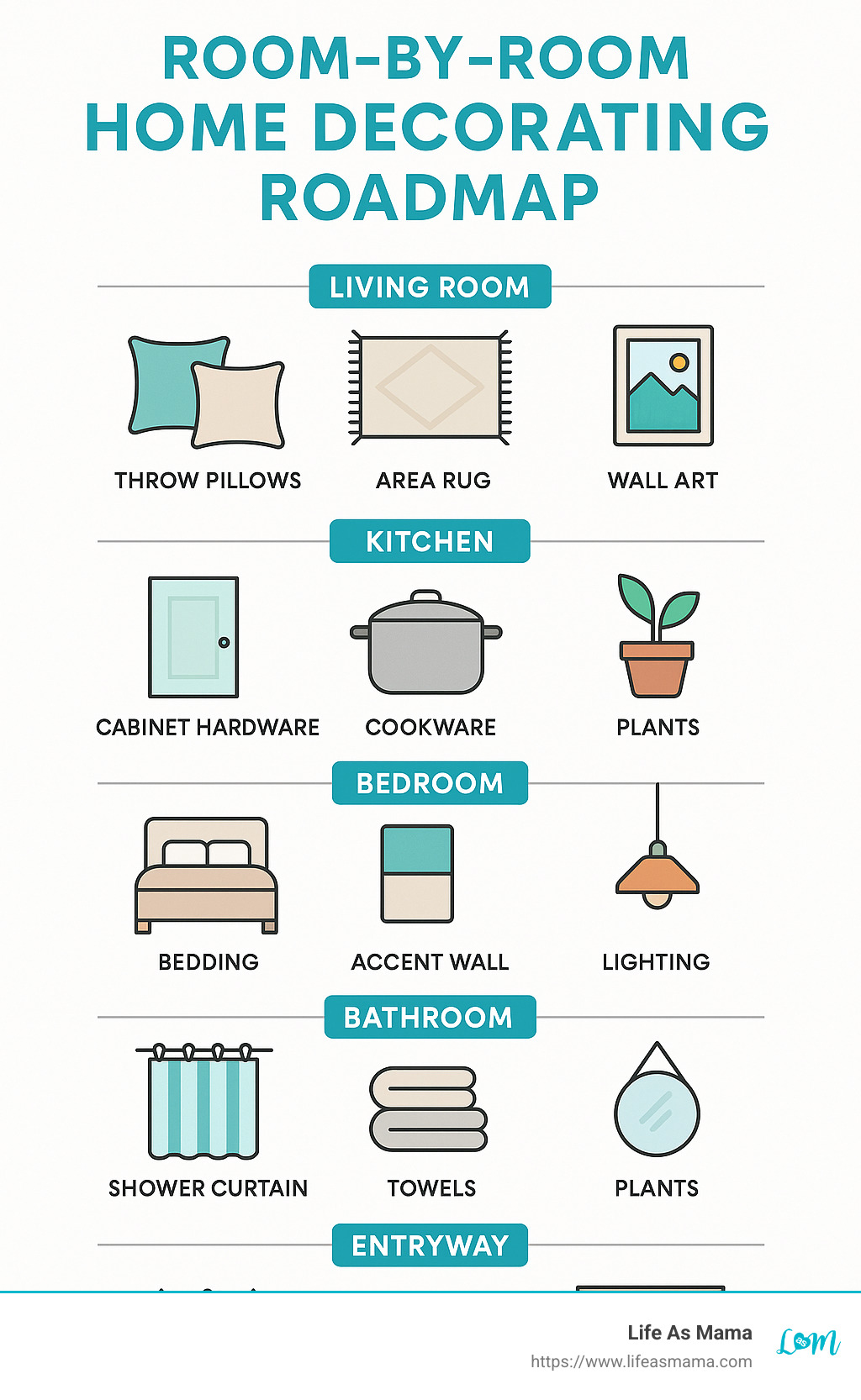
Decorate your home ideas don’t have to be complex or expensive. Here’s a quick guide to refreshing your space:
- Living Room: Add throw pillows, a new area rug, and wall art
- Kitchen: Update cabinet hardware, display colorful cookware, add plants
- Bedroom: Invest in quality bedding, create a focal wall, use layered lighting
- Bathroom: Replace shower curtain, add coordinated towels, incorporate small plants
- Entryway: Install hooks or a bench, add a mirror, create a drop zone
Many homeowners feel overwhelmed when thinking about redecorating, but breaking it down room by room makes the process manageable and fun. Your home should tell your unique story through thoughtful details and personal touches.
I’m Amanda Schmitt, a former Occupational Therapist who now dedicates my time to family and helping others create functional, beautiful spaces with practical decorate your home ideas that work for busy households with children.
Decorate your home ideas terms to remember:
– area rug design tips
– entryway design tips
– fireplace design tips
2025 Decorate Your Home Ideas: Trends & Style Fusion
Looking ahead to 2025, home decorating is taking a delightful turn toward spaces that truly reflect who we are. Gone are the days of cookie-cutter rooms from catalogs! According to HGTV, “Bookshelf Wealth” is leading the charge – where your book collection and personal treasures become the stars of your shelves, rather than minimalist objects that say nothing about you.
“The essence of home decoration in 2025 is celebrating what you love and displaying it proudly,” says interior designer Rita Konig. “It’s less about following trends and more about curating spaces that tell your story.”
A recent survey found that 65% of homeowners plan to refresh their living rooms this year, focusing mainly on color and lighting. We’re all craving spaces that feel both updated and deeply personal!
The most exciting decorate your home ideas emerging for 2025 blend comfort, personality, and sustainability. Layered rugs are having a major moment, with HGTV reporting a 30% jump in searches for “how to layer rugs” as we all seek to add depth and coziness underfoot. Dopamine colors – those bright, mood-boosting hues – are making a splashy comeback after years of neutral overload.
Sustainable furniture is finally becoming mainstream rather than a specialty niche, with beautiful pieces made from recycled or responsibly sourced materials. For science-backed information on eco-friendly fabrics that are both beautiful and better for the planet, check out Coyuchi’s research.
The vintage-modern mix continues to gain popularity, with over half of designers now recommending at least one antique piece in every room. Meanwhile, smart-home tech is evolving to blend seamlessly with our decor rather than announcing itself loudly.
Modern Meets Vintage: decorate your home ideas in 2025
The most interesting homes in 2025 will masterfully balance old and new elements. This approach isn’t just visually appealing—it’s sustainable and creates spaces with genuine soul and character.
“To me the relationship between art and interiors is a dance,” notes Rita Konig, “one that should be more Fred and Ginger than either Tom and Jerry or Gilbert and George.”
Try introducing a statement antique into an otherwise contemporary space – perhaps your grandmother’s buffet alongside a sleek sofa. One homeowner, Melissa from Chicago, did exactly this: “The contrast makes both pieces stand out,” she explains. “And there’s something special about having a piece with family history in a room where we make new memories.”
Retro lighting offers another way to blend eras – a vintage table lamp or mid-century pendant can anchor a modern room with character while providing essential function. Look for pieces with sleek lines but mix materials freely: pair that streamlined sofa with a natural wood coffee table or brass accents for wonderful tension between time periods.
Consider updating vintage pieces for the best of both worlds – that Victorian chair reupholstered in a bold, contemporary fabric creates conversation and unique style no catalog can replicate.
Color Comeback: decorate your home ideas with bold palettes
After years dominated by grays and beiges, color is making a dramatic return! HGTV Magazine editors highlighted over 135 favorite paint shades for 2025, showing just how diverse our color appetites have become.
“If neutrals don’t make you happy, don’t use them,” advises designer Alex Hitz. “Accept a head-to-toe bold palette if that’s what brings you joy.”
Tomato-red is emerging as a favorite – this warm, energizing shade works beautifully as an accent wall or through smaller doses in accessories and artwork. Coastal-blues from navy to aquamarine create serene backdrops while adding visual interest. Earthy-browns in rich chocolate and caramel tones add warmth and groundedness, while moody greens connect us to nature while adding sophistication.
For those feeling color-shy, start small! A few new throw pillows, a painted side table, or vibrant artwork lets you experiment before committing to larger changes. The beauty of color is that it’s relatively easy to update as your confidence (and preferences) evolve.
Your home should make YOU happy when you walk through the door. In 2025, the best decorate your home ideas will be the ones that bring you joy and reflect your unique personality – no matter what’s trending on social media!
Color, Patterns & Texture Mastery
Walking into a beautifully decorated home isn’t just about pretty furniture—it’s about how colors play together, patterns dance across surfaces, and textures invite you to reach out and touch. These elements are the secret sauce that transforms a house from “nice” to “wow, I love being here!”
When I first started experimenting with decorate your home ideas, I was terrified of getting color wrong. But here’s what I’ve learned: colors affect us emotionally. Those warm reds, oranges, and yellows? They’re like a cup of coffee for your space—energizing and stimulating. Cool blues, greens, and purples tend to whisper “relax” instead of shouting “let’s party!”

Before you grab those paint samples, take a moment to think about:
Room function makes all the difference. A bedroom needs different energy than a kitchen where you start your day. Natural light changes everything—northern exposure rooms often feel colder, so warming them up with color makes sense. And don’t forget about room size—lighter colors expand, darker ones create cozy intimacy. Most importantly, work with what you’ve got—those existing elements like flooring and cabinets aren’t going anywhere without a bigger budget!
As for texture? It’s like seasoning for your room. Interior designer Jeremiah Brent puts it perfectly: “Every room needs different textures to feel complete. Without texture variation, even the most beautiful color scheme can fall flat.” Think smooth silk pillows against a nubby wool throw, or glossy ceramics atop a matte wooden table.
Picking Your Perfect Palette
If color wheels make your head spin, you’re not alone! The good news is that creating a beautiful palette doesn’t require an art degree—just a little structure and some trust in your own preferences.
The 60-30-10 rule is your new best friend. Think of it like putting together an outfit: 60% is your “base” (walls, large furniture pieces), 30% is your “clothing” (accent furniture, curtains), and 10% is your “jewelry” (accessories that pop). This simple framework helps create balance without overthinking.
“Start with colors you naturally gravitate toward,” suggests color consultant Maria Killam, and I couldn’t agree more. Open your closet—the colors you wear are often ones you’ll enjoy living with too. Our homes should make us happy, not just impress visitors!
When Sarah from Portland wrote to us about her living room makeover, she shared a brilliant starting point: “I found this vintage rug with terracotta, navy, and cream, and pulled my entire color scheme from there. Now everything feels connected because it all references this one piece I truly love.” Inspiration can come from anywhere—a favorite painting, a piece of pottery, or even a photograph from a cherished vacation.
Before committing to a whole room of color, always test paint on different walls and check it throughout the day. What looks perfect at 10 AM might feel completely different by evening lamplight. And remember that your home is a journey through connected spaces—colors should flow from room to room, even as each space maintains its own personality.
Mixing Patterns Like a Pro
Pattern mixing strikes fear into many homeowners’ hearts, but it’s actually one of the most playful aspects of creating a home you love. Think of it like cooking—there are some basic principles, but then you get to add your own creative flair.
The secret to successful pattern mixing lies in creating conversation, not competition. When patterns vary in scale—like pairing wide stripes with tiny florals—they complement rather than fight each other. Finding patterns that share at least one color creates an instant connection, while mixing different types (geometric with organic shapes) creates dynamic interest.
Textile designer John Robshaw explains it beautifully: “Pattern mixing works best when there’s a deliberate approach. Think of it like composing music—you need harmony, rhythm, and occasional moments of surprise.”
Some combinations never fail: stripes with florals (just vary their sizes), geometric prints with abstract designs, and treating animal prints as neutrals alongside bolder patterns. And always include solid colors as visual resting places—they’re like the pauses in a great conversation.
If you’re still feeling uncertain about mixing patterns, start small with pillows or accessories that can be easily swapped. The beauty of decorate your home ideas is that they can evolve as your confidence grows. Check out these Area Rug Design Tips for more inspiration on incorporating patterns through floor coverings.
The most interesting homes accept a bit of the unexpected. That perfectly imperfect mix of colors, patterns, and textures is what makes a house feel like it belongs uniquely to you—and that’s something no design algorithm can replicate.
Space Planning, Lighting & Cozy Vibes
Creating a home that feels both functional and welcoming starts with thoughtful space planning and lighting. I’ve found that the way we arrange our furniture dramatically impacts how we use and experience our rooms every day.
When my family moved into our current home, I spent weeks trying different furniture arrangements before finding the perfect flow. Trust me, it’s worth the effort! Good space planning considers how people move through spaces, where conversations naturally happen, and what activities each room needs to support.
“Every room needs a touch of black,” notes designer Rita Konig. This simple tip has transformed my decorating approach—adding even small black elements like picture frames or lamp bases helps ground a space and adds sophistication to any color scheme.
When arranging your furniture, aim to create conversation areas where family members can chat comfortably without shouting across the room. Maintain clear pathways (at least 30 inches wide) so nobody bumps into furniture when walking through. I learned this lesson the hard way after numerous coffee spills!
Position your seating to take advantage of natural focal points like windows, fireplaces, or TVs. Try to balance visual weight throughout the room—if you have a substantial sectional on one side, add some visual interest on the opposite wall to create equilibrium.
Scale matters tremendously too. I once fell in love with an oversized sofa that looked amazing in the showroom but completely overwhelmed our modest living room. Furniture should be proportional to your space—a lesson I wish I’d learned before that delivery day!
Lighting transforms everything about how your home feels. “Lighting is the jewelry of a room,” says designer Thomas O’Brien, and I couldn’t agree more. I’ve seen boring spaces become magical with the right lighting updates.
A well-lit room includes three key lighting types working together:
- Ambient lighting provides overall illumination through ceiling fixtures or recessed lights
- Task lighting focuses light where you need it for specific activities like reading or cooking
- Accent lighting highlights special features like artwork or architectural elements
For more specific guidance on creating a beautiful living room, check out our article on 6 Living Room Ideas And 6 Mistakes To Avoid.
Make Small Rooms Feel Bigger
Small spaces can feel just as inviting as large ones with the right decorate your home ideas. When my sister moved into her tiny first apartment, we transformed it from cramped to cozy using several designer-approved techniques.
Mirrors work magic in small spaces. We hung a large mirror across from her window, instantly doubling the natural light and making her living room feel twice as big. Position mirrors thoughtfully to reflect light and views—it creates an almost magical expansion effect.
Choose furniture with legs whenever possible. Pieces that show floor underneath them create a sense of openness and air flow. My sister replaced her bulky sofa with a mid-century style that stood on tapered legs, and the difference was remarkable.
Accept vertical space to draw the eye upward. Floor-to-ceiling curtains make ceilings appear higher, while tall bookshelves maximize storage without consuming precious floor space. One weekend, we installed floating shelves that climbed her wall—adding storage while creating visual interest that draws attention up.
Keep color consistent throughout small spaces. Fewer color transitions create a more expansive feel because your eye doesn’t stop at each color change. A coherent palette makes the entire space feel connected and larger.
Multi-functional furniture is worth every penny in small spaces. My sister’s ottoman coffee table provides seating, storage, and a surface for snacks—three functions in the footprint of one piece!
Most importantly, declutter regularly. Nothing makes a small space feel smaller than too many belongings. Creating simple systems for managing everyday items makes this easier to maintain.
Lighting That Sets the Mood
Lighting isn’t just functional—it’s emotional. The right lighting transforms how we feel in our homes, and I’ve found it’s often the missing element when a room feels “not quite right.”
“Lighting can make or break a room,” says lighting designer Lindsey Adelman. I finded this truth when adding a simple dimmer switch to our dining room. Suddenly, the same space could shift from bright and energetic for homework to soft and intimate for dinner parties.
Dimmers are game-changers for creating flexible spaces. This affordable update allows you to adjust lighting levels throughout the day and for different activities. I installed them in nearly every room of our home, and they’re especially wonderful in bedrooms and dining areas.
Wall sconces add personality while freeing up precious surface space on tables and counters. In our small guest bedroom, wall-mounted reading lights eliminated the need for bulky nightstands altogether.
Layered lighting creates depth and flexibility. In our living room, we combined ceiling lights, floor lamps, and table lamps to create different “scenes” depending on what we’re doing. For movie nights, we might just use the floor lamp in the corner, while for game nights, we turn on everything for bright, energetic light.
Smart bulbs have revolutionized our home lighting. Being able to adjust brightness and color temperature from my phone or with a voice command makes it easy to shift the mood without getting up from the couch. For families with young children, the ability to dim lights gradually at bedtime is particularly helpful.
RGBIC light strips add unexpected delight, especially in entertainment areas. My teenagers installed these behind their gaming setups, and they create an immersive atmosphere that changes with each game they play.
When selecting bulbs, aim for warm-toned options in the 2700K-3000K range for most living spaces. These create a cozy, inviting glow that flatters skin tones and makes everyone feel their best. Save cooler, brighter lights for task-focused areas like laundry rooms or home offices.
With thoughtful space planning and lighting, even simple decorate your home ideas can transform how your house feels. These fundamentals create the perfect foundation for adding your personal style through color, texture, and meaningful objects.
DIY, Budget & Sustainable Upgrades
Changing your home doesn’t require emptying your bank account. Some of the most impactful decorate your home ideas come from simple DIY projects that bring personality and charm to your space without breaking the budget.
I recently spoke with Melissa, a mom of three who completely refreshed her family room with just $200 and a weekend of work. “I was amazed at how different the room felt after painting an accent wall, adding some thrifted pillows, and creating a simple gallery wall with family photos,” she told me. “My kids even got involved with the painting, which made it extra special.”
According to HGTV editors, sustainable home goods are becoming mainstream rather than niche, with eco-friendly products named as top picks for every room in 2025. This shift reflects our growing awareness about how our decorating choices affect both our families and the planet.
One of my favorite budget-friendly approaches is upcycling existing furniture. That outdated dresser might look completely different with new hardware and a fresh coat of paint. Even simpler: try rearranging what you already own. Sometimes a refresh is as easy as moving your sofa to a new wall or swapping accessories between rooms.
“Decorating with foraged elements like branches and pinecones is one of the easiest ways to create both rustic charm and sophisticated displays with unique personality,” explains designer Emma Johnson. This zero-cost approach brings nature indoors while adding beautiful texture and seasonal interest.
For those willing to hunt, thrift stores and estate sales offer incredible treasures at a fraction of retail prices. That vintage brass lamp or hand-carved wooden bowl brings character that mass-produced items simply can’t match. Plus, there’s something deeply satisfying about giving a beautiful object a second life in your home.
Looking for more wallet-friendly inspiration? Check out our comprehensive guide to Affordable Home Decoration Tips You Should Try.
Room-by-Room Quick DIYs
Each room in your home offers unique opportunities for simple DIY projects that make a surprisingly big impact.
Your kitchen can be transformed with peel-and-stick backsplash film that mimics the look of tile or marble without the installation headache. One reader shared how she updated her basic kitchen by painting lower cabinets a rich navy while keeping upper cabinets white – creating a custom look for the cost of a few paint gallons. Even swapping out standard drawer pulls for leather handles or vintage hardware can give your kitchen a designer touch.
In the bedroom, creating a custom headboard often delivers the biggest bang for your buck. I’ve seen stunning versions made from salvaged wood, vintage doors, or simple upholstered panels. Another reader, Jamie, told me how she created a cozy sanctuary by hanging a simple canopy using inexpensive curtain rods mounted to her ceiling. “It completely changed how the room feels,” she said. “Now it’s the retreat I’ve always wanted.”
Bathroom updates can be equally transformative without requiring a full renovation. Specialized tile paint can refresh outdated floor or wall tiles in a weekend. One of my favorite quick fixes is replacing a builder-grade mirror with a framed version – either by adding a frame to your existing mirror or installing something with more character. For a touch of warmth and texture, a wooden bath mat or stool brings natural elements into what can otherwise feel like a cold, clinical space.
“I completely transformed my boring bathroom by painting the vanity a deep emerald green and adding brass hardware,” shares Lisa from Atlanta. “The whole project cost less than $100 but looks like I hired a professional. The best part is the smile it puts on my face every morning.”
Eco-Forward Choices
Making sustainable decorating choices isn’t just good for the planet—it often results in healthier, higher-quality, and more distinctive spaces that tell a meaningful story.
When shopping for furniture and decor, look for FSC-certified wood, which ensures responsible forest management practices. For textiles, organic cotton and linen are produced without harmful pesticides that can affect both the environment and your family’s health. Low-VOC paints and finishes reduce harmful emissions in your home, creating a healthier environment, especially important in children’s rooms.
“We’re seeing a significant shift in how homeowners approach decorating,” notes sustainable design expert Sarah Barnard. “People increasingly want to know the story behind their furniture—where materials came from, who made it, and how it impacts both their health and the planet.”
I’ve found that supporting local craftspeople not only reduces the environmental impact of shipping but often results in more meaningful pieces. That handmade ceramic vase or locally built bookshelf comes with a connection to your community that mass-produced items simply can’t provide.
In my own home, I’ve gradually replaced plastic storage with baskets and glass containers, chosen natural fiber rugs like jute and wool, and invested in solid wood furniture that will last for generations rather than particleboard pieces that often end up in landfills within a few years. These simple changes have created a home that not only looks more beautiful but feels more aligned with my values.
Energy-efficient lighting is another easy eco-upgrade. LED bulbs use up to 75% less energy than standard incandescents and last much longer. Many now come in warm color temperatures that create the cozy glow we all want in our homes.
The most sustainable choice is often to use what you already have. Before buying something new, consider whether existing items can be repurposed, refreshed, or reimagined in new ways. This approach is not only gentle on the planet but often results in spaces with more character and personal meaning.
Art, Accessories & Outdoor Statements
The finishing touches in your home—art, accessories, and outdoor spaces—are where your personality really shines through. These elements transform a well-designed space into a home that feels uniquely yours.
When I first started helping families decorate their homes, I noticed how often these final layers were rushed or overlooked. Yet they’re the very things that make a house feel lived-in and loved. Think about it: the art you choose tells your story, the accessories reflect your interests, and your outdoor spaces extend your living area in the most personal ways.
“Bookshelf Wealth” is 2025’s first major design trend, according to HGTV. This approach celebrates personal collections and meaningful objects rather than minimalist styling. Your bookshelves become a curated display of your interests, travels, and values. I love this trend because it honors what you already own and love rather than pushing you to buy new things.
When it comes to art, designer Jean-Louis Deniot suggests, “Art should be a conversation starter. Choose pieces that move you, not just what matches your sofa.” This advice resonates with me deeply—some of my favorite homes feature unexpected art that reveals something meaningful about the people who live there.
For more ideas on those perfect finishing touches, explore our article on Home Decor Touches That Will Finish Any Room.
Displaying Art & Collections
How you display your art and collections can dramatically impact their visual effect. I recently visited a friend’s home where she had transformed a plain hallway into a gallery of family photographs spanning four generations—it wasn’t just decoration, it told their family story in the most beautiful way.
Try these professional display techniques that I’ve seen work wonders in real homes:
Create a salon-style gallery wall by mixing different sizes and styles of frames for an eclectic, collected look. Don’t worry about perfect spacing—sometimes a bit of beautiful chaos creates the most interesting walls.
Use floating shelves to provide flexible display space for art, books, and objects that can be easily rearranged with the seasons or as your collection grows. I love how these allow you to layer smaller pieces in front of larger ones.
Consider a picture rail system if you like to frequently change your displays. This allows you to hang and rearrange art without making multiple holes in your walls—a game-changer for renters or indecisive decorators like me!
Create a record wall for music lovers in your family. Album covers make stunning, meaningful art and can spark wonderful conversations with guests about shared musical interests.
Use shadowboxes for 3D objects to protect and highlight special items like shells collected on family vacations, ticket stubs from memorable concerts, or small heirlooms passed down through generations.
“I created a gallery wall using family photos spanning four generations,” shares reader Michael from Denver. “It’s not just decoration—it’s our family story told visually.”
For collections, designer Emily Henderson recommends, “Group like items together rather than scattering them throughout your home. The impact is much greater when you see the collection as a whole.” I’ve found this to be true whether you’re displaying vintage teacups or your child’s rock collection—the grouping creates visual impact and purpose.
Finishing Touches & Common Mistakes to Avoid
The small details often make the biggest difference in how polished your space feels. At the same time, certain common decorating mistakes can undermine even the most thoughtful design. After years of helping families finish their spaces, I’ve noticed patterns in what works—and what doesn’t.
When adding those final touches, consider incorporating fresh flowers or plants. They bring life and color to any space and can dramatically change how a room feels, even if nothing else changes. Don’t worry if you don’t have a green thumb—even simple grocery store flowers in a favorite vase can make a difference.
Textured throw pillows and blankets add comfort and visual interest to sofas and beds. I recommend choosing covers you can wash easily, especially in homes with children and pets. The coziness factor these textiles add is worth the occasional laundry day!
Don’t underestimate the power of books in your decorate your home ideas. They’re not just for reading—they add color, height, and personality to shelves and tables. I often suggest clients display books with beautiful covers face-out as instant, meaningful art.
Trays help corral small items and make surfaces look intentional rather than cluttered. I use them on coffee tables, bathroom counters, and bedside tables to create little vignettes that feel purposeful and tidy.
Candles add warmth and ambiance, especially in evenings when you want to create a cozy atmosphere. Scented versions can also help establish different moods throughout your home—energizing citrus in kitchen areas and calming lavender in bedrooms.
Remember to include personal mementos in your decorating plan. Items with stories make your space uniquely yours. That strange little figurine your child made in art class or the rock you picked up on a special hike might not be “designer,” but they’re what make your house feel like home.
As for mistakes, I’ve seen (and made!) plenty over the years. Rugs that are too small top my list—a rug should accommodate at least the front legs of all furniture in a seating arrangement. This simple rule makes rooms feel more cohesive and intentional.
Many people make the mistake of hanging art too high. The center of artwork should generally be at eye level (about 57-60 inches from the floor). Art hung too high feels disconnected from the furniture below it and can make ceilings seem lower.
Poor lighting is another common issue. Relying solely on overhead lighting creates harsh, unflattering illumination that no one looks or feels good in. Add table lamps, floor lamps, and sconces to create a layered lighting plan that adapts to different needs and times of day.
Watch out for scale errors—furniture that’s too large or too small for the space. I always recommend taping out the dimensions of potential furniture pieces on your floor before purchasing to visualize how they’ll fit.
Pushing all furniture against walls creates an awkward, empty feeling in the center of rooms. Try floating some pieces to create more intimate conversation areas, even in smaller spaces.
Finally, avoid impulse buying without measuring. Always measure your space before purchasing furniture or large decor items. I keep a small measuring tape in my purse at all times for unexpected finds!
“The most common mistake I see is rushing the process,” says designer Amber Lewis. “Great rooms evolve over time as you collect pieces you truly love, not just what’s available at the moment.” This might be the most important advice of all—your home should tell your unique story, and the best stories develop over time.
Frequently Asked Questions about decorate your home ideas
How do I start decorating on a tight budget?
Let’s be honest – most of us don’t have unlimited funds to transform our homes. The good news? You don’t need deep pockets to create a space you love. Some of the most beautiful homes I’ve visited were decorated on shoestring budgets by owners who used creativity instead of cash.
Fresh paint gives you the biggest bang for your buck. A $30 gallon of paint can completely transform a room’s feel in a single weekend. One reader, Melissa, told me how painting her dark brown living room a soft white made the space feel “twice as large and ten times more cheerful.”
Thrift stores and secondhand marketplaces are treasure troves for budget decorators. I recently found a solid wood coffee table for $40 that would have cost $400 new. Facebook Marketplace, estate sales, and even curb alerts can yield amazing finds if you’re willing to look regularly.
Rearranging what you already own costs nothing but time and can completely refresh your space. Try moving your sofa to a different wall, swapping rugs between rooms, or using bedroom furniture in your living space. Sometimes a fresh perspective is all you need.
“When I was decorating my first apartment, I had almost no budget,” shares reader Tina from Philadelphia. “I painted everything white, added plants from the grocery store, and found a beautiful vintage sofa for $75. Friends thought I’d spent thousands.”
Don’t overlook the impact of simple DIY projects like framing fabric scraps, creating abstract paintings, or printing and framing favorite photos. These personal touches often become the most meaningful elements in your home.
For more budget-friendly inspiration, check out our detailed guide: 24 Details to Style Your House on a Budget.
What’s the easiest way to blend vintage and modern pieces?
Mixing old and new creates spaces with soul and personality – but it can be tricky to get right. The secret lies in creating dialogue between pieces rather than competition.
Color is your best unifier when blending different styles. A cohesive color palette helps diverse pieces feel intentionally collected rather than randomly assembled. If your vintage dresser is mahogany, try picking up those warm brown tones in modern accessories or artwork.
Finding the right balance is crucial – rooms tend to look best when they’re not split 50/50 between styles. Interior designer Emma Sims-Hilditch suggests using about 80% of one style (either contemporary or vintage) and 20% of the other for a harmonious look.
Repeating materials and finishes creates subtle connections between old and new pieces. If your antique dining table has brass details, incorporate brass in your modern lighting or hardware to create a through-line.
“I have my grandmother’s 1940s dining table paired with modern acrylic chairs,” explains designer Jessica Davis. “The contrast makes both pieces more interesting, and the transparency of the chairs keeps the heavy wood table from overwhelming the space.”
Vintage pieces often shine brightest as focal points. Let that beautiful antique cabinet or heirloom chair take center stage rather than competing with other statement pieces. Surrounding special items with simpler, contemporary pieces often highlights their unique character.
Which lighting updates give the biggest impact fast?
Nothing transforms a room’s mood as quickly as lighting changes. Even better? Many impactful lighting updates require minimal effort and moderate investment.
Dimmer switches might be the most underrated home improvement. For about $20 and 30 minutes of time, you gain infinite control over your room’s ambiance. Installing dimmers in our dining room completely transformed our evening meals – bright and energizing for family dinners, soft and intimate for date nights.
Statement pendants or chandeliers create instant focal points. Replacing builder-grade fixtures with something distinctive immediately lifts a space. Look for options that direct light both up and down for the most flattering effect.
Smart bulbs have revolutionized home lighting. For $20-40 per bulb, you can control brightness, warmth, and even color from your phone. The ability to shift from energizing cool light during the day to relaxing warm light in the evening makes a remarkable difference in how you experience your home.
Multiple light sources at different heights create the cozy, layered effect you see in designer spaces. Rather than relying solely on overhead lighting (which creates harsh shadows), incorporate table lamps, floor lamps, and wall sconces for a warm, inviting glow.
“I replaced the builder-grade pendant over my dining table with a dramatic chandelier,” shares reader Carlos from Miami. “It completely transformed the space and became the focal point of the room—all for the cost of the fixture and an hour of my time.”
For those renting or hesitant about electrical work, plug-in wall sconces offer designer style without commitment. These fixtures mount to walls but plug into standard outlets, providing the sophisticated look of hardwired sconces without the permanent installation.
Conclusion
Creating a home that feels both beautiful and personal is an ongoing process, not a one-time project. The best decorate your home ideas are those that evolve with you, reflecting your changing needs, tastes, and experiences over time.
As we’ve explored throughout this guide, successful decorating balances several key elements that work together to create spaces you’ll truly love living in. Your home should seamlessly blend function with beauty, serving your daily needs while still delighting your senses every time you walk through the door.
The most inviting homes aren’t perfect—they’re authentic. They tell the story of the people who live there through thoughtfully chosen colors, objects that carry meaning, comfortable places to gather, and personal touches that couldn’t exist anywhere else. These are the elements that transform a simple structure into a true sanctuary.
“I’ve found that my favorite rooms are the ones that evolved naturally over time,” shares reader Melissa from Atlanta. “The living room that combines my grandmother’s side table with a modern sofa and the artwork my children made—it feels like us in a way no instantly decorated space ever could.”
Creating a beautiful home isn’t about following rigid rules or achieving magazine perfection. It’s about crafting spaces where your family can thrive, where memories are made, and where everyone feels that sense of exhaling when they walk through the door. That feeling of truly being at home.
If you’re feeling overwhelmed, start small. Pick one room—perhaps the one where you spend the most time—and begin there with a fresh coat of paint or rearranging the furniture. Even modest changes can dramatically shift how a space feels and functions.
For more inspiration and practical decorate your home ideas, explore our other home decor articles, including 24 Details to Style Your House on a Budget. We’re here to help you turn your house into a home, one thoughtful detail at a time.
What room will you start with? Even small changes can make a big difference. Happy decorating!
Related Images:

Amanda Schmitt
Latest posts by Amanda Schmitt (see all)
- Fruit Infused Waters That Make Summer Hydration Fun - July 1, 2025
- Light Up Your Life: Home Lighting Decoration Ideas - June 30, 2025
- Let’s Taco Party! Easy Steps for a Perfect Taco Bar Setup - June 27, 2025