Area Rug Design Tips: Top 5 Essential Secrets 2025
Area rug design tips are at the heart of changing a house into a home. These essential elements of home decor not only add warmth and style but also help define a room’s personality. Whether you want to create a cozy reading nook or add a touch of luxury to your living room, the right area rug can make all the difference.
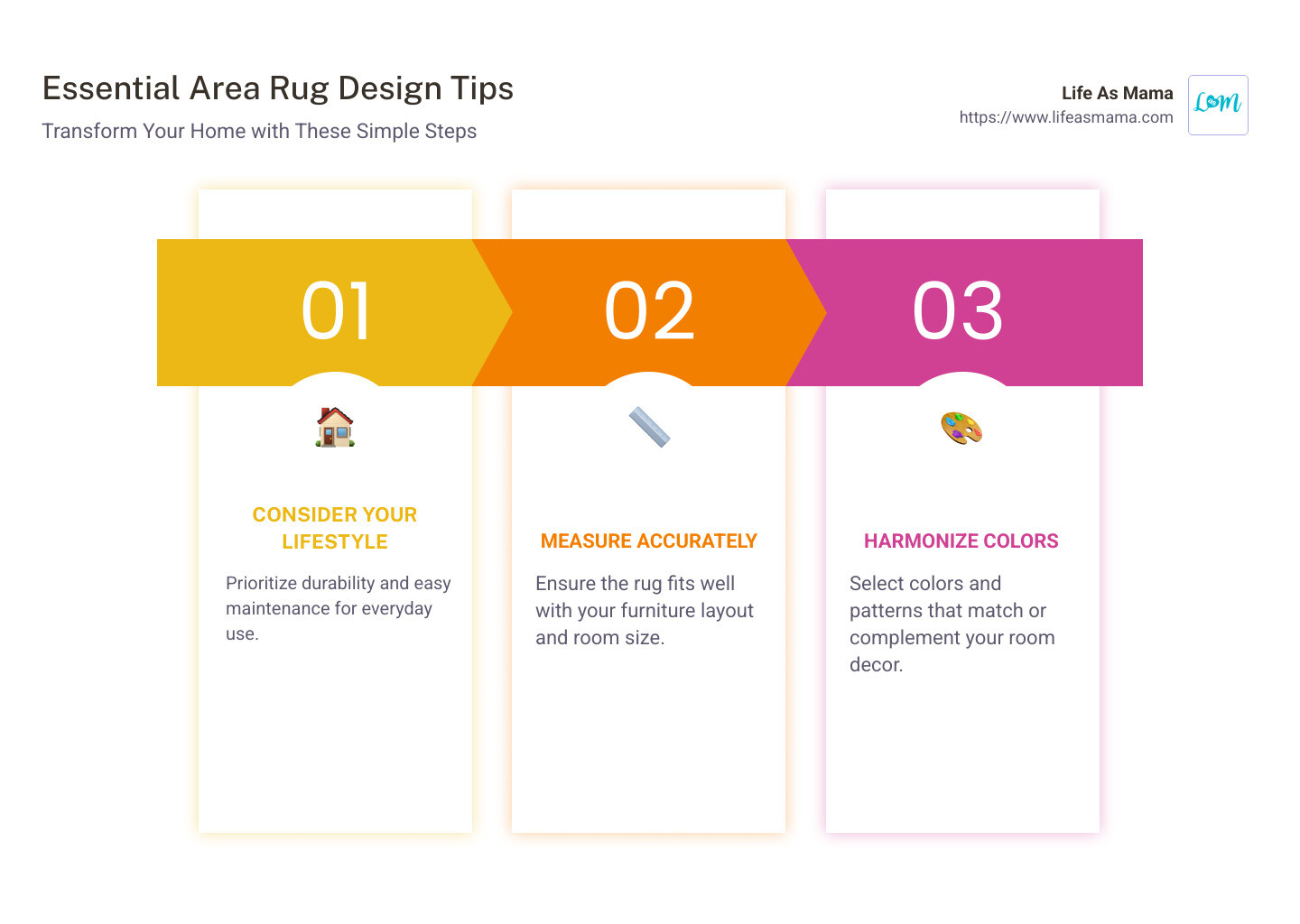
- Ensure your rug suits your lifestyle: Think durability and ease of cleaning.
- Measure carefully before purchasing: Consider the furniture layout.
- Select colors and patterns that complement your space: Match with key elements in the room.
I’m Amanda Schmitt. With a rich background in occupational therapy and a passion for helping families create beautiful, inviting spaces, I’ve spent years diving into home decor. Given the need for area rug design tips in crafting such spaces, I’m here to guide you through the essentials. In the next section, we’ll explore the fascinating world of area rugs, starting with their definition and significance.
Area rug design tips helpful reading:
– drawing room decorating ideas
– interior design tricks
Understanding Area Rugs
What is an Area Rug?
An area rug is a versatile piece of decor that serves as an accent rug, offering a splash of style without covering the entire floor. Unlike wall-to-wall carpets, area rugs are designed to anchor furniture and define spaces within a room. They are perfect for adding a touch of personality and warmth while maintaining the flexibility to change them out as your design preferences evolve.
Why are they important?
- Flexibility: Easy to remove and clean, area rugs provide a practical alternative to permanent carpeting.
- Design Element: They help tie together the furniture and decor, creating a cohesive look.
- Space Definition: Area rugs can delineate areas within a larger room, such as separating a dining area from a living space.
Benefits of Area Rugs
Area rugs are not just about aesthetics; they serve several functional roles that improve the comfort and safety of your home.
-
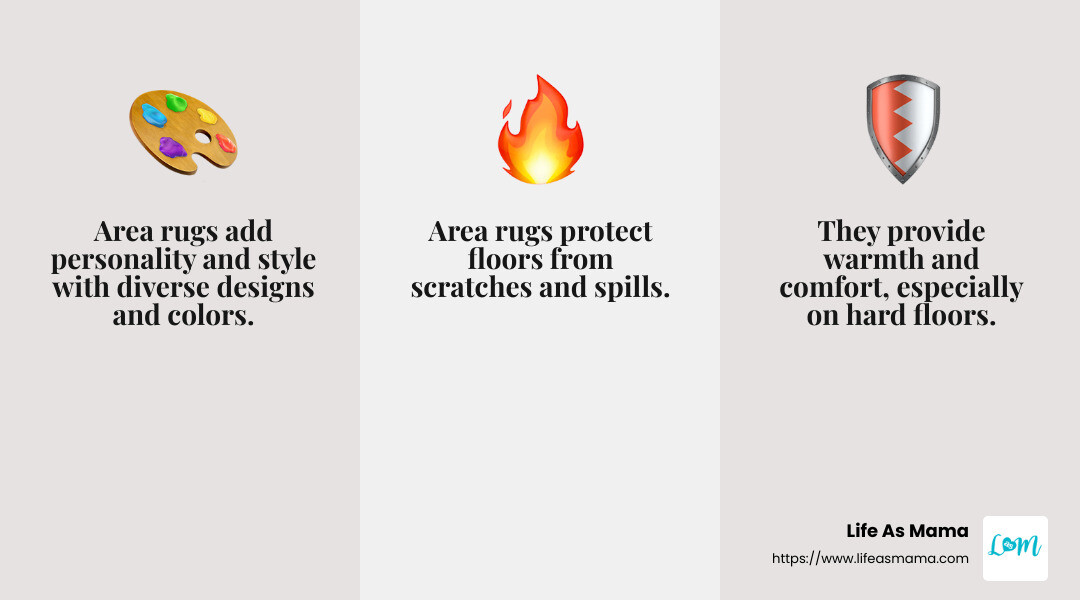
Personality and Style: With countless designs, colors, and patterns, area rugs can reflect your personal taste and bring life to any room.
-
Warmth and Comfort: Rugs provide a cozy, inviting feel underfoot, which is especially appreciated in rooms with hard flooring like tile or hardwood.
-
Protection: They act as a shield for your floors, protecting them from scratches, spills, and other wear and tear. This is particularly valuable in high-traffic areas.
-
Acoustics: Area rugs can help reduce noise, making a room feel more serene and less echoey.
Placement and Size
The placement and size of an area rug are crucial for achieving the desired effect. The right size ensures that the rug complements the room rather than overwhelming it.
- Living Room: Ideally, the rug should be large enough to extend under the front legs of sofas and chairs, creating a unified seating area.
- Bedroom: A rug should extend beyond the bed, providing a soft landing when you step out of bed.
- Dining Room: Ensure the rug is large enough to accommodate the dining table and chairs, even when the chairs are pulled out.
By understanding these aspects of area rugs, you can select the perfect one to improve both the functionality and beauty of your space. Next, we’ll dive deeper into the specific strategies for choosing the right size and placement for your area rug.
Area Rug Design Tips
Choosing the Right Size
Picking the right size for your area rug can make or break the look of your room. It’s not just about filling space; it’s about creating harmony between the furniture and the rug.
Measurements Matter
Start by measuring your room and the furniture layout. For a living room, the rug should ideally extend under the front legs of your sofas and chairs. This creates a unified seating area. A common pitfall is choosing a rug that’s too small, making the space feel disjointed.
In the bedroom, aim for a rug that extends beyond the bed. This ensures a soft landing when you step out of bed. For a dining room, the rug should be large enough to accommodate both the table and chairs, even when the chairs are pulled out. A good rule of thumb is to add about two feet to the perimeter of your dining table for the rug size.
Room Size and Rug Size
Consider the overall size of your room. In small rooms, a large rug can make the space feel more expansive. For larger rooms, multiple rugs can be used to define different areas, like a reading nook or a conversation area.
Selecting Colors and Patterns
The color and pattern of your area rug are key to enhancing your room’s style and mood.
Contrast and Complement
If your primary furniture, like a sofa, is a solid color, a patterned rug can add visual interest. Match the secondary color in the rug to your sofa, and the third color to your room’s accents, like pillows or drapes.
For rooms with patterned or elaborately designed furniture, a solid-colored rug works best. It complements without overwhelming the existing decor.
Style and Mood
The rug’s color can set the mood of the room. Dark, rich colors can create a cozy, intimate atmosphere, while lighter shades can make a smaller space appear larger. Warm colors like yellow or red add energy, while cool colors like blue or green promote calmness.
By carefully considering placement, size, and color, you can select an area rug that improves the beauty and functionality of your space. Up next, we’ll explore specific placement strategies for different rooms in your home.
Placement Strategies for Area Rugs
Living Room Rug Placement
When placing an area rug in your living room, aim to create a cohesive seating arrangement. The rug should extend under the front legs of your sofas and chairs. This anchors the furniture and unifies the space. If your living room is larger, consider a rug that fits entirely under the furniture for a more expansive feel.
Centering the rug is crucial. A well-centered rug can balance the room and draw attention to your seating area. Ensure there’s enough clearance—at least 3 inches—between the rug and the furniture legs to maintain a neat look.
Bedroom Rug Placement
In the bedroom, a well-placed rug can create a cozy and inviting atmosphere. The rug should extend beyond the sides and end of the bed. This provides a soft landing spot when you get out of bed. Ideally, the rug should be placed sideways and pulled out from the foot of the bed to cover about a third of the bed length from the headboard.
Nightstands should be considered as well. The rug should extend under them if possible, offering a unified look. Ensure there’s enough clearance around the bed and nightstands for easy movement and access.
Dining Room Rug Placement
For the dining room, the rug’s size is key to maintaining stability and visual harmony. The rug should be large enough to accommodate the table and chairs, even when the chairs are pulled out. This typically means extending the rug about 3 feet beyond the edge of the dining table.
Avoid using a round rug under a rectangular table, as this can lead to chair legs sitting unevenly on the floor, creating imbalance. A rectangular rug that mirrors the shape of the table is ideal for maintaining a stable and balanced dining area.
By following these placement strategies, you can ensure your area rugs not only improve the aesthetic of each room but also contribute to their functionality. Next, we’ll dive into some frequently asked questions about area rugs to address common concerns and misconceptions.
Frequently Asked Questions about Area Rugs
What is the rule of thumb for area rugs?
The general rule for area rugs is to leave about 18 inches of exposed floor space around the perimeter of the room. This helps frame the rug and creates a border that improves the room’s overall look. However, in smaller spaces, you can adjust this to 12 inches to maintain balance.
Should an area rug be lighter or darker than the couch?
The color of your area rug should create contrast with your couch. A lighter rug can make the room feel more open and airy, while a darker rug can add warmth and coziness. If your couch is a solid color, consider a patterned rug to add depth and interest. On the other hand, if your couch is patterned, a solid-colored rug can provide a calming backdrop.
Matching your rug to accent colors in the room, like pillows or curtains, can also create a cohesive look. This approach helps tie all elements together while maintaining visual separation between the floor and furniture.
How do you layout an area rug?
When laying out an area rug, focus on centering it within the room’s main features, such as a fireplace or a large window. This creates a focal point and anchors the space. Ensure there’s enough clearance around furniture pieces, like sofas and chairs, to avoid a cramped appearance. Generally, aim for at least 3 inches of space between furniture legs and the rug edge.
In open floor plans, use rugs to define different zones. For instance, a rug under the dining table can delineate the dining area from the living space, creating a sense of order and organization.
By considering these area rug design tips, you can improve both the functionality and aesthetic appeal of your home. Up next, we’ll explore more about how area rugs can transform your living spaces.
Conclusion
At Life As Mama, we’re all about making home decor simple and family-friendly. Our practical tips for choosing the perfect area rug aim to help you create a cozy and inviting home without breaking the bank.
An area rug is more than just a decorative piece. It adds warmth, defines spaces, and protects your floors. With our guide, we hope you feel confident in selecting the right rug size, color, and placement for any room in your home.
The right area rug can transform your living space, making it both functional and stylish. Whether you’re looking to anchor your living room furniture or add a splash of color to your bedroom, these area rug design tips are here to guide you.
For more budget-friendly home styling ideas, check out our 24 Details to Style Your House on a Budget. We’re here to help you create a beautiful home that your family will love and enjoy.
By incorporating these strategies, you can achieve a harmonious and stylish look that reflects your personal taste and improves your home’s overall ambiance. Happy decorating!
Related Images:

Amanda Schmitt
Latest posts by Amanda Schmitt (see all)
- 20+ First Day of School Traditions to Make the Day Special - August 23, 2026
- Fruit Infused Waters That Make Summer Hydration Fun - July 1, 2025
- Light Up Your Life: Home Lighting Decoration Ideas - June 30, 2025