Collagen for Cellulite Reduction: Top 5 Amazing Results
What is Cellulite?
Collagen for cellulite reduction has become a popular solution among women looking for smoother skin. But does it really work? Here’s the quick truth:
- Yes, collagen supplements can help reduce cellulite by strengthening your skin’s connective tissue, making cellulite less visible.
- Studies found taking 2.5 grams of collagen daily for six months led to significantly smoother skin.
- Women with a normal BMI saw up to a 9% reduction in cellulite appearance, while overweight women saw about a 4% drop.
Are you ready to explore exactly how and why it works? In this guide, we’ll dive into how collagen affects cellulite, the best types of collagen to use, and how long it takes to see results.
I’m Amanda Schmitt, previously an Occupational Therapist and Certified Lymphedema Therapist with experience in skin structure and tissue health. I’ve combined this knowledge and my own mom-focused journey to deeply research the benefits and practicality of using Collagen for cellulite reduction, so let’s dive in together!
If you’ve ever looked in the mirror and noticed dimpled skin on your thighs, buttocks, or abdomen, you’re not alone. That “orange peel” or “cottage cheese” appearance is cellulite, and it affects approximately 85% of women over the age of 20. Despite its prevalence, many of us still feel self-conscious about it, thanks to airbrushed magazine photos and filtered social media images.
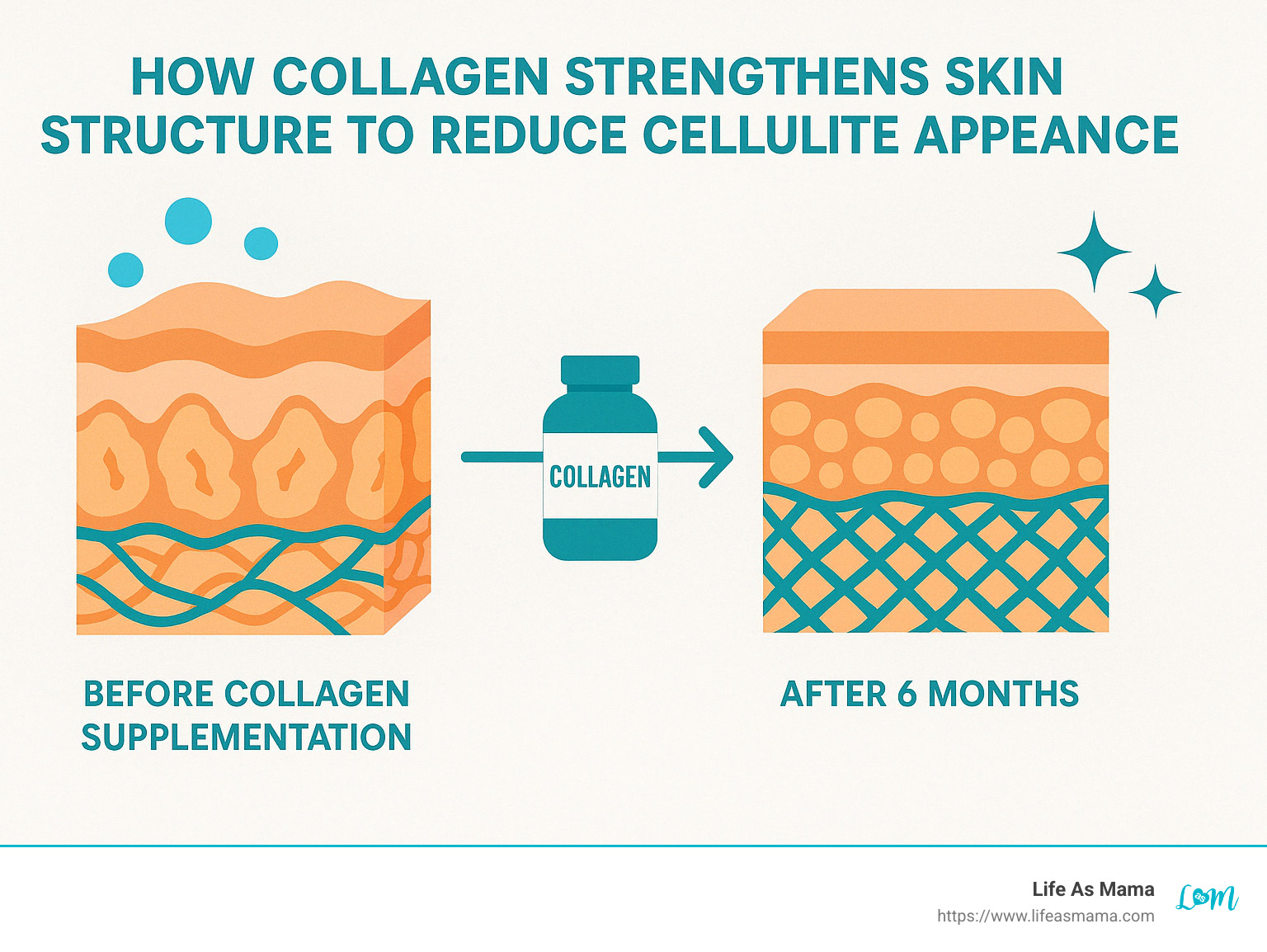
Cellulite occurs when fat deposits push through the connective tissue beneath your skin. Under your skin’s surface lies a complex network of connective tissues, primarily made of collagen fibers. These fibers stand perpendicular to the skin and, in an ideal world, would form a strong, tight mesh that keeps underlying fat cells in place.
However, several factors can weaken this connective tissue structure:
- Hormonal changes: Estrogen levels affect collagen production and fat distribution, which is why cellulite primarily affects women after puberty.
- Age: As we get older, our skin naturally thins and loses elasticity as collagen production decreases by about 1% per year.
- Genetics: Your genes influence your skin structure, metabolism, and fat distribution.
- Lifestyle factors: Poor diet, lack of exercise, and dehydration can all contribute to the appearance of cellulite.
What’s interesting is that cellulite isn’t necessarily related to being overweight. Even slim, fit women can have cellulite because it’s more about the structure of your skin than your body fat percentage.

When the connective tissue weakens or becomes less elastic, the fat cells can push upward against the skin while the connective fibers pull downward. This creates the dimpled appearance we recognize as cellulite. Think of it like a mattress with buttons—the buttons (connective tissue) pull down while the stuffing (fat cells) pushes up, creating that characteristic dimpled look.
Collagen for Cellulite Reduction: How Does It Work?
Now that we’ve explored what cellulite is and why it forms, let’s talk about the star of the show: collagen for cellulite reduction. Collagen is the body’s own powerhouse protein, making up around 75% of your skin’s structure. Think of it like the scaffolding holding everything securely in place beneath your skin’s surface.

When your collagen is strong and plentiful, your skin stays firm, smooth, and elastic. But as we age, collagen production naturally slows down, causing connective tissue to weaken. When this happens, fat cells find it easier to push upward into the skin, creating the dimples we know as cellulite.
So here’s where collagen supplements come into play. Taking collagen regularly helps your body strengthen those connective tissues, effectively “tightening the net” beneath your skin. This tighter network keeps fat cells from poking through as easily, resulting in smoother, firmer-looking skin.
Collagen supplementation also boosts skin elasticity. Elastic skin is better at bouncing back into shape instead of forming dimples. Plus, collagen helps increase overall skin thickness. Thicker skin hides imperfections more effectively—think about how thicker fabric is less likely to show bumps underneath.
Another helpful benefit is improved circulation. Healthy blood flow delivers nutrients more efficiently and clears away waste and fluids stuck beneath the skin’s surface. This means less fluid retention and swelling, which can contribute to a smoother overall appearance.
Scientific research backs this up, too. One study noted clearly: “Taking collagen peptides daily helps the body produce more collagen I, elastin, and fibrillin,” all of which contribute to tighter, more youthful skin. When collagen fibers are strong and flexible, cellulite simply has fewer chances to make an unwanted appearance.
Types of Collagen Effective for Cellulite Reduction
Not all collagen types give equal benefits when fighting cellulite. The two main types important for skin health (and cellulite control!) are Type I collagen and Type III collagen.
Type I collagen is the most abundant, making up nearly 90% of your body’s collagen supply. It’s particularly important because it directly provides the structure your skin needs to stay firm and healthy-looking. Type III collagen also plays a role, helping support skin elasticity and working hand-in-hand with Type I.
When choosing your collagen supplement, you’ll likely encounter two main sources: marine collagen and bovine collagen. Marine collagen, taken from fish, mostly provides Type I collagen and is known for its excellent absorption and effectiveness for skin health. Bovine collagen, derived from cows, contains both Type I and Type III collagen, making it beneficial for overall skin strength and elasticity.
The absolute best choice for cellulite reduction is hydrolyzed collagen peptides. These collagen proteins are broken down into tiny molecules, making it easier for your body to absorb and put them to work quickly. As research confirms, hydrolyzed collagen peptides are specifically effective because your body easily takes them in and uses them to restore your collagen network.
How Long Does It Take to See Results from Collagen Supplementation?
If you’re like most busy moms, you’re probably wondering, “How quickly will I actually SEE results?” Like most good things, collagen for cellulite reduction takes time, consistency, and patience.
According to one significant study published in the Journal of Medicinal Food, participants who took a daily dose of 2.5 grams of collagen peptides experienced noticeable improvements in cellulite after about six months. Researchers observed smoother, firmer skin with reduced waviness and higher skin density.
Here’s a realistic look at what you can expect when adding collagen to your daily routine:
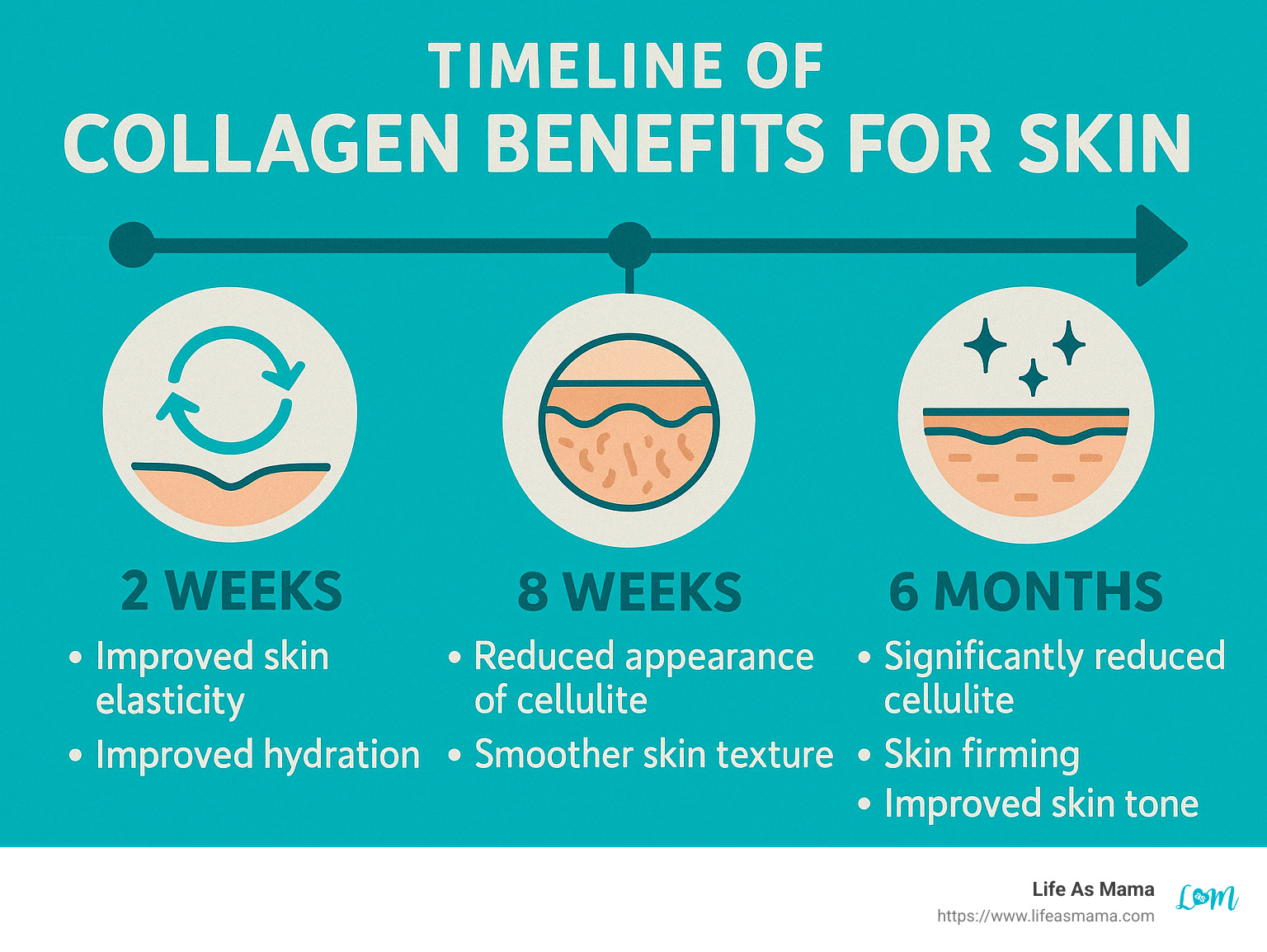
- In the first month, you might notice your skin feels softer, more hydrated, and more supple. (Better skin days!)
- By about two months, clinical research often shows increased collagen and elastin production beneath the skin’s surface.
- But it typically takes around six months of consistent daily supplementation to see significant improvement in cellulite appearance—so patience is key.
The bottom line? Taking collagen supplements occasionally or inconsistently won’t get you those visible results. But sticking to your daily routine of collagen supplementation can lead to smoother skin that helps you feel more confident—especially when paired with other healthy lifestyle habits (more on that shortly!).
Ready for more anti-aging and skincare tips? Check out our guide on Top 5 Natural Anti-Aging Techniques for Moms—because, let’s face it, every mama deserves to feel amazing in her skin!
Scientific Evidence Supporting Collagen for Cellulite Reduction
When it comes to skincare trends, it’s easy to be skeptical. After all, who hasn’t fallen for a miracle cream or magic potion before? But the great news about using collagen for cellulite reduction is that science is firmly on your side.
One of the strongest studies supporting collagen’s cellulite-reducing benefits was published in the Journal of Medicinal Food in 2015. The researchers conducted a double-blind, placebo-controlled study—that’s science-speak for “highly reliable”—involving 105 women between the ages of 24 and 50. These women all had moderate cellulite and volunteered to test whether collagen peptides could really make a difference.
Participants were split into two groups. One received a daily dose of 2.5 grams of specific bioactive collagen peptides (BCP), while the other took a placebo. After six months, the changes were impressive—and measurable.
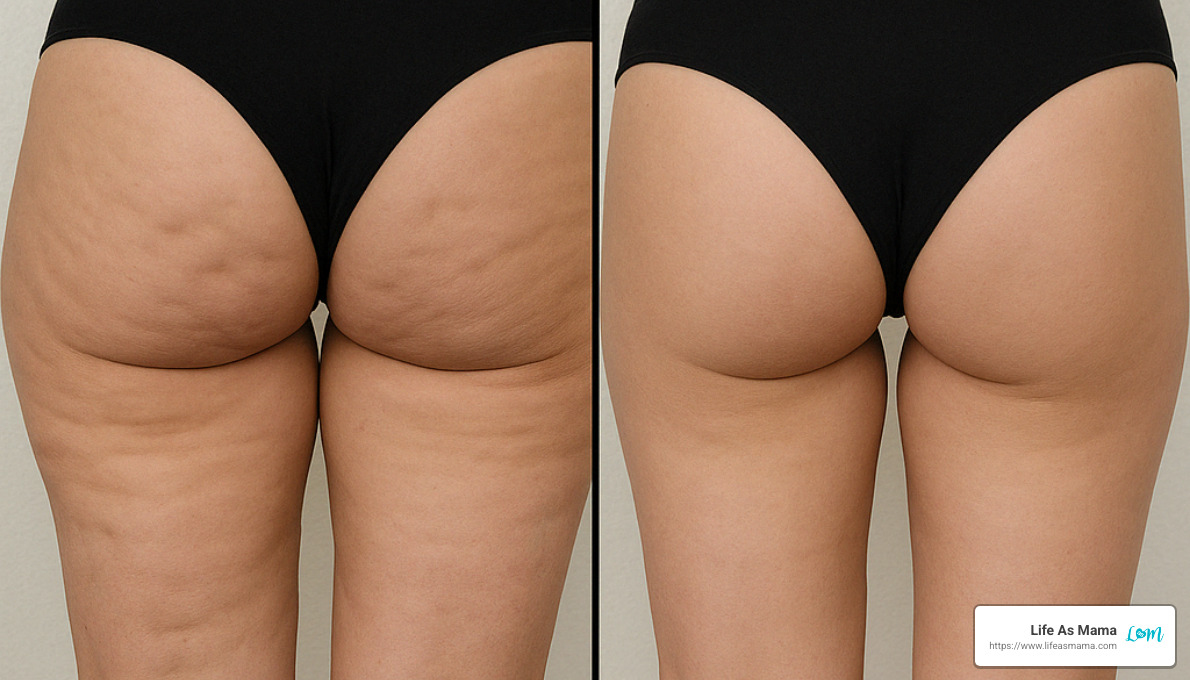
The results showed that women with a normal BMI (under 25) experienced an average cellulite reduction of around 9%. If your BMI is a bit higher, collagen can still help, but the effect is slightly less pronounced—women with a BMI over 25 saw about a 4% improvement. Either way, that’s a noticeable step toward smoother, firmer-looking skin.
But the good news didn’t stop there. Overall skin waviness (another way to measure how visible cellulite appears) dropped by about 8% on average for the collagen group versus placebo. And for women with a normal BMI, the reduction in skin waviness was even greater—around 11.1%.
Another key benefit observed was an increase in dermal density, meaning the skin’s deeper layers literally became thicker and stronger after six months of collagen supplementation. That’s exactly what you want to happen if you’re trying to minimize those pesky dimples.
In fact, the researchers summed up their findings by stating clearly: “Based on the current data, it can be concluded that a long-term therapy with orally administered BCP leads to an improvement of cellulite and has a positive impact on skin health.”
One reason this research is especially convincing is the care the scientists took in measuring results. Instead of relying solely on visual assessments, which can be subjective, they used multiple scientific techniques—including the pinch test, 3D skin surface profiling, and ultrasound imaging—to objectively evaluate the improvements in cellulite severity and skin health.
The Impact of BMI on Collagen’s Efficacy in Cellulite Reduction
An interesting detail from the study was how BMI affects the success of collagen supplementation. As mentioned earlier, collagen showed more pronounced results for women with a lower BMI (under 25). Why is this?
Experts believe several factors might explain the difference. Women with normal body weight typically have a different fat distribution, less pressure on their connective tissues, and potentially better metabolic conditions for collagen synthesis. On the flip side, those with higher BMIs usually have more fat pressing on the connective tissue and skin, making it harder for collagen alone to fully smooth things out.
This doesn’t mean collagen isn’t worth taking if you’re carrying extra weight! Even a 4% improvement in cellulite appearance is meaningful. It just means that combining collagen supplementation with lifestyle adjustments—like a balanced diet, regular exercise, and hydration—will likely give you the most noticeable results. (For more tips on enhancing collagen’s effects naturally, check out our guide on Top 5 Natural Anti-Aging Techniques for Moms.)
In short, the science backs up the enthusiasm for collagen for cellulite reduction. It’s not a miracle cure, but it’s certainly not snake oil either. By consistently incorporating collagen peptides into your daily routine and complementing them with healthy lifestyle choices, you’re well on your way to smoother, healthier-looking skin.
Enhancing Collagen’s Effects with Lifestyle Changes
While taking Collagen for cellulite reduction can give your skin a noticeable boost, combining it with healthy lifestyle habits is like giving your skin a VIP treatment. Think of collagen as providing sturdy building blocks for smoother skin, while your everyday choices set the foundation and environment for those blocks to work their magic.
First things first, let’s talk about nutrition. Choosing a balanced diet filled with collagen-supporting foods makes a big difference. Load your plate with lean proteins, colorful fruits and veggies, nuts, and seeds. These foods provide amino acids (the essential building blocks for collagen), vitamin C (needed for collagen production), and antioxidants (to protect your collagen from breaking down).
Next up: staying active. Regular exercise, especially strength training that targets common cellulite-prone areas like thighs and glutes, can help tone and tighten underlying muscles. Think of your muscles as the firm mattress under your skin—stronger support underneath means smoother, less dimpled skin on top. Plus, exercise gets your blood flowing, boosting the nutrients and oxygen that reach your skin.
Don’t forget hydration! Drinking plenty of water (at least 8 glasses daily) keeps your skin plump and elastic. Good hydration helps nutrients reach your skin cells and flushes away toxins, making cellulite less noticeable over time.
Maintaining a healthy weight is another key piece of the puzzle. Research shows collagen supplementation is significantly more effective for women with a normal BMI. While collagen still helps if you’re overweight, pairing it with weight management efforts can maximize its cellulite-smoothing effects.
Speaking of lifestyle habits—ditch smoking if you haven’t already. Cigarettes break down your skin’s collagen and elastin, speeding up aging and potentially worsening cellulite. Plus, smoking restricts blood flow, starving your skin cells of the nutrients they crave.
Sun protection is equally important. Excessive sun exposure damages collagen, causing your skin to lose elasticity and firmness. Protect yourself daily by applying sunscreen and avoiding too much sun—your future skin will thank you!
Want another simple trick? Regular massage can temporarily boost circulation and help reduce fluid retention under the skin, making cellulite less noticeable. One Life As Mama community member shared her experience: “I started taking collagen daily and committed to drinking more water, doing regular massages, and throwing in squats three times a week. After about four months, my thighs felt smoother and looked noticeably better in certain lighting. No miracles, but definitely a visible difference!”
If you’re looking for even more natural tips to slow down aging, be sure to check out our popular guide: Top 5 Natural Anti-Aging Techniques for Moms.
Combining Collagen with Other Skincare Practices
Collagen supplementation can work even better when paired with smart skincare habits. Think of it like giving your skin double the support—inside and out.
Using skincare products packed with antioxidants (like vitamins C and E) helps protect your skin’s existing collagen from breaking down and encourages new collagen to form. Adding retinoids (vitamin A derivatives) to your routine can further boost collagen production and smooth your skin’s texture over time. Curious how it works? Check out our easy-to-understand guide: The Science of Youthful Skin: How Retinol Serums Really Work.
Regularly exfoliating your skin will also keep it looking fresh and bright, helping topical treatments absorb better. You can even give dry brushing a try—gently brushing your skin before showering can temporarily improve circulation and skin appearance.
And don’t underestimate the power of good sleep! Your body repairs and regenerates skin cells while you snooze, so aim for 7–9 hours of restful sleep each night.
Lastly, don’t let stress sabotage your skin. Chronic stress triggers the release of cortisol, a hormone that breaks down collagen fibers. Making time for relaxation, whether through meditation, yoga, or just enjoying regular me-time, can help lower stress levels and keep your collagen intact.
Above all, consistency is key. Just like Collagen for cellulite reduction needs daily commitment over months, these lifestyle and skincare practices will deliver the best results when you stick with them over time. Remember—beautiful, smoother skin isn’t about perfection. It’s about small, achievable steps that add up to noticeable results you’ll love.
Can Collagen Creams Be Effective for Cellulite Reduction?
When you’re browsing beauty aisles or scrolling through online shops, you’ll inevitably spot dozens of creams promising to banish cellulite with their “collagen-rich formulas.” It’s tempting, isn’t it? Just slather on some cream and watch those dimples disappear. But I need to be honest with you – these topical solutions rarely deliver on their promises, at least not in the dramatic way their marketing suggests.

The science behind why collagen creams fall short is actually quite simple. Think of collagen molecules as being similar to large puzzle pieces – they’re simply too big to squeeze through the tiny spaces between skin cells. As one dermatologist put it, “Collagen applied to the skin provides only a temporary effect. A cream may moisturize the skin, but only for a short while. However, it will never support the dermis.”
When we’re talking about collagen for cellulite reduction, what we really need is structural support deep in the skin’s dermis layer. That’s where the connective tissue needs strengthening to prevent fat cells from pushing through. Unfortunately, topical collagen just sits on the surface, unable to reach where it’s truly needed.
That’s not to say these creams are completely useless. They often contain ingredients that can temporarily improve skin appearance:
Caffeine can momentarily tighten skin and boost circulation, giving your thighs a firmer look for a few hours – perfect for a beach day, but not a long-term solution. Retinol is a bit more promising since it actually signals your skin to produce more of its own collagen over time. Peptides are smaller than collagen molecules and might penetrate better, potentially triggering collagen synthesis. And antioxidants help protect your existing collagen from breaking down, which is certainly valuable.
I’ve had many mom friends share their disappointment after investing in pricey collagen creams. Sarah, a mom of three from our Life As Mama community, told me she spent nearly $200 on a “miracle” collagen cream only to see no difference after finishing the entire jar. “I wish someone had told me to focus on supplements instead,” she sighed.
Research consistently shows that “Only ingested collagen (not collagen creams) is effective, as topically applied collagen molecules cannot penetrate deeply enough into the dermis to have a lasting effect.” Your body needs to process collagen internally, breaking it down into amino acids and peptides that can be distributed where needed through your bloodstream.
If you’re already using a collagen cream you love, there’s no need to toss it. Just adjust your expectations and consider it part of a more comprehensive approach. Think of these creams as supporting players rather than the star of your collagen for cellulite reduction strategy. They might help your skin look temporarily smoother or more hydrated, which is certainly a nice bonus while you work on addressing the deeper structural issues through oral supplementation.
Lasting changes come from within – both literally in terms of collagen supplementation, and figuratively in terms of embracing a holistic approach to skin health that includes proper nutrition, hydration, and movement. Your skin will thank you for addressing cellulite from the inside out.
Frequently Asked Questions about Collagen for Cellulite Reduction
Does Collagen for Cellulite Reduction Really Work?
Let’s be honest—there’s no magical cure that will completely erase cellulite overnight. But the good news is, collagen for cellulite reduction does have real scientific backing. Several studies show that regularly taking specific bioactive collagen peptides (around 2.5 grams daily for about six months) can visibly improve cellulite.
Collagen works by strengthening your skin’s connective tissues—the network of fibers beneath your skin. When these fibers become stronger and more elastic, they help hold fat cells in place more effectively, making cellulite less obvious. Think of collagen as your skin’s secret support team; the stronger the team, the smoother your skin looks!
That said, it’s important to set realistic expectations. While collagen supplements can significantly improve your skin’s texture and reduce cellulite visibility, they won’t completely eliminate it. The best results occur when you combine daily collagen supplementation with healthy lifestyle choices, like balanced nutrition, regular exercise, and proper hydration.
What Type of Collagen is Best for Cellulite Reduction?
If you’re ready to give collagen for cellulite reduction a try, choosing the right type of collagen matters. Research suggests that Type I collagen is your best bet. Why? Because Type I collagen makes up most of your skin’s structure, helping it stay firm and elastic.
Hydrolyzed collagen peptides are especially beneficial. These are collagen molecules broken down into tiny pieces, making them easier for your body to absorb and put to work. Marine collagen, sourced primarily from fish, is particularly high in Type I collagen and is easily absorbed, making it an ideal choice for skin health. Bovine collagen, derived from cows, contains both Type I and Type III collagen, offering solid overall skin benefits too.
When shopping for supplements, look for reputable brands that specifically list “hydrolyzed collagen peptides” and include Type I collagen. Checking for additional ingredients like vitamin C or hyaluronic acid is also a plus, as these can further boost collagen’s effects. Aim to reach the clinically recommended dosage of around 2.5 grams daily (as shown effective in studies), and you’ll be setting yourself up for the best possible results.
Are There Side Effects to Taking Collagen for Cellulite Reduction?
Collagen supplements are generally considered safe for most people, which is great news if you’re looking to get smoother skin without worry. However, as with anything you put into your body, you might notice a few minor side effects. Some women experience mild bloating, digestive upset, or feel fuller than usual. The good news is these symptoms usually fade quickly and aren’t common for most people.
If you have allergies, you’ll want to be careful about choosing the collagen source. Marine collagen, for instance, might not be the best pick if you’re allergic to fish or shellfish. Similarly, bovine collagen won’t suit those with beef allergies.
Quality is also important. Since dietary supplements aren’t as strictly regulated as medications, look for collagen supplements from reputable brands that undergo third-party testing to ensure purity and strength.
It’s always a good idea to chat with your healthcare provider before starting any new supplement, especially if you’re pregnant, breastfeeding, have allergies, or currently take medications. While collagen is generally safe, a quick consultation can help ensure it’s right for you.
The best part? Many women find that collagen supplementation doesn’t just help with cellulite—it also gives them stronger nails, healthier hair, and even less joint discomfort. That’s a win-win-win in our book!
Conclusion
Throughout this guide, we’ve explored how collagen for cellulite reduction works and the scientific evidence supporting its effectiveness. The research shows promising results, particularly for women with normal BMI who take 2.5 grams of specific bioactive collagen peptides daily for six months.
Let’s recap what we’ve learned on this journey together. Cellulite affects about 85% of women over age 20—it’s incredibly common and completely normal. Those dimpled areas appear when fat deposits push through weakened connective tissue, creating that characteristic orange peel texture many of us recognize in the mirror.
The good news? Collagen supplementation can help strengthen that connective tissue matrix in your skin, making it more resilient against the pressure of underlying fat cells. The science backs this up—particularly when using Type I hydrolyzed collagen peptides, with marine collagen offering excellent bioavailability for most people.
One thing to remember is that patience truly is key. Those impressive results in clinical studies didn’t appear overnight—significant improvements were observed after six months of consistent daily supplementation. Your body needs time to build and reinforce that supportive collagen network.

It’s worth noting that your starting point matters too. The research clearly showed that BMI impacts effectiveness, with normal-weight women seeing more pronounced benefits (9% reduction in cellulite) compared to overweight women (4% reduction). This doesn’t mean collagen won’t work if you’re carrying extra weight—just that your results might be more modest.
For the best outcomes, think of collagen as just one piece of your skin health puzzle. Combining your supplements with healthy lifestyle practices makes a world of difference. Staying hydrated, eating nutrient-rich foods, moving your body regularly, and managing stress all work synergistically with collagen to improve your skin’s appearance and overall health.
And what about those tempting collagen creams lining store shelves? While they might temporarily plump and hydrate your skin, they can’t address cellulite at its root. Those collagen molecules are simply too large to penetrate deeply into the skin where they’re actually needed. Your body needs to build collagen from within.
At Life As Mama, we believe in providing practical, evidence-based information that helps you make informed decisions about your health and wellbeing. While collagen for cellulite reduction isn’t a miracle cure, the research suggests it can be a valuable part of a holistic approach to improving skin appearance.
I think it’s important to mention that while seeking ways to reduce cellulite is perfectly fine, practicing self-acceptance is equally important. Your body has likely done amazing things—perhaps carried children, overcome illness, or simply carried you through each day. That deserves appreciation, dimples and all.
If you decide to try collagen supplementation, approach it with patience and consistency. Think of it as nurturing your skin from the inside out—a gentle, gradual process rather than a quick fix. The journey to healthier skin is definitely a marathon, not a sprint, but with the right tools and information, meaningful progress is absolutely possible.
For more skincare tips and family-friendly wellness guides, be sure to check out our guide on The Best Cleansers for Healthy Skin. Your journey to feeling confident in your skin is one we’re honored to support!
Related Images:

Amanda Schmitt
Latest posts by Amanda Schmitt (see all)
- 20+ First Day of School Traditions to Make the Day Special - August 23, 2026
- Fruit Infused Waters That Make Summer Hydration Fun - July 1, 2025
- Light Up Your Life: Home Lighting Decoration Ideas - June 30, 2025