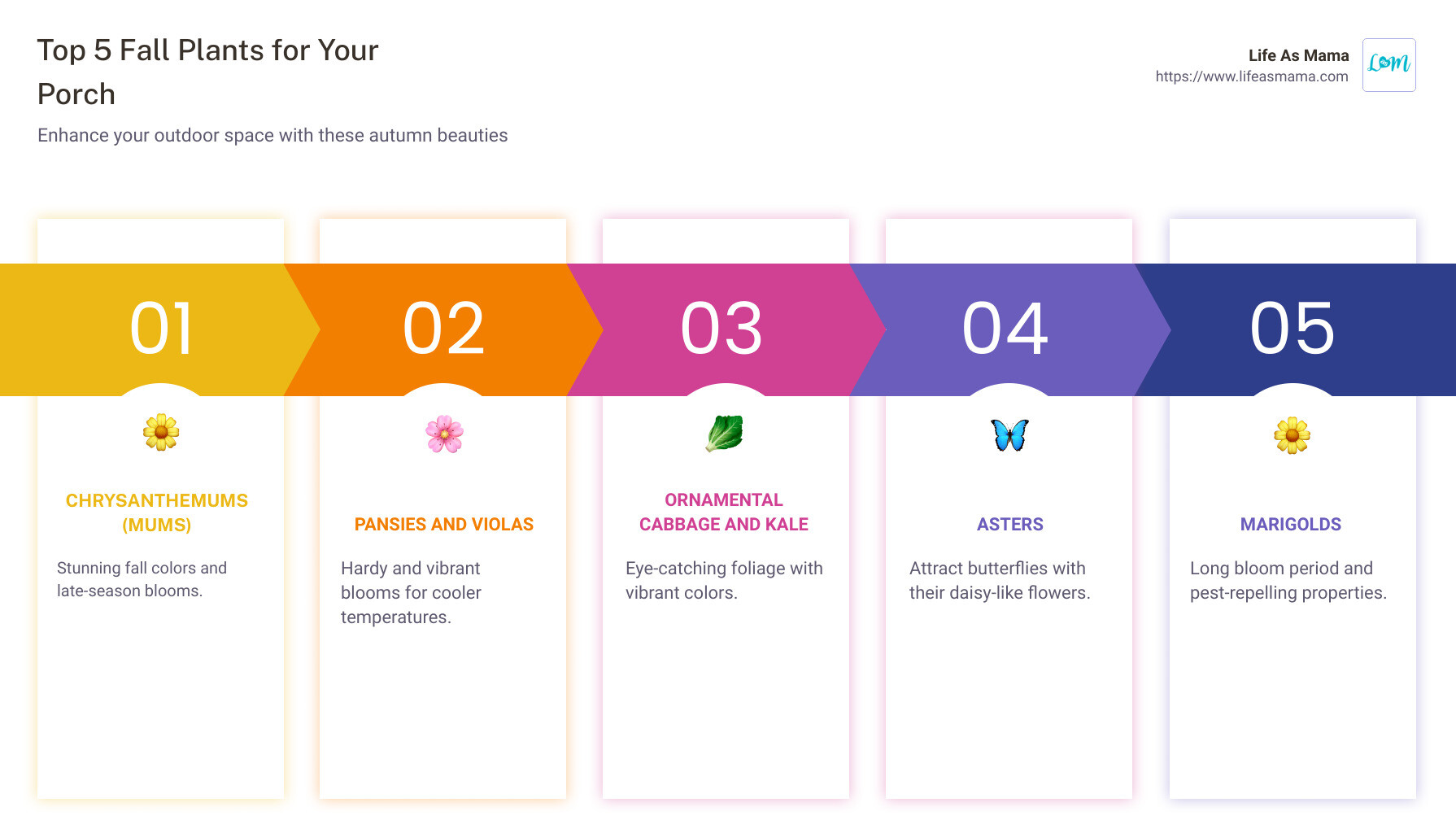
Fall plants for porch displays can transform your outdoor space into an autumnal sanctuary. From chrysanthemums to ornamental cabbages, the right choices can make your porch pop with color and texture. Quick ideas include:
- Chrysanthemums (Mums): Stunning fall colors
- Pansies: Hardy, vibrant blooms for cooler temperatures
- Ornamental Cabbage and Kale: Eye-catching foliage
- Asters: Attract butterflies, daisy-like flowers
- Marigolds: Long bloom period, pest-repelling properties
As autumn sweeps in with cool breezes and golden hues, it’s the perfect time to refresh your porch and container gardens. Seasonal gardening doesn’t just bring beauty to your home; it creates a welcoming atmosphere for family and guests alike.
I’m Amanda Schmitt, and I transitioned from being an Occupational Therapist to running the “Life As Mama” blog full-time. With a passion for gardening, I love helping moms like you create beautiful, stress-free outdoor spaces. Join me as we dive into the best fall plants for porch decor and container gardens.
Fall plants for porch words to learn:
– fall bedding plants
– what plants do exciting gardens ship in fall
1. Chrysanthemums (Mums)
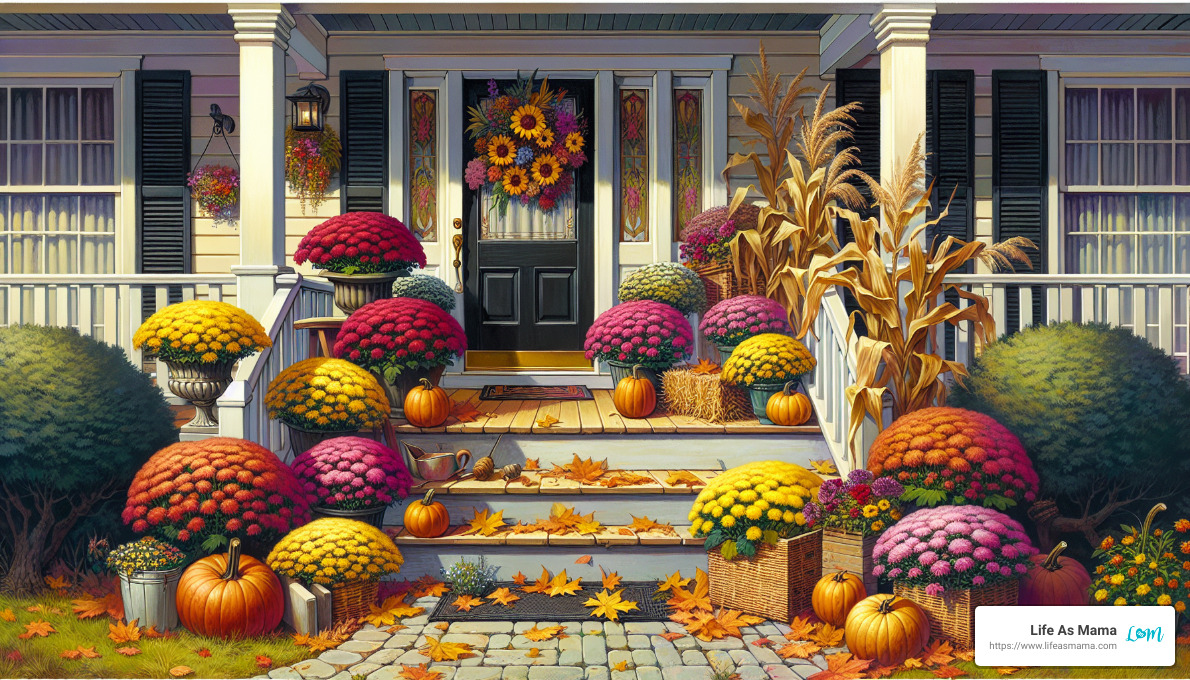
Chrysanthemums, or mums, are the quintessential fall plants for porch decor. These late-season bloomers are known for their stunning fall colors that range from vibrant yellows and oranges to deep purples and reds. Their compact size and long-lasting flowers make them a favorite for container gardening.
Why Choose Mums?
Stunning Fall Color: Mums are the crown jewel of fall containers. Their bright, beautiful blooms can add a burst of color to any porch or garden. According to Kelly Funk of Jackson & Perkins, “Chrysanthemums’ bright and beautiful, yet highly hardy, blooms add color to any fall container arrangement.”
Late-Season Bloomers: Mums bloom late in the season, providing color when many other flowers have faded. This makes them perfect for extending the beauty of your outdoor space into the cooler months.
Growing Conditions
To thrive, mums need:
- Well-Draining Soil: Ensure your container has good drainage to prevent waterlogging, which can lead to root rot.
- Sunny Location: Mums love the sun. Place them where they’ll get at least six hours of sunlight per day.
- Regular Watering: Keep the soil consistently moist but not waterlogged. Water deeply and less frequently to encourage strong root growth.
Tips for Success
- Repot Immediately: When you buy mums, repot them into a larger container with well-draining soil to allow their roots to spread.
- Remove Spent Blooms: Deadhead regularly to encourage new blooms and extend the flowering period.
- Fertilize Sparingly: Use a balanced, water-soluble fertilizer once a month to keep your mums healthy and vibrant.
By following these simple tips, you can enjoy a vibrant, colorful display of chrysanthemums well into the fall season. Their versatility and beauty make them a must-have for any autumn porch or container garden.
Next, let’s explore another fantastic option for your fall decor—Pansies and Violas.
2. Pansies and Violas
Pansies and violas are perfect fall plants for porch displays. They thrive in variable fall temperatures and offer vibrant blooms in a range of colors like purple, burgundy, magenta, white, and yellow.
Why Choose Pansies and Violas?
Vibrant Blooms: These flowers add a splash of color to your containers, making them eye-catching even as the weather cools. Their bright faces can cheer up any porch.
Variable Fall Temperatures: Pansies and violas are hardy enough to withstand the fluctuating temperatures of fall. They thrive in cool weather, making them ideal for autumn planting.
Growing Conditions
To keep your pansies and violas happy, ensure they have:
- Partial to Full Sun: These flowers prefer at least 4-6 hours of sunlight daily. Too much shade can reduce their blooms.
- Well-Draining Soil: Ensure your containers have good drainage. Pansies and violas don’t like their roots to sit in water.
- Regular Watering: Keep the soil evenly moist but not waterlogged. Consistent watering encourages prolonged flowering.
Freeze Tolerance
While most pansies and violas have little freeze tolerance, they can survive light frosts. In mild climates like the Pacific Northwest, they often come back in the spring.
Tips for Success
- Companion Planting: Pair them with ornamental grasses. The airy texture of grasses contrasts beautifully with the vibrant blooms of pansies and violas.
- Use as “Spillers”: These flowers drape neatly over the sides of containers, making them ideal for adding a cascading effect to your fall planters.
- Deadhead Regularly: Remove spent blooms to encourage new growth and extend the flowering period.
By following these guidelines, you can enjoy a colorful and lively display of pansies and violas on your porch throughout the fall. Their resilience and beauty make them a staple for any autumn container garden.
Next, let’s move on to another stunning option for your fall decor—Ornamental Cabbage and Kale.
3. Ornamental Cabbage and Kale
Ornamental cabbage and kale are festive plants that bring vibrant foliage to your fall porch and container gardens. These plants are known for their striking leaf coloration and ability to withstand cooler temperatures, making them a perfect choice for autumn.
Why Choose Ornamental Cabbage and Kale?
Festive Plants: These plants add a unique, decorative touch to your fall displays with their chubby, cheerful cabbages and spiky kales.
Vibrant Foliage: The leaves come in stunning shades of purple, rose, and cream, which only get more intense as the weather gets colder.
Striking Leaf Coloration: The colors of ornamental cabbage and kale intensify after a frost, making them even more eye-catching as the season progresses.
Growing Conditions
To keep your ornamental cabbage and kale thriving, make sure they have:
- Full Sun to Partial Shade: These plants can handle a variety of light conditions but prefer at least 4-6 hours of sunlight daily.
- Well-Draining Soil: Ensure your containers have good drainage to prevent root rot.
- Consistent Moisture: Keep the soil evenly moist but not waterlogged. Regular watering helps maintain the vibrant colors of the leaves.
Tips for Success
- Unique Containers: Don’t be afraid to plant them in unusual containers like funky shallow baskets or modern metal planters. They bring rich color and texture to mixed container gardens.
- Companion Planting: Pair them with plants like pansies or ornamental grasses for a dynamic fall display. The contrasting textures and colors create a visually stunning arrangement.
- Overwintering: If you want to keep them beyond the fall, consider moving the containers to a sheltered location before the first hard frost.
By incorporating ornamental cabbage and kale into your fall porch and container gardens, you can enjoy a festive and vibrant display that lasts well into the colder months. Their bold colors and interesting textures make them a standout choice for any autumn setting.
Next, let’s explore another beautiful option for your fall decor—Asters.
Enhance Your Porch with Beautiful Asters: Top Tips for 2024
Asters are a fantastic addition to your fall porch and container gardens. These daisy-like flowers bloom from late summer into early fall, bringing a burst of color when many other plants are fading.
Why Choose Asters?
Daisy-Like Flowers: Asters produce charming, daisy-like blooms in shades of purple, pink, blue, and white, adding a touch of elegance to your fall display.
Late Summer/Early Fall Bloom: These plants start blooming in late summer and continue into the fall, ensuring your garden remains vibrant as the seasons change.
Attract Butterflies: Asters are known to attract butterflies, making your garden a lively and colorful haven for these beautiful pollinators.
Growing Conditions
To keep your asters flourishing, make sure they have:
- Full Sun: Asters thrive in full sun, needing at least 6 hours of sunlight each day to produce their best blooms.
- Regular Watering: Keep the soil consistently moist but not waterlogged. Regular watering is essential to maintain their vibrant flowers.
- Well-Draining Soil: Use pots and soil that drain well to prevent root rot and mildew.
Tips for Success
- Container Size: Since asters can grow quite tall, sometimes up to 6 feet, choose large containers to give them enough room to develop.
- Companion Planting: Pair asters with plants like marigolds or ornamental grasses. The contrasting textures and colors can create a stunning fall arrangement.
- Cut Back After Flowering: Once the flowers have faded, cut the stems back entirely. This helps the plant conserve energy and prepares it for the next growing season.
By adding asters to your fall porch and container gardens, you can enjoy a continuous display of color and attract butterflies well into the autumn months. Their daisy-like flowers and easy maintenance make them a must-have for any fall garden setup.
Next, let’s explore another vibrant option for your fall decor—Marigolds.
5. Marigolds
Marigolds are a must-have for your fall porch and container gardens. These cheerful flowers not only add vibrant color but also have practical benefits.
Why Choose Marigolds?
Long Bloom Period: Marigolds bloom from late spring until the first frost, ensuring your garden stays colorful throughout the fall.
Pest-Repelling Properties: These flowers naturally repel pests like aphids and mosquitoes, making them a great companion plant.
Vibrant Blooms: Marigolds come in stunning shades of yellow, orange, red, and gold, perfect for autumn decor.
Growing Conditions
To keep your marigolds thriving, ensure they have:
- Full Sun: These plants need at least 6 hours of sunlight each day. They flourish in bright, sunny spots.
- Regular Watering: Keep the soil evenly moist but not soggy. Water regularly, especially during dry spells.
- Well-Draining Soil: Marigolds prefer sandy, loamy soil that drains well to prevent root rot.
Tips for Success
- Deadhead Regularly: Remove spent blooms to encourage continuous flowering throughout the season.
- Container Size: Choose pots that are at least 12 inches in diameter to give the roots room to grow.
- Companion Planting: Pair marigolds with vegetables or other flowers like asters or snapdragons. Their pest-repelling properties can benefit nearby plants.
By adding marigolds to your fall porch and container gardens, you can enjoy vibrant, long-lasting blooms while keeping pests at bay. Their easy maintenance and bright colors make them an essential addition to any autumn garden setup.
Next, let’s dive into another fantastic fall plant—Heuchera (Coral Bells).
6. Heuchera (Coral Bells)
Heuchera, also known as Coral Bells, are a stunning addition to any fall porch or container garden. Their beautiful foliage comes in a variety of colors, including deep purples, vibrant greens, and even silvery hues. This makes them perfect for adding depth and visual interest to your autumn arrangements.
Why Choose Heuchera?
Compact Growth: Heuchera grows in a neat, compact form, making it ideal for container gardens and small spaces. This means you can easily fit them into any part of your porch setup without worrying about them taking over.
Partial Shade: These plants thrive in partial shade, which is perfect for those spots on your porch that don’t get full sun. They can handle some sunlight but prefer shaded areas to keep their foliage vibrant.
Low Maintenance: One of the best things about Heuchera is that they require very little maintenance. They are hardy and can withstand various conditions, making them a great choice for busy gardeners.
Growing Conditions
To keep your Heuchera healthy and thriving, follow these simple guidelines:
- Well-Draining Soil: Ensure the soil in your containers is well-draining. Heuchera doesn’t like to sit in water, so good drainage is essential. Consider using a mix of potting soil and perlite to improve aeration.
- Consistent Moisture: While they don’t like soggy soil, Heuchera does appreciate consistent moisture. Water them regularly, but let the top inch of soil dry out between waterings to prevent root rot.
Tips for Success
- Mulching: Add a layer of mulch around the base of the plants to help retain moisture and keep the roots cool.
- Fertilization: Heuchera benefits from a light feeding of balanced fertilizer in the spring and again in mid-summer. This will help maintain their vibrant foliage.
- Pruning: Remove any dead or damaged leaves to keep the plant looking tidy and to promote new growth.
By incorporating Heuchera into your fall porch and container gardens, you can enjoy their striking foliage and low-maintenance beauty all season long. Their adaptability to partial shade and compact growth habit make them a versatile and attractive choice for any autumn display.
Next, let’s explore the unique charm of Ornamental Grasses.
7. Ornamental Grasses
Ornamental grasses are a fantastic way to add texture and interest to your fall porch or container garden. They require very little maintenance and can thrive in a variety of conditions, making them a great choice for gardeners of all skill levels.
Why Choose Ornamental Grasses?
Feathery Texture: The feathery plumes of ornamental grasses add a soft, airy feel to your garden arrangements. They sway gracefully in the breeze, bringing a sense of movement and life to your fall display.
Low Maintenance: These plants are incredibly easy to care for. They don’t need frequent watering or special soil conditions, making them perfect for busy gardeners.
Versatile Lighting: Ornamental grasses can grow in full sun to light shade. This flexibility means you can place them almost anywhere on your porch and still expect them to thrive.
Popular Varieties
Here are some popular types of ornamental grasses that work well in fall container gardens:
- Purple Fountaingrass: Known for its dramatic, dark purple plumes, this grass adds a pop of color and height to your arrangements.
- Blue Fescue: This grass has a lovely blue-gray color that contrasts beautifully with other fall plants like mums and strawflowers.
- ‘Morning Light’ Maidengrass: With its slender, arching leaves, this grass brings elegance and height to any container garden.
Growing Conditions
To keep your ornamental grasses healthy, follow these guidelines:
- Well-Draining Soil: Ensure your container has well-draining soil. Ornamental grasses do not like to sit in water, so good drainage is crucial.
- Moderate Watering: These grasses are drought-tolerant once established. Water them moderately, allowing the soil to dry out between waterings.
Tips for Success
- Pruning: Trim back any dead or damaged foliage to keep the plant looking tidy. Most ornamental grasses can be cut back to the ground in late winter to encourage fresh growth in the spring.
- Spacing: Give each plant enough space to grow. Crowded plants can struggle to thrive, so ensure your container is large enough to accommodate their mature size.
- Companion Plants: Pair ornamental grasses with other fall plants for porch displays like mums or pansies to create a balanced and visually appealing arrangement.
By incorporating ornamental grasses into your fall porch and container gardens, you can enjoy their feathery texture and low-maintenance beauty throughout the season. Their ability to thrive in various lighting conditions and their striking appearance make them a must-have for any autumn garden.
Next, let’s dig into the vibrant world of Impatiens.
8. Impatiens
Impatiens are a fantastic choice for shaded container gardens. These colorful plants thrive in partial to full shade, making them perfect for areas that don’t get much sunlight.
Why Choose Impatiens?
Lush Growth: Impatiens are known for their dense, bushy foliage. They can fill out a container beautifully, creating a lush, green backdrop for their vibrant blooms.
Continuous Flowering: One of the best features of impatiens is their ability to flower continuously. From late spring until the first frost, these plants will keep producing colorful blooms, adding a cheerful touch to your fall porch.
Consistent Moisture: Impatiens love moisture. Keep the soil consistently moist, but not waterlogged, to ensure they stay healthy and vibrant.
Growing Conditions
To keep your impatiens thriving, follow these guidelines:
- Partial to Full Shade: Impatiens do best in shaded areas. They can handle some morning sun, but too much direct sunlight can scorch their delicate leaves.
- Well-Draining Soil: Ensure your container has well-draining soil. While impatiens love moisture, they don’t like to sit in water, which can lead to root rot.
- Consistent Watering: Water your impatiens regularly to keep the soil evenly moist. During hot, dry spells, you may need to water them daily.
Popular Varieties
Here are some popular types of impatiens that work well in container gardens:
- New Guinea Impatiens: These have larger flowers and can tolerate more sun than other types of impatiens. They come in a wide range of colors, including red, pink, white, and purple.
- Double Impatiens: Known for their rose-like blooms, double impatiens add a touch of elegance to any container garden. They’re available in various colors and are perfect for creating a sophisticated look.
- Trailing Impatiens: These are ideal for hanging baskets or the edges of containers. Their trailing habit allows them to spill over the sides, creating a beautiful cascading effect.
Tips for Success
- Fertilizing: Feed your impatiens with a balanced, water-soluble fertilizer every two weeks. This will help them produce more blooms and maintain their lush growth.
- Pinching Back: If your impatiens start to look leggy, pinch back the stems. This will encourage bushier growth and more blooms.
- Pest Control: Keep an eye out for common pests like aphids and spider mites. If you notice any, treat your plants with an insecticidal soap to keep them healthy.
Companion Plants
Pair impatiens with other shade-loving plants to create a stunning container garden. Some great companions include:
- Begonias: Their lush foliage and vibrant blooms complement impatiens beautifully.
- Hostas: These plants add texture and interest with their large, variegated leaves.
- Ferns: Ferns provide a lovely, feathery contrast to the dense foliage of impatiens.
By incorporating impatiens into your fall plants for porch displays, you can enjoy their lush growth and continuous flowering throughout the season. Their ability to thrive in shaded areas and their vibrant blooms make them a must-have for any autumn garden.
Next, let’s explore the unique beauty of Celosia.
9. Celosia
Celosia, also known as cockscomb, is a showstopper with its stunning sunset colors and unique flower heads. This annual plant is perfect for adding a splash of vibrant color to your fall porch.
Why Choose Celosia?
Stunning Sunset Colors: Celosia blooms in a range of vibrant hues, including shades of red, orange, yellow, and pink. These colors can add warmth and beauty to your fall garden.
Unique Flower Heads: Celosia is known for its distinctive flower heads, which come in two main types: feathery spikes and crested blooms. Both types add texture and interest to your container garden.
Full Sun: Celosia thrives in full sun, making it an excellent choice for sunny spots on your porch. The more sunlight it gets, the more vibrant its colors will be.
Regular Watering: To keep celosia healthy and blooming, water it consistently. The soil should be kept evenly moist but not waterlogged.
Growing Conditions
To ensure your celosia thrives, follow these guidelines:
- Full Sun: Plant celosia in a location that receives at least 6-8 hours of direct sunlight each day. This will help the plant produce its best colors and most robust blooms.
- Well-Draining Soil: Celosia prefers well-draining soil. If the soil retains too much water, it can lead to root rot. Adding compost or sand can improve drainage.
- Consistent Watering: Water celosia regularly, ensuring the soil stays evenly moist. Avoid letting the soil dry out completely between waterings.
Popular Varieties
Here are some popular types of celosia that work well in container gardens:
- Celosia argentea (Plume Celosia): Known for its feathery, plume-like flower spikes, this variety adds a soft, airy texture to your garden.
- Celosia cristata (Crested Celosia): This variety features unique, brain-like crested blooms that create a bold and dramatic effect.
- Celosia spicata (Wheat Celosia): This type has flower heads that resemble wheat spikes, adding a rustic charm to your fall container garden.
Tips for Success
- Fertilizing: Feed celosia with a balanced, water-soluble fertilizer every few weeks. This will promote strong growth and vibrant blooms.
- Deadheading: Remove faded or browning blooms to encourage the plant to produce more flowers throughout the season.
- Pest Control: Keep an eye out for common pests like aphids and spider mites. If you notice any, treat your plants with insecticidal soap or neem oil.
Companion Plants
Pair celosia with other sun-loving plants to create a stunning container garden. Some great companions include:
- Dusty Miller: The silvery foliage of dusty miller contrasts beautifully with celosia’s vibrant colors.
- Marigolds: Their bright, cheerful blooms complement the bold colors of celosia.
- Zinnias: These flowers add a variety of colors and shapes, enhancing the visual appeal of your garden.
By incorporating celosia into your fall plants for porch displays, you can enjoy its stunning sunset colors and unique flower heads throughout the season. Its ability to thrive in full sun and its need for regular watering make it a must-have for any autumn garden.
Next, let’s explore the vibrant foliage of Coleus.
10. Coleus
Coleus is a fantastic choice for adding a burst of color to your fall porch. This plant is celebrated for its stunning foliage, which comes in a variety of vibrant patterns and hues.
Why Choose Coleus?
Colorful Foliage: Coleus is known for its striking leaves, which can feature combinations of green, pink, red, maroon, and more. These colors can make any container garden pop with interest.
Varying Light Conditions: One of the best things about coleus is its versatility. Some varieties thrive in full sun, while others prefer shade. This makes it easy to find a coleus that fits your specific lighting conditions.
Regular Watering: Coleus needs consistent moisture to keep its foliage vibrant. The soil should be kept evenly moist but not soggy.
Growing Conditions
To ensure your coleus thrives, follow these guidelines:
- Light: Choose a variety of coleus that matches your porch’s light conditions. Some varieties prefer full sun, while others do better in partial to full shade.
- Well-Draining Soil: Plant coleus in well-draining, rich soil. This helps prevent root rot and keeps the plant healthy.
- Consistent Watering: Water regularly to keep the soil moist. Avoid letting the soil dry out completely between waterings.
Popular Varieties
Here are some popular types of coleus that work well in container gardens:
- ‘Wizard Mix’: This variety offers a mix of colorful foliage in shades of green, red, and yellow, perfect for adding variety to your garden.
- ‘Kong Red’: Known for its large leaves with deep red centers and green edges, this variety makes a bold statement.
- ‘Black Dragon’: Featuring dark, almost black leaves with ruffled edges, this variety adds a dramatic touch to any container garden.
Tips for Success
- Fertilizing: Feed coleus with a balanced, water-soluble fertilizer every few weeks to promote lush growth.
- Pinching: Pinch back the tips of the stems to encourage bushier growth and prevent the plant from becoming leggy.
- Pest Control: Watch out for common pests like aphids and whiteflies. Treat infestations with insecticidal soap if necessary.
Companion Plants
Pair coleus with other plants to create a visually appealing container garden. Some great companions include:
- Sweet Potato Vine: The trailing foliage of sweet potato vine complements the upright growth and vibrant colors of coleus.
- Impatiens: These shade-loving flowers add a splash of color and blend well with the varied hues of coleus leaves.
- Ferns: Their delicate fronds contrast beautifully with the bold patterns of coleus foliage.
By incorporating coleus into your fall plants for porch displays, you can enjoy its colorful foliage and vibrant patterns throughout the season. Its ability to adapt to varying light conditions and its need for regular watering make it a versatile and eye-catching addition to any autumn garden.
Next, let’s explore the cool-weather charms of Snapdragons.
11. Snapdragons
Snapdragons are a delightful addition to any fall porch with their vibrant, bell-shaped blooms and resilience to cooler temperatures.
Cool Temperatures
Snapdragons thrive in cooler weather, making them perfect for fall. They can handle the chill better than many other flowers, ensuring your porch stays colorful even as temperatures drop.
Light Requirements
These plants do best in full sun to partial shade. They need at least six hours of sunlight daily to produce their stunning blooms. If your porch gets some shade, snapdragons will still perform well as long as they get enough light.
Soil Needs
Snapdragons require well-draining soil to prevent root rot. The soil should be rich and slightly acidic to neutral (pH 6.2 to 7). Ensure your containers have drainage holes to allow excess water to escape.
Continuous Blooms
One of the standout features of snapdragons is their continuous blooming. They flower from spring through fall, providing a long-lasting display of color. Deadheading spent blooms will encourage even more flowers.
Cold-Hardy
Snapdragons are cold-hardy and can survive light frosts. This makes them an excellent choice for extending the blooming season on your porch. In USDA Zones 7 and warmer, they can even survive the winter and bloom again in spring.
Growing Tips
To get the best out of your snapdragons, follow these simple tips:
- Watering: Keep the soil consistently moist but not waterlogged. Water early in the day to allow the foliage to dry before nightfall.
- Fertilizing: Use a balanced, water-soluble fertilizer every two weeks to keep your snapdragons healthy and blooming.
- Pinching: Pinch back the tips of the stems when the plants are young to encourage bushier growth and more flowers.
Popular Varieties
Here are some snapdragon varieties that are perfect for container gardens:
- ‘Rocket Mix’: This variety features tall spikes in a rainbow of colors, from white to red to yellow.
- ‘Liberty Classic’: Known for its sturdy stems and vibrant hues, this variety is great for cutting.
- ‘Twinny Peach’: With its double blooms in shades of peach and yellow, this variety adds a soft touch to your fall display.
Companion Plants
Snapdragons pair well with other fall plants. Some great companions include:
- Pansies: These cool-weather flowers come in various colors and blend beautifully with snapdragons.
- Ornamental Cabbage and Kale: Their striking foliage adds texture and color contrast to snapdragon blooms.
- Asters: These daisy-like flowers bloom in late summer and fall, complementing the snapdragons’ colors.
By incorporating snapdragons into your fall plants for porch arrangements, you’ll enjoy their continuous blooms and cold-hardiness. Their ability to thrive in cool temperatures and well-draining soil makes them a reliable and beautiful choice for autumn container gardens.
Next, let’s look at the easy-to-grow charm of Black-Eyed Susan.
12. Black-Eyed Susan
Black-Eyed Susans are a must-have for anyone looking to add a burst of sunshine to their fall porch. These hardy perennials are known for their bright yellow petals and dark centers, which resemble a black eye—hence the name.
Easy to Grow
Black-Eyed Susans are incredibly easy to grow, even for beginners. They are known for their resilience and ability to thrive in various conditions. Just plant them in well-drained soil, and they’ll do the rest.
Pest-Resistant
One of the standout features of Black-Eyed Susans is their pest resistance. Unlike many other garden plants, they are rarely bothered by pests or diseases. This makes them a low-maintenance option for your fall container garden.
Full Sun
These plants love the sun. They need at least six hours of direct sunlight daily to produce their stunning blooms. If your porch gets plenty of sun, Black-Eyed Susans will thrive and reward you with their cheerful flowers.
Well-Drained Soil
Black-Eyed Susans prefer well-drained soil. While they can tolerate various soil types, ensuring good drainage is key to preventing root rot. If you’re planting them in containers, make sure they have drainage holes.
Beautiful Blooms
The bright, golden-yellow flowers of Black-Eyed Susans can light up any porch. They bloom from midsummer to late fall, providing long-lasting color. Their daisy-like appearance adds a classic touch to your autumn decor.
Growing Tips
- Watering: Keep the soil consistently moist but not soggy. Water them deeply once a week, more frequently during hot, dry spells.
- Fertilizing: Use a balanced, slow-release fertilizer at the beginning of the growing season to promote healthy growth and abundant blooms.
- Deadheading: Remove spent flowers to encourage continuous blooming and keep the plant looking tidy.
Popular Varieties
Here are some popular varieties of Black-Eyed Susans that are perfect for fall container gardens:
- ‘Goldsturm’: Known for its vibrant yellow flowers and compact growth, this variety is a garden favorite.
- ‘Indian Summer’: This variety features larger blooms and is perfect for adding a dramatic touch to your fall display.
- ‘Toto’: A dwarf variety that works well in smaller containers, offering the same bright blooms in a more compact form.
Companion Plants
Black-Eyed Susans pair beautifully with other fall plants. Consider these companions for a stunning fall display:
- Coneflowers: Their purple and pink blooms complement the yellow of Black-Eyed Susans.
- Asters: These late bloomers add a splash of purple and blue, enhancing the fall color palette.
- Ornamental Grasses: The feathery texture of grasses contrasts nicely with the bold blooms of Black-Eyed Susans.
By incorporating Black-Eyed Susans into your fall plants for porch arrangements, you’ll enjoy their easy maintenance, pest resistance, and beautiful, long-lasting blooms. Their ability to thrive in full sun and well-drained soil makes them a reliable and stunning choice for autumn container gardens.
Next, let’s look at the versatile charm of Ornamental Grasses.
Frequently Asked Questions about Fall Plants for Porch
What is the best fall plant for a porch?
The best fall plant for a porch often depends on your specific conditions and preferences. However, pansies and violas are top choices because they thrive in cooler temperatures and provide vibrant, cheerful blooms. They can withstand light frosts, making them excellent for fall.
Other great options include:
- Cyclamen: Known for their beautiful, butterfly-like flowers and heart-shaped leaves.
- Bellis (English daisy): These hardy plants offer charming, daisy-like flowers that bloom in cooler weather.
- Heucheras (Coral Bells): These are loved for their colorful foliage and can add a splash of color even without flowers.
- Carex (Sedge): This ornamental grass is perfect for adding texture and movement to your porch planters.
What potted plants are good in autumn?
For autumn potted plants, consider a mix of flowers and foliage to create a balanced and visually appealing display. Here are some top picks:
- Pansies: Their bright colors and ability to drape over container edges make them perfect spillers.
- Flowering Cabbage and Kale: These add dramatic foliage with colors that intensify in cooler weather.
- Creeping Jenny: This low-growing plant features bright green leaves that trail beautifully over the sides of containers.
- Marigolds: Known for their pest-repelling properties and vibrant blooms, marigolds are a fall favorite.
- Lettuces: They offer both beauty and edibility, perfect for a colorful and functional fall garden.
- Violas: Similar to pansies, they provide vibrant colors and can handle cooler temperatures.
- Asters: These daisy-like flowers bloom in late summer and early fall, adding a burst of color when most plants have faded.
- Ivy: Great for adding greenery and a trailing effect to your fall planters.
How late can you plant flowers in the fall?
You can typically plant fall flowers about 6-8 weeks before the first expected frost date in your area. This timing allows the plants to establish strong roots before the cold sets in.
Hardy options like pansies, violas, ornamental cabbage, and kale can often be planted even after the first frost, as long as the ground isn’t frozen. Always consider your local climate and the specific needs of the plants you choose.
For more details on planting times and care tips, check out this guide on fall gardening.
By following these guidelines, you’ll ensure your fall plants for porch thrive throughout the season, bringing color and life to your outdoor space.
Conclusion
Fall gardening can transform your porch into a vibrant and welcoming space. At Life As Mama, we believe that adding seasonal beauty to your home should be both fun and rewarding. Whether you’re a seasoned gardener or just starting out, our practical tips and family-friendly guides make it easy to create stunning fall container gardens.
From the colorful blooms of pansies and violas to the striking foliage of ornamental cabbage and kale, there’s a wide variety of fall plants that can thrive on your porch. These plants not only add visual appeal but also bring a sense of warmth and coziness to your outdoor space during the cooler months.
The key to successful fall gardening is to choose plants that suit your local climate and provide the right care. Most fall plants prefer well-draining soil, consistent moisture, and a mix of sun and shade. By following these simple guidelines, you can enjoy a beautiful and vibrant porch all season long.
For more detailed tips and inspiration, be sure to check out our comprehensive guide on fall gardening. Happy gardening, and may your fall plants bring joy and beauty to your home!
Related Images:

Amanda Schmitt
Latest posts by Amanda Schmitt (see all)
- 20+ First Day of School Traditions to Make the Day Special - August 23, 2026
- Fruit Infused Waters That Make Summer Hydration Fun - July 1, 2025
- Light Up Your Life: Home Lighting Decoration Ideas - June 30, 2025