Weight Loss Calculator: 5 Powerful Strategies 2025
Achieving your fitness goals can be simplified with a weight loss calculator. This tool eliminates the guesswork from your weight loss journey by determining the number of calories you should consume to create a calorie deficit, which is essential for losing weight. It’s quick, simple, and designed to fit seamlessly into your busy lifestyle. Here’s what you need to know:
- What it does: Calculates the calorie deficit needed for weight loss.
- How it helps: Adjusts as your metabolism changes with your body.
- Why it matters: Knowing your calorie needs can accelerate your weight loss efforts.
In one quick step, a weight loss calculator provides insights tailored to your lifestyle and goals, making it easier to track progress and maintain motivation.
Creating a calorie deficit is crucial for weight loss. When you consume fewer calories than your body needs, it starts using stored fat as energy, leading to weight loss.
I’m Amanda Schmitt, here to guide you through using a weight loss calculator effectively. With my experience as an Occupational Therapist and passion for lifestyle wellness, I will help you embrace the simplicity and effectiveness of calculating your caloric needs for weight loss.
Weight loss calculator terms to learn:
Understanding Weight Loss Calculators
A weight loss calculator is your secret weapon in the battle against unwanted pounds. It simplifies the complex math behind weight loss, making it accessible to everyone. Let’s break down how it works:
Calorie Calculator
At its core, a weight loss calculator is a calorie calculator. It estimates how many calories you need to consume each day to reach your weight loss goals. This involves understanding your Basal Metabolic Rate (BMR) and Total Daily Energy Expenditure (TDEE).
- BMR Equations: Your BMR is the number of calories your body needs to maintain basic functions like breathing and digestion. It’s calculated using factors such as age, gender, height, and weight. Various equations, like the Harris-Benedict or Mifflin-St Jeor, are commonly used to determine BMR.
- Calorie Tracking: Once your BMR is known, the calculator factors in your activity level to determine your TDEE. This is the total calories you burn in a day, including exercise. By tracking your daily intake and comparing it to your TDEE, you can adjust your diet to create a calorie deficit.
BMR Equations

These equations are the backbone of any weight loss calculator. They provide a personalized estimate of your daily caloric needs.
Calorie Tracking
Keeping an eye on your calorie intake is crucial. A weight loss calculator helps by providing a target to aim for, making it easier to stay on track.
- Why Track Calories?: It ensures you’re not eating more than you burn. Think of it as balancing a checkbook; you need to know your numbers to manage your weight effectively.
- How to Track: Use apps or journals to log meals, snacks, and drinks. This practice increases awareness and helps identify areas for improvement.
A weight loss calculator combines science and simplicity to help you manage your weight with precision. By understanding your caloric needs and tracking your intake, you empower yourself to make informed decisions and achieve your weight loss goals.
How to Use a Weight Loss Calculator Effectively
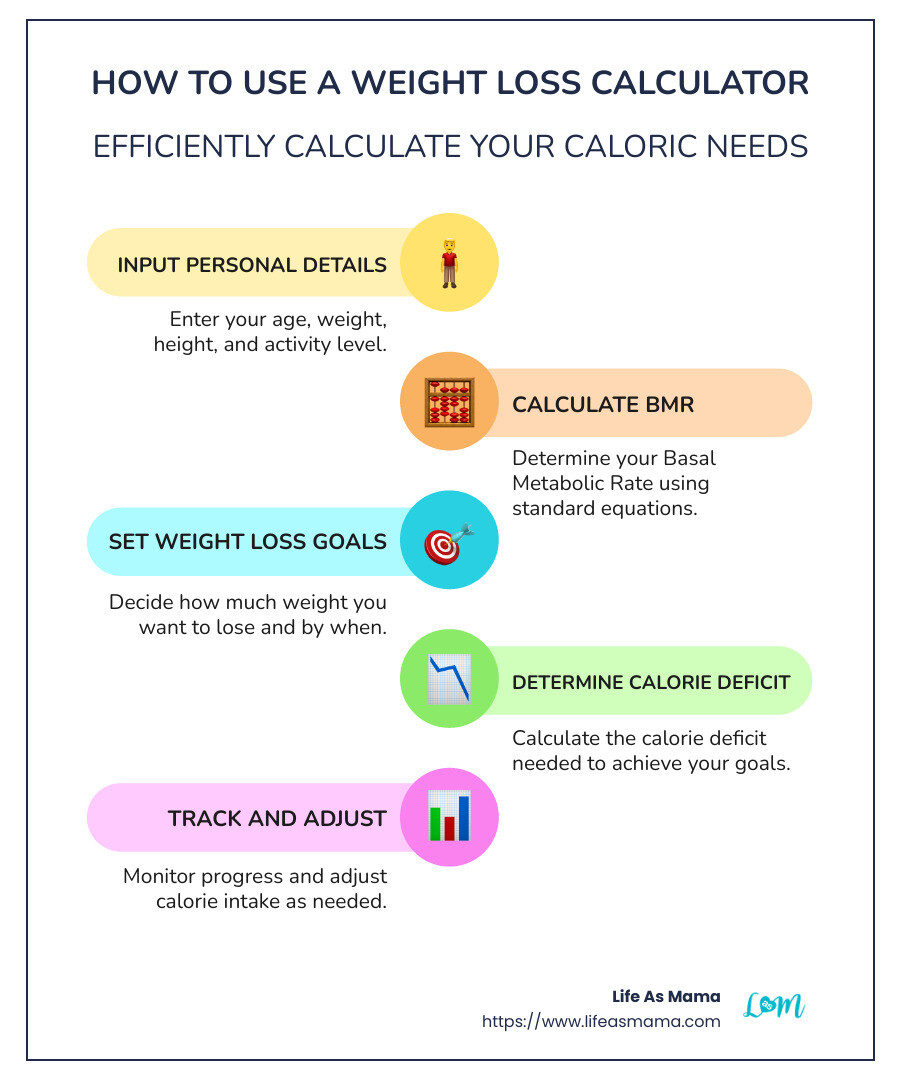
Using a weight loss calculator effectively involves more than just plugging in numbers. It’s about understanding your body’s needs and making informed decisions to reach your goals. Here’s how you can make the most out of it:
Calorie Intake
First, determine your calorie intake. This is the number of calories you should consume daily to achieve your weight loss target. The calculator takes into account your Basal Metabolic Rate (BMR) and activity level to provide a personalized recommendation.
- Set Realistic Goals: Begin by setting a realistic weight loss goal. Losing 1-2 pounds per week is generally considered safe and sustainable.
- Track Consistently: Consistency is key. Use a journal or an app to log everything you eat. This helps you stay aware of your eating habits and adjust as necessary.
Exercise Tracking
Tracking your physical activity is just as important as monitoring your diet. The calculator can adjust your caloric needs based on how active you are.
- Log Your Activities: Whether it’s a brisk walk, a yoga session, or a gym workout, keep track of your exercise. This not only helps in calculating your Total Daily Energy Expenditure (TDEE) but also motivates you to stay active.
- Adjust as Needed: If you increase your physical activity, your calorie needs might change. Keep updating your activity level in the calculator to get accurate results.
Personalized Goals
A weight loss calculator is not one-size-fits-all. It’s designed to cater to your individual needs.
- Consider Your Lifestyle: The calculator asks for details about your daily routine, preferences, and goals. This helps in creating a plan that suits your lifestyle, making it easier to stick with.
- Adapt Over Time: As you progress, your metabolic rate might change. Regularly update your information to ensure your plan remains effective.
By focusing on calorie intake, exercise tracking, and personalized goals, you can leverage a weight loss calculator to guide you towards success. It’s a powerful tool when used correctly, helping you make informed decisions on your weight loss journey.
The Science Behind Calorie Deficits
Understanding the concept of a calorie deficit is crucial for effective weight loss. Simply put, a calorie deficit occurs when you consume fewer calories than your body needs to maintain its current weight. This forces your body to tap into stored energy, often from fat reserves, leading to weight loss.
Metabolism and Its Role
Your metabolism plays a significant role in determining how your body uses calories. It’s the process by which your body converts what you eat and drink into energy. Even when you’re at rest, your body needs energy for basic functions like breathing and circulating blood. This is known as your Basal Metabolic Rate (BMR).
- Adaptive Metabolism: As you lose weight, your metabolism can slow down. This means your body requires fewer calories to function, making it harder to maintain a calorie deficit. Precision Nutrition’s research highlights the adaptive nature of metabolism, emphasizing the need for continuous monitoring and adjustment of your calorie intake.
- Factors Affecting Metabolism: Age, gender, muscle mass, and genetic factors all influence your metabolic rate. For instance, muscle burns more calories than fat, so individuals with more muscle mass typically have a higher BMR.
Achieving Weight Loss Through Calorie Deficits
Creating a calorie deficit is essential for weight loss, but it’s important to do it safely and sustainably.
- Balanced Nutrition: While reducing calorie intake, ensure you’re still getting the necessary nutrients. A diet rich in vegetables, fruits, lean proteins, and whole grains can help maintain health while losing weight.
- Avoid Extreme Deficits: Drastic calorie cuts can lead to muscle loss and nutrient deficiencies. It’s generally recommended to aim for a moderate calorie deficit, which supports gradual and sustainable weight loss.
- Monitor and Adjust: As you progress, your calorie needs may change. Regularly update your weight loss plan to reflect changes in your metabolism and activity level. This ensures you remain in an effective calorie deficit over time.
By understanding the science behind calorie deficits and metabolism, you can make informed decisions on your weight loss journey. This knowledge, combined with tools like a weight loss calculator, can help you achieve your goals in a healthy and sustainable way.
Top Strategies for Sustainable Weight Loss
Starting on a weight loss journey requires more than just cutting calories. Sustainable weight loss is about making informed choices and adopting strategies that can be maintained over the long term. Here are some of the most effective approaches:
Diet and Exercise
A balanced approach combining diet and exercise is key to sustainable weight loss. Diet involves not just cutting calories, but ensuring nutritional adequacy. A diet rich in vegetables, fruits, lean proteins, and whole grains provides essential nutrients while helping to maintain a calorie deficit.
Exercise complements dietary efforts by increasing calorie expenditure and building muscle. Activities like walking, cycling, or strength training can improve weight loss and improve overall health. Regular physical activity also boosts metabolism, making it easier to manage weight over time.
Zigzag Calorie Cycling
Zigzag calorie cycling is a clever strategy to prevent your body from adapting to a constant calorie deficit, which can lead to a weight loss plateau. This method involves alternating between high-calorie and low-calorie days while maintaining your overall weekly calorie target.
For example, if your weekly goal is 14,000 calories, you might consume more calories on active days and fewer on rest days. This approach not only keeps your metabolism guessing but also offers flexibility for social events or “cheat days.” It’s a practical way to enjoy occasional indulgences without derailing your progress.
Nutritional Awareness
Being aware of what you eat and how much you consume is crucial. Many people underestimate their caloric intake, especially when eating out, where portions are often larger than necessary. Using smaller plates can help with portion control, as studies show we tend to fill our plates regardless of size.
Tracking your food intake with a weight loss calculator or app can increase awareness and accountability. It helps you understand the caloric value of different foods and the exercise needed to offset indulgences like a 220-calorie bag of M&Ms. This knowledge can lead to healthier eating habits and better decision-making.
By combining these strategies—balanced diet and exercise, zigzag calorie cycling, and nutritional awareness—you can create a sustainable weight loss plan that fits your lifestyle. These approaches, supported by tools like nutrition tracking apps, can help you achieve and maintain your weight loss goals effectively.
Frequently Asked Questions about Weight Loss Calculators
What is the 30/30 rule in weight loss?
The 30/30 rule is a simple guideline to help balance protein intake and exercise. It suggests consuming at least 30 grams of protein per meal and engaging in 30 minutes of exercise daily. Protein is crucial for weight loss because it helps build muscle, which in turn increases your metabolism.
Muscle tissue burns more calories at rest compared to fat tissue. Thus, by focusing on protein-rich meals and regular exercise, you can effectively boost your metabolism and support your weight loss efforts.
How to calculate weight loss percentage?
Calculating your weight loss percentage is a straightforward way to track progress. To find out how much weight you’ve lost in percentage terms, use the following weight loss formula:
[ \text{Weight Loss Percentage} = \left( \frac{\text{Starting Weight} – \text{Current Weight}}{\text{Starting Weight}} \right) \times 100 ]
For example, if you started at 200 pounds and now weigh 180 pounds, your weight loss percentage would be 10%. This calculation helps you see the bigger picture and stay motivated as you progress toward your goal.
How many calories should I eat to lose 2 pounds a week?
To lose 2 pounds a week, you’ll need to create a calorie deficit of about 7,000 calories per week, as each pound of fat is roughly equivalent to 3,500 calories. This means reducing your caloric intake by 1,000 calories per day through a combination of diet and exercise.
First, calculate your Total Daily Energy Expenditure (TDEE), which includes your Basal Metabolic Rate (BMR) and activity level. Then, subtract 1,000 calories from your TDEE to find your target daily intake. For example, if your TDEE is 2,500 calories, aim to consume 1,500 calories daily.
That maintaining a calorie deficit should be done healthily. Ensure you’re still getting enough nutrients by eating a balanced diet, and consider consulting a healthcare professional before making significant dietary changes.
Conclusion: Key Takeaways for Moms on Weight Loss Strategies
At Life As Mama, we understand that starting on a weight loss journey can be both exciting and challenging. That’s why we’re committed to providing family-friendly guides that make the process easier for everyone. Our resources are designed to help you and your loved ones set realistic goals, track your progress, and celebrate your achievements together.
Whether you’re using a weight loss calculator to manage your calorie intake or exploring new meal plans, we aim to simplify the journey with practical tips and expert insights. Our guides focus on balanced nutrition and sustainable habits, ensuring that the entire family can benefit from healthier lifestyle choices.
We believe that weight loss doesn’t have to be a solitary endeavor. By involving your family in the process, you create a supportive environment that fosters long-term success. Together, you can explore new recipes, try out fun exercises, and enjoy the satisfaction of achieving your health goals.
Ready to take the next step? Check out our top keto shakes for weight loss for delicious and nutritious options that fit seamlessly into your routine. Let’s make this journey a memorable one for you and your family!
Related Images:

Amanda Schmitt
Latest posts by Amanda Schmitt (see all)
- 20+ First Day of School Traditions to Make the Day Special - August 23, 2026
- Fruit Infused Waters That Make Summer Hydration Fun - July 1, 2025
- Light Up Your Life: Home Lighting Decoration Ideas - June 30, 2025