Best face cream for aging skin holds the secret to revitalizing your look and nurturing your skin. If you’re searching for standout options, consider products with ingredients like retinol, vitamin C, and hyaluronic acid. These components help boost elasticity, fade wrinkles, and hydrate your skin, providing a youthful glow. In the world of motherhood, finding the right cream can make all the difference without needing an elaborate routine.
Aging skin can feel like a never-ending battle against time, but your skincare routine doesn’t have to be complicated. Incorporating key anti-aging ingredients into your daily regimen can subtly improve your skin’s texture and appearance over time. Whether you’re dealing with fine lines, loss of firmness, or dryness, there’s a cream that can address your specific needs. From maintaining soft, supple skin to reducing wrinkles, the right products can provide noticeable benefits with minimal effort.
I’m Amanda Schmitt, with experience in skincare and an eye for the best face cream for aging skin. As a former occupational therapist and mother, I understand the challenges of finding the right blend of efficiency and effectiveness for busy moms. Let’s explore how custom skincare can fit into your routine.
Understanding Aging Skin
Aging skin is a natural part of life, but understanding the process can help you make informed choices about your skincare routine. As we age, our skin undergoes several changes that lead to visible signs like wrinkles and sagging. Let’s break down the key factors involved:
Skin Aging Process
The skin aging process is influenced by both intrinsic and extrinsic factors. Intrinsic aging is the natural aging process that everyone experiences. It typically begins in our 20s, with the gradual decline of collagen production. Collagen is a protein that helps keep our skin firm and smooth. As its levels decrease, the skin becomes thinner and less elastic.
Extrinsic aging, on the other hand, is caused by external factors like sun exposure, pollution, and lifestyle choices. This type of aging can be more controlled with proper skincare and lifestyle habits.
Sun Damage
Sun damage is one of the most significant contributors to premature skin aging. Ultraviolet (UV) rays from the sun can penetrate the skin, causing damage to collagen fibers and leading to the formation of wrinkles and age spots. This process, known as photoaging, accelerates the natural aging process and can be minimized by using sunscreen daily.

Collagen Loss
Collagen loss is a critical aspect of aging skin. As we age, collagen production decreases, leading to a loss of skin firmness and elasticity. This results in the formation of fine lines and deeper wrinkles. The reduction in collagen also means that the skin takes longer to heal and regenerate.
Elastin Breakdown
Elastin is another essential protein in our skin, responsible for maintaining its elasticity. Like collagen, elastin fibers degrade over time, contributing to sagging skin and the loss of youthful resilience. When elastin breaks down, the skin becomes less capable of snapping back into shape after stretching or contracting.
Understanding these processes can help you choose the best face cream for aging skin that targets these specific issues. Look for products with ingredients known to boost collagen production and protect against sun damage, such as retinol and vitamin C. These ingredients help maintain your skin’s health and youthful appearance.
In the next section, we’ll explore the top ingredients to look for in anti-aging creams, which can help combat the effects of aging on your skin.
Top Ingredients to Look for in Anti-Aging Creams
Choosing the right ingredients is crucial when searching for the best face cream for aging skin. Let’s explore some powerhouse components that can help you achieve youthful, glowing skin.
Retinols
Retinols are derived from vitamin A and are well-known for their anti-wrinkle properties. They work by promoting cell turnover and boosting collagen production, which helps reduce fine lines and wrinkles. Although retinols are milder than prescription retinoids, they can still be effective when used consistently. Just remember, retinols are not safe to use during pregnancy.
Vitamin C
Vitamin C is a potent antioxidant that brightens the skin and reduces discoloration. It helps protect against sun damage and supports collagen production, keeping your skin firm and smooth. When choosing a vitamin C product, look for those containing L-ascorbic acid for maximum effectiveness. Be sure to store it away from air and sunlight to maintain its potency.
Niacinamide
Niacinamide, a form of vitamin B-3, is a versatile ingredient that calms the skin and reduces signs of aging. It improves skin tone and texture while minimizing discoloration. Niacinamide is gentle enough for daily use and can improve the effectiveness of other ingredients in your cream.
Bakuchiol
Bakuchiol is a natural alternative to retinol, originating from Ayurvedic medicine. It offers similar anti-aging benefits without the irritation, making it safe for use during pregnancy. Bakuchiol helps reduce signs of aging and evens out skin discoloration, making it a great choice for those with sensitive skin.
Tranexamic Acid
Tranexamic acid is known for its skin-brightening properties and is particularly effective in treating melasma. Derived from the amino acid lysine, it helps reduce discoloration and should be used with sunscreen for optimal results.
Azelaic Acid
Azelaic acid is a gentle antibacterial and skin-lightening agent that works well with other ingredients. It’s safe to use during pregnancy and can help improve skin tone and texture. Azelaic acid is particularly beneficial for those with sensitive or acne-prone skin.
By understanding these key ingredients, you can make informed decisions when selecting products for your skincare routine. Each ingredient offers unique benefits, so consider your specific skin concerns when choosing the right anti-aging cream for you.
In the next section, we’ll explore some of the best face creams for aging skin, featuring these powerful ingredients.
Best Face Creams for Aging Skin
Finding the best face cream for aging skin means understanding which ingredients can deliver the desired results. Here are some top choices based on key ingredients:
Retinol-Based Creams
Retinol is a superhero in anti-aging. Derived from vitamin A, it encourages cell turnover and boosts collagen production. This helps in reducing fine lines and wrinkles, making it a staple in anti-wrinkle creams. Products like the Shani Darden Retinol Reform Treatment Serum have been praised for their effectiveness. However, retinol is not safe for use during pregnancy.
Vitamin C Enriched Creams
Vitamin C is not just for your morning orange juice. This powerful antioxidant is essential for collagen production, which keeps skin firm and reduces discoloration. Look for creams with L-ascorbic acid for the best results. The CeraVe Vitamin C Face Serum is a great example of a product that can brighten your skin and protect it from environmental damage.
Niacinamide Infused Creams
Niacinamide, a form of vitamin B-3, is celebrated for its calming effect on the skin. It improves skin tone and texture while minimizing signs of aging. It’s gentle enough for daily use and complements other active ingredients. Consider trying products with niacinamide if you have sensitive skin.
Bakuchiol Alternatives
For those seeking a gentle retinol alternative, bakuchiol is a fantastic option. It’s safe to use during pregnancy and offers similar anti-aging benefits without irritation. Bakuchiol helps reduce signs of aging and evens out skin tone, making it a go-to for sensitive skin types.
Tranexamic Acid Creams
Tranexamic acid is a game-changer for skin brightening and melasma treatment. This ingredient, derived from lysine, reduces discoloration effectively. Pair it with sunscreen for the best results. Products like Paula’s Choice Clinic Discoloration Repair Serum harness the power of tranexamic acid to improve skin clarity.
Azelaic Acid Creams
Azelaic acid is a gentle antibacterial and skin-lightening agent. It’s safe during pregnancy and works well with other ingredients, making it ideal for sensitive or acne-prone skin. The Ordinary Azelaic Acid Serum is a popular choice for those looking to improve skin tone and texture.
By selecting creams with these powerful ingredients, you can target specific skin concerns and improve your anti-aging routine. Up next, we’ll discuss how to choose the best face cream for your unique skin type and needs.
How to Choose the Best Face Cream for Aging Skin
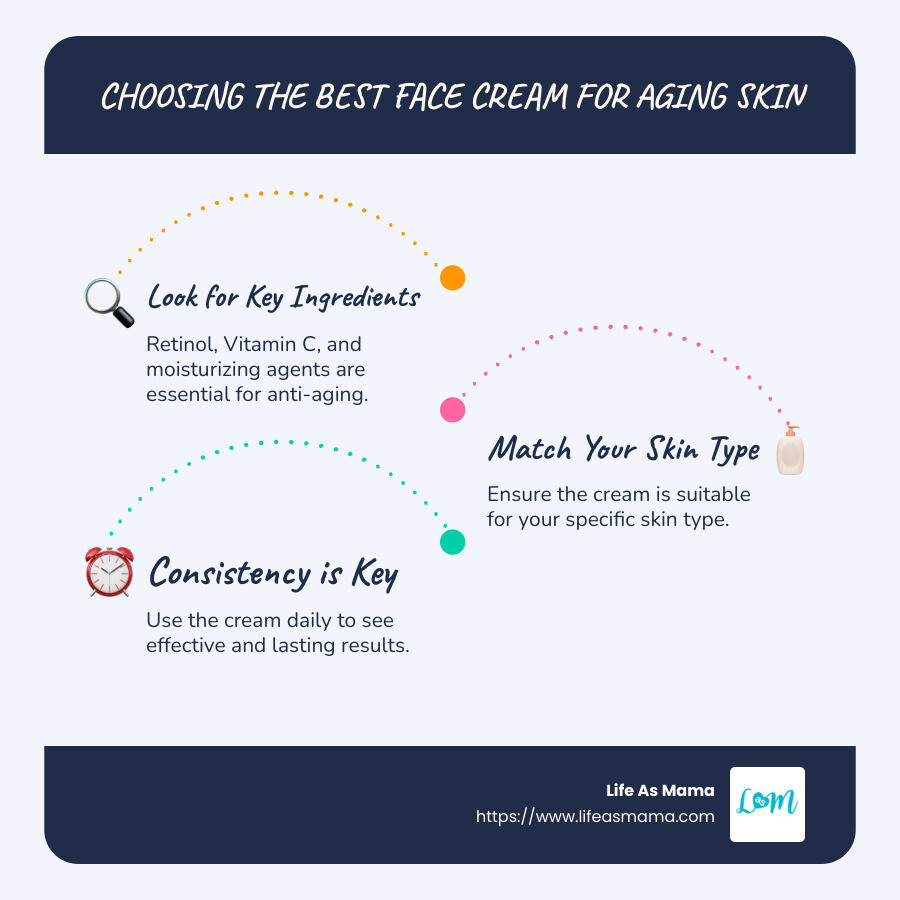
Choosing the best face cream for aging skin can feel overwhelming with so many options available. Here’s a simple guide to help you make the best choice for your unique needs:
Skin Type
Understanding your skin type is the first step. Is your skin oily, dry, sensitive, or a combination? Each type requires different care. For example, oily skin may benefit from oil-free, lightweight creams, while dry skin might need richer, hydrating formulas. Sensitive skin types should look for hypoallergenic products to avoid irritation.
Active Ingredients
Active ingredients are what make a cream effective. Retinol, vitamin C, and niacinamide are popular for their anti-aging benefits. Retinol boosts collagen and reduces wrinkles, while vitamin C brightens and protects. Niacinamide calms and improves texture. If you have sensitive skin, consider bakuchiol, a gentle alternative to retinol. Always check the ingredient list to ensure the cream targets your specific concerns.
Daily Use
Consistency is key. Most anti-aging creams require daily use to see results. Apply them as part of your morning and evening routine. Start with a clean face, then layer your cream after any serums or treatments. It might take weeks to notice changes, so be patient and stick with it.
Side Effects
Some creams can cause side effects like irritation or redness, especially if they contain strong ingredients like retinol. Always do a patch test before using a new product. If you experience any adverse reactions, discontinue use and consult a dermatologist. Opt for products labeled as non-comedogenic to avoid clogged pores, especially if you have acne-prone skin.
Cost
Price doesn’t always equate to effectiveness. A high-cost cream isn’t necessarily better than a more affordable option. Focus on the ingredients and what suits your skin type and concerns. Sometimes, drugstore brands offer excellent results without breaking the bank.
By considering these factors, you can find a face cream that fits your skin’s needs and your budget. Up next, we’ll answer some frequently asked questions about anti-aging creams to help you steer this skincare journey.
Frequently Asked Questions about Anti-Aging Creams
Do any anti-aging creams actually work?
Yes, many anti-aging creams can work, but their effectiveness often depends on the active ingredients and how consistently they are used. According to the American Academy of Dermatology, ingredients like retinol, vitamin C, and niacinamide are known for their anti-aging properties. Retinol helps increase collagen production, reducing wrinkles. Vitamin C brightens the skin and fights damage, while niacinamide soothes and improves texture.
However, results vary from person to person. It’s important to use these creams consistently, usually daily, for several weeks before expecting to see results. Once you stop using them, your skin may return to its previous state.
What is the best face cream for aged skin?
The best face cream for aged skin is one that suits your skin type and addresses your specific concerns. For instance, the L’Oréal Paris Revitalift Triple Power Anti-Aging Moisturizer has received high praise for its ability to hydrate and brighten skin while reducing imperfections. It’s been scored a perfect 5/5 by users who appreciate its immediate softening effects and the way it blends seamlessly into the skin.
Dermatologists often recommend products with retinol for their proven effectiveness in reducing fine lines and wrinkles. However, if your skin is sensitive, you might opt for a cream with bakuchiol, a gentler alternative to retinol.
What is the best skin care line for over 50?
When it comes to skincare for those over 50, a routine that focuses on hydration, sun protection, and anti-aging ingredients is key. Dermatologists suggest using products that contain hyaluronic acid for hydration, broad-spectrum sunscreen for protection, and peptides for skin firmness.
For a complete routine, you might start with a gentle cleanser, followed by a vitamin C serum, a moisturizer with SPF for daytime, and a retinol-based cream for nighttime. Products from skincare lines like La Roche-Posay are often recommended because they cater to various skin types and concerns, providing targeted solutions for aging skin.
The best skincare line will depend on your individual needs and preferences. Consulting with a dermatologist can provide personalized advice to help you choose the right products for your skin.
Final Thoughts on Choosing the Best Face Cream for Aging Skin
Taking care of aging skin doesn’t have to be complicated. At Life As Mama, we believe in creating a personalized skincare plan that fits into your daily routine and addresses your specific needs.
Personalized Skincare Plan
A personalized skincare plan is essential for effective results. Everyone’s skin is different, and what works for one person might not work for another. Consulting with a dermatologist can help you understand your skin type and choose products that will be most effective for you. They can recommend creams with active ingredients like retinol, vitamin C, or niacinamide based on your skin’s needs.
Sun Protection
One of the most important steps in any skincare routine is sun protection. The sun’s rays can cause premature aging, leading to wrinkles and loss of skin elasticity. A daily moisturizer with SPF can help protect your skin from these harmful effects. Sun protection is crucial even on cloudy days or when staying indoors.
Daily Moisturizer Use
Using a daily moisturizer is key to maintaining hydrated and youthful skin. Moisturizers help to lock in moisture and create a barrier against environmental stressors. Choose a moisturizer that suits your skin type and contains ingredients that target aging concerns.
Incorporating these simple steps into your routine can help you maintain healthy, glowing skin. For more tips and information on skincare, check out our Ultimate Buyer’s Guide to Retinol Serums for Every Skin Type.
By following these guidelines, you can keep your skin looking its best and accept the aging process with confidence.
Related Images:

Amanda Schmitt
Latest posts by Amanda Schmitt (see all)
- Healthy and Quick Back to School Breakfast Ideas - August 27, 2026
- 20 DIY Easter Centerpieces That Aren’t Just for Kids - October 9, 2025
- 18 Adult Birthday Party Themes for a Sophisticated Celebration - October 3, 2025