Why Breastfeeding Nutrition is Important
When it comes to diets for breastfeeding moms, understanding how to nourish both your body and your baby is essential. Here’s a quick answer for those who need it fast:
- Eat a mix of whole fruits, veggies, whole grains, proteins, dairy, and healthy oils.
- Get 8-12 ounces of low-mercury seafood weekly.
- Stay hydrated with water and limit sugary drinks.
- Limit alcohol and caffeine.
Breastfeeding has numerous benefits for both moms and their babies. Nourishing your body with healthy choices can protect your baby from infections and illnesses while lowering your own risk of certain diseases. Choosing nutrient-rich foods is the key to ensuring both you and your baby get the nutrition you need.
As a mom, it can be challenging to balance your diet while meeting the demands of breastfeeding. With the right information, you can steer this period smoothly and healthily.
My name is Amanda Schmitt, and as a mom and former healthcare professional, I’ve spent years helping moms like you find practical and effective approaches to breastfeeding nutrition.
Essential Nutrients for Breastfeeding Moms
Protein-Rich Foods
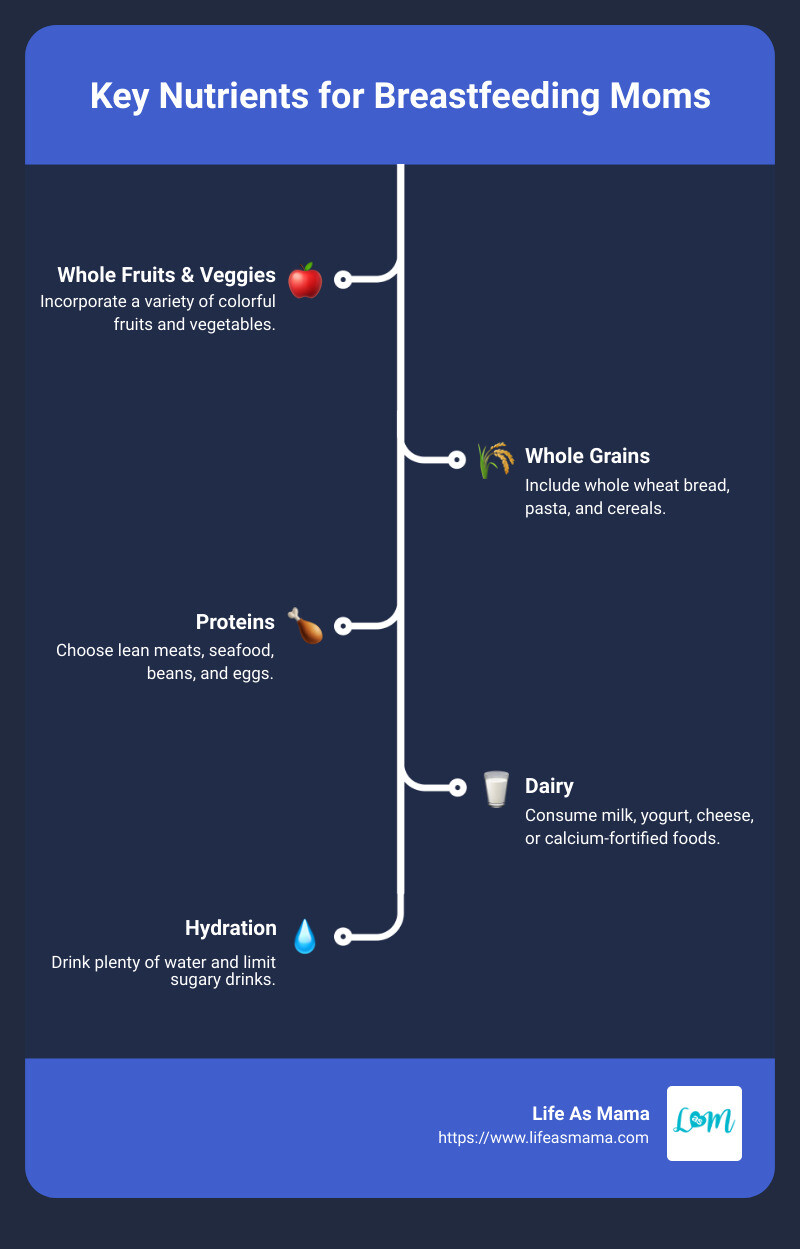
Protein is vital for both you and your baby. It helps build and repair tissues. Aim for lean meats like chicken and turkey, eggs, and dairy products such as milk and yogurt. Beans, lentils, and seafood (low in mercury) like salmon are also excellent options.
Eating a variety of protein sources can help ensure you’re getting all the amino acids you need.
Whole Grains
Whole grains provide essential vitamins and minerals. They also give you the energy you need to keep up with breastfeeding. Opt for whole wheat bread, pasta, cereal, and oatmeal. These foods are high in fiber, which can help with digestion.
Fruits and Vegetables
Fruits and vegetables are packed with vitamins, minerals, and antioxidants. Dark green vegetables like spinach and kale are great sources of vitamins A and C. Yellow vegetables like carrots and sweet potatoes provide beta-carotene. Citrus fruits like oranges and grapefruits are rich in vitamin C, which helps with iron absorption.
Dairy
Dairy products like milk, yogurt, and cheese are excellent sources of calcium. If you’re lactose intolerant or prefer plant-based options, look for calcium-fortified foods like almond milk or soy yogurt.
Hydration
Staying hydrated is crucial while breastfeeding. Water should be your go-to, but you can also include other fluids like herbal teas and broths. Limit sugary drinks and caffeine. Too much caffeine can affect your baby’s sleep, so keep it to 2-3 cups a day.

By focusing on these essential nutrients, you can ensure both you and your baby are getting what you need to thrive. Up next, we’ll dive into specific diets that can help you achieve this balanced nutrition.
Diets for Breastfeeding Moms
Balanced Diet
A balanced diet is key to successful breastfeeding. It ensures that both you and your baby get the nutrients you need. Aim for a variety of foods that cover all major food groups. This includes proteins, whole grains, fruits, vegetables, and dairy.
Vitamins and minerals are crucial too. They support your baby’s growth and your own health. A daily multivitamin supplement can help fill any gaps in your diet. Your healthcare provider can recommend one that’s right for you.
Extra Calories
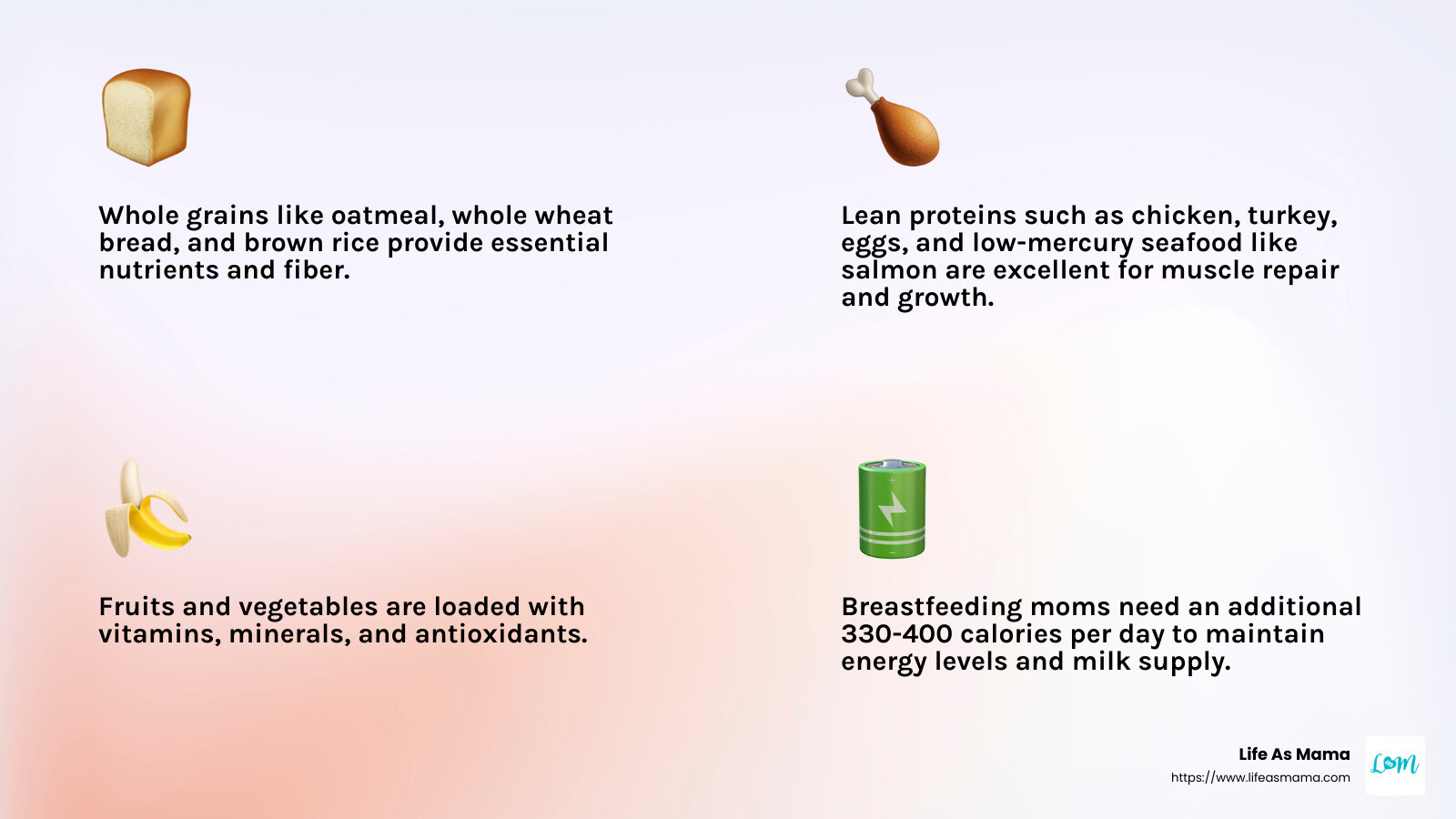
Breastfeeding moms need extra calories to maintain their energy levels and milk supply. You’ll need about an additional 330-400 calories a day. These should come from nutrient-rich snacks rather than empty calories.
Here are some healthy snack ideas:
– A slice of whole-grain bread with peanut butter
– A medium banana or apple
– 8 ounces of yogurt
Nutrient-Dense Foods
Nutrient-dense foods are packed with vitamins and minerals but are low in calories. These foods help you get the most nutrition without overeating.
Whole grains like oatmeal, whole wheat bread, and brown rice provide essential nutrients and fiber. They keep you full longer and help with digestion.
Lean proteins such as chicken, turkey, eggs, and low-mercury seafood like salmon are excellent for muscle repair and growth. Beans and lentils are great plant-based options.
Fruits and vegetables are loaded with vitamins, minerals, and antioxidants. Dark green veggies like spinach and kale offer vitamins A and C. Yellow veggies like carrots and sweet potatoes are rich in beta-carotene. Citrus fruits like oranges are high in vitamin C, which helps with iron absorption.
By focusing on these nutrient-dense foods, you can ensure that you and your baby are well-nourished.
Next, we’ll discuss foods you might want to avoid while breastfeeding.
Foods to Avoid While Breastfeeding
Alcohol
Alcohol can pass into your breast milk and affect your baby. There’s no safe level of alcohol in breast milk. If you do decide to drink, wait 2-3 hours per serving (12 oz. beer, 6 oz. wine, or 1.5 oz. liquor) before breastfeeding. This allows time for the alcohol to clear from your milk.
Pump and dump if you need to relieve breast fullness during this waiting period. This won’t remove alcohol from your milk but can help you feel more comfortable.
Caffeine
Caffeine also makes its way into breast milk and can agitate your baby or disrupt their sleep. Limit your intake to 2-3 cups of coffee per day, or about 300 milligrams of caffeine.
Besides coffee, caffeine is found in:
– Tea
– Sodas
– Energy drinks
– Chocolate
If your baby seems fussy or has trouble sleeping, consider cutting back on caffeine.
High-Mercury Fish
Certain types of fish contain high levels of mercury, which can harm your baby’s developing nervous system. Avoid fish like swordfish, king mackerel, and tilefish.
Instead, opt for low-mercury fish such as:
– Salmon
– Sardines
– Trout
These are not only safer but also rich in omega-3 fatty acids, which are beneficial for your baby’s brain development.
Gassy Foods
Some foods can make your baby gassy or colicky. Common culprits include:
– Cabbage
– Broccoli
– Onions
If you notice your baby becoming more irritable after you eat these foods, try eliminating them from your diet for a while to see if it helps.
Next, we’ll discuss special considerations for vegetarian and vegan diets while breastfeeding.
Special Considerations for Vegetarian and Vegan Diets
Breastfeeding moms who follow a vegetarian or vegan diet need to pay extra attention to certain nutrients to ensure both they and their babies stay healthy. Here are some key considerations:
Iron-Rich Foods
Iron is crucial for producing hemoglobin, which carries oxygen in the blood. Non-heme iron, found in plant-based foods, is less readily absorbed by the body than heme iron from animal products.
Good sources of iron include:
– Lentils
– Enriched cereals
– Leafy greens (like spinach and kale)
– Dried fruit (such as raisins and apricots)
To improve iron absorption, pair these foods with vitamin C-rich foods like citrus fruits, bell peppers, and strawberries.
Protein Sources
Protein is essential for muscle repair and overall growth. Vegetarians and vegans can meet their protein needs through a variety of plant-based sources.
Excellent protein sources are:
– Soy products (tofu, tempeh, soy milk)
– Meat substitutes (like veggie burgers)
– Legumes (beans, lentils, chickpeas)
– Nuts and seeds (almonds, chia seeds, hemp seeds)
Including a mix of these protein-rich foods in your diet helps ensure you get all essential amino acids.
Calcium Sources
Calcium is vital for bone health. While dairy is a well-known source, there are plenty of plant-based options for those who avoid animal products.
Calcium-rich foods include:
– Dairy products (for vegetarians)
– Dark green vegetables (like broccoli and bok choy)
– Calcium-fortified foods (such as orange juice, plant milks, and cereals)
If you’re not consuming enough calcium from food, consider discussing supplementation with your healthcare provider.
Supplements
Certain nutrients are challenging to obtain from a vegan or vegetarian diet alone, making supplements necessary.
Important supplements to consider:
- Vitamin B-12: Essential for nerve function and red blood cell production. Found almost exclusively in animal products, so a supplement is crucial for vegans.
- Omega-3: Vital for brain health. If you don’t eat fish, consider an algae-based omega-3 supplement.
- Vitamin D: Important for calcium absorption and bone health. If you have limited sun exposure or don’t consume fortified foods, a supplement may be needed.
By focusing on these nutrients, you can maintain a balanced and healthy diet while breastfeeding. Next, we’ll answer some frequently asked questions about diets for breastfeeding moms.
Frequently Asked Questions about Diets for Breastfeeding Moms
What kind of diet should a breastfeeding mom have?
A balanced diet is key for breastfeeding moms. This means eating a variety of foods to ensure you get all the essential nutrients. Focus on:
- Protein foods: Lean meats, eggs, dairy, beans, lentils, and seafood. Protein helps with tissue repair and muscle growth.
- Vegetables: Dark green vegetables (like spinach and kale) and yellow vegetables (like carrots and squash) provide essential vitamins and minerals.
- Fruits: Citrus fruits, berries, and apples are excellent choices. They offer vitamins and antioxidants.
- Whole grains: Whole wheat bread, pasta, cereal, and oatmeal are great sources of fiber and other nutrients.
What foods should I avoid during breastfeeding?
Certain foods and drinks can affect your baby through breast milk. Here are some you should limit or avoid:
- Caffeine: Limit to 2-3 cups of coffee or caffeinated drinks per day. Too much caffeine can make your baby irritable and affect their sleep.
- Gassy foods: Foods like cabbage, broccoli, and onions can cause gas and discomfort in your baby.
- High-mercury fish: Avoid fish like swordfish, king mackerel, and tilefish. Mercury can harm your baby’s developing nervous system.
- Alcohol: There’s no safe level of alcohol in breast milk. If you drink, wait 2-3 hours per drink before breastfeeding or pump and dump your milk.
How can I lose weight while breastfeeding?
Losing weight while breastfeeding is possible, but it’s important to do it safely:
- Physical activity: Regular exercise can help you shed pregnancy weight. Activities like walking, swimming, and yoga are great options.
- Moderate calorie restriction: Aim for a gradual weight loss of about 1 pound per week. Don’t go on extreme diets that could affect your milk supply.
- Avoid extreme diets: Fad diets or very low-calorie diets can reduce your milk supply and deprive you of essential nutrients.
By focusing on a balanced diet and healthy lifestyle, you can support both your health and your baby’s growth. Next, we’ll discuss some special considerations for vegetarian and vegan diets.
Key Takeaways: Nourishing Diet Choices for Breastfeeding Moms
Making healthy choices while breastfeeding is crucial for both you and your baby. A balanced diet filled with protein-rich foods, whole grains, fruits, and vegetables ensures you get all the essential nutrients you need. Your body is working hard to nourish your baby, so giving it the right fuel is key.
At Life As Mama, we understand the challenges of motherhood and aim to provide practical, family-friendly guides to help you along the way. Whether it’s tips on healthy eating, exercise, or managing daily routines, our resources are designed to support you in making the best choices for your family.
For more insights and practical advice on diets for breastfeeding moms, check out our comprehensive guide to the top keto shakes for weight loss. It’s packed with information to help you stay healthy and energized while caring for your little one.
By focusing on a well-rounded diet and making informed choices, you can ensure both you and your baby thrive during this special time.
Related Images:

abens1960
Latest posts by abens1960 (see all)
- Healthy Eating for Nursing Moms: Top Diets to Follow - August 23, 2024

