Tips for Air Travel with Infant: Top 10 Stress-Free Secrets
Tips for air travel with infant are essential for parents aiming for a stress-free journey. Here’s a quick rundown to make your trip smoother:
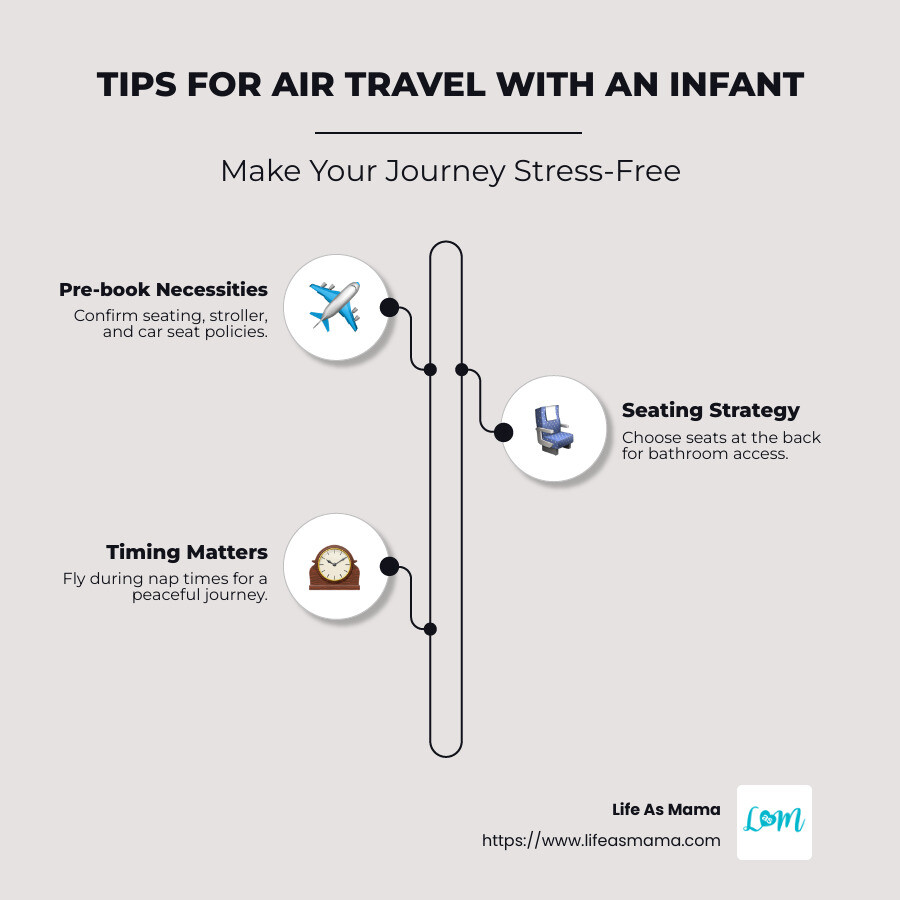
- Pre-book infant necessities: Confirm seating and check stroller and car seat policies.
- Seating strategy: Choose seats at the back for easy bathroom access.
- Timing matters: Fly during nap times to improve the chances of a peaceful journey.
- Travel lightly but smartly: Layered clothing and essentials only.
- Prepare for pressure changes: Offer a bottle or pacifier during takeoff and landing.
Navigating air travel with a baby can be challenging, but having a plan in place can make it manageable.
I’m Amanda Schmitt, and as a former Occupational Therapist turned full-time mom and blogger at Life As Mama, I’ve gathered these practical tips for air travel with infant through years of personal experience and research.
When is Your Baby Ready to Fly?
Flying with a baby can be a big decision. Knowing when your baby is ready to fly is crucial for a safe and pleasant journey. Here’s what you need to know about age guidelines and health considerations.
Age Guidelines
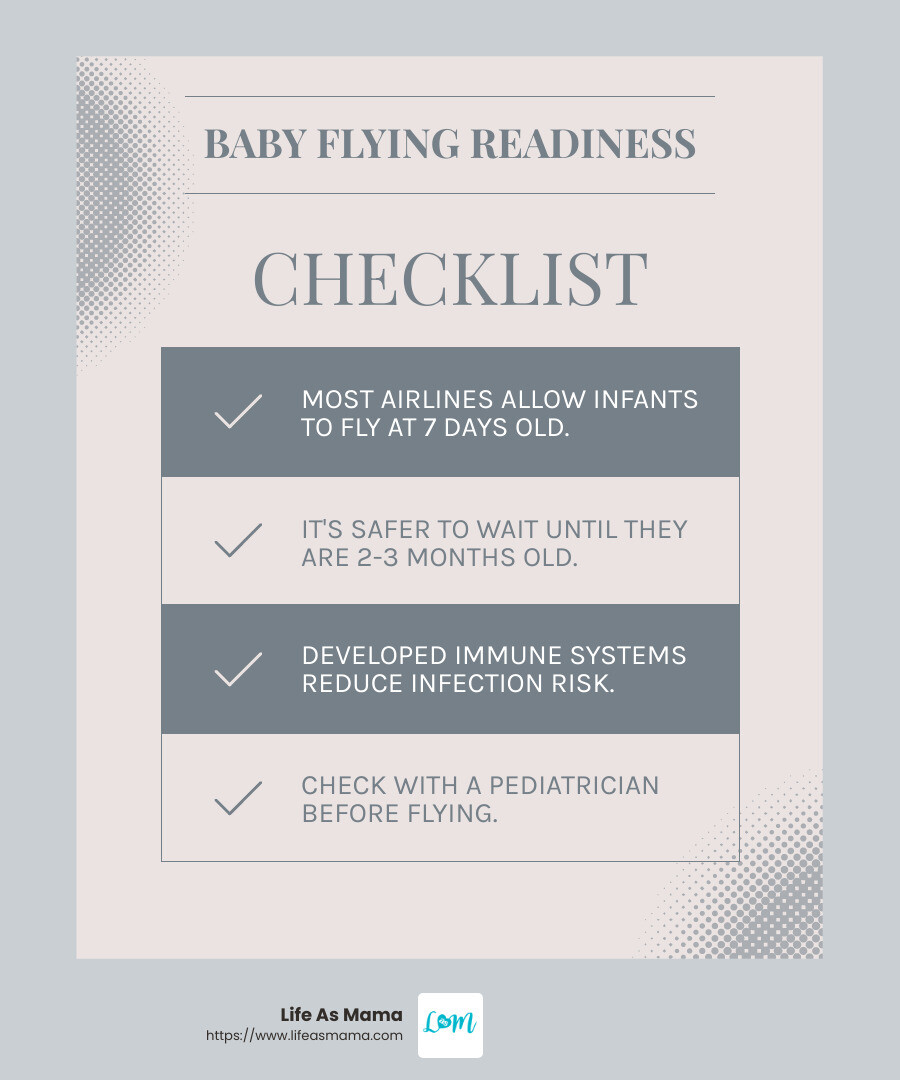
Most airlines allow infants to fly as early as seven days old, but it’s wise to wait until they are at least two to three months old. This gives your baby’s immune system more time to develop, reducing the risk of catching infections in crowded airports and airplanes.
Health Considerations
Before booking that flight, consider your baby’s health:
- Immune System: Newborns have developing immune systems. Flying too early might expose them to germs.
- Ear Pain: Babies can experience ear pain during flights due to pressure changes. Nursing or using a pacifier during takeoff and landing can help alleviate discomfort.
- Doctor’s Advice: If your baby has any health issues, consult your pediatrician before flying. They can provide personalized advice based on your baby’s health needs.
Special Situations
If your baby was born prematurely or has health conditions, you might need to delay flying until they are older. Always consult with a healthcare professional to ensure your baby is ready to travel.
Every baby is different. Use these guidelines to decide when your baby is ready to take to the skies. Next, let’s look at tips for air travel with infant to make your journey as smooth as possible.
Tips for Air Travel with Infant
Flying with your baby can be daunting, but with the right tips and preparation, it can be a breeze. Let’s explore some essential tips for air travel with infant to ensure a smooth journey.
Choosing the Right Seat
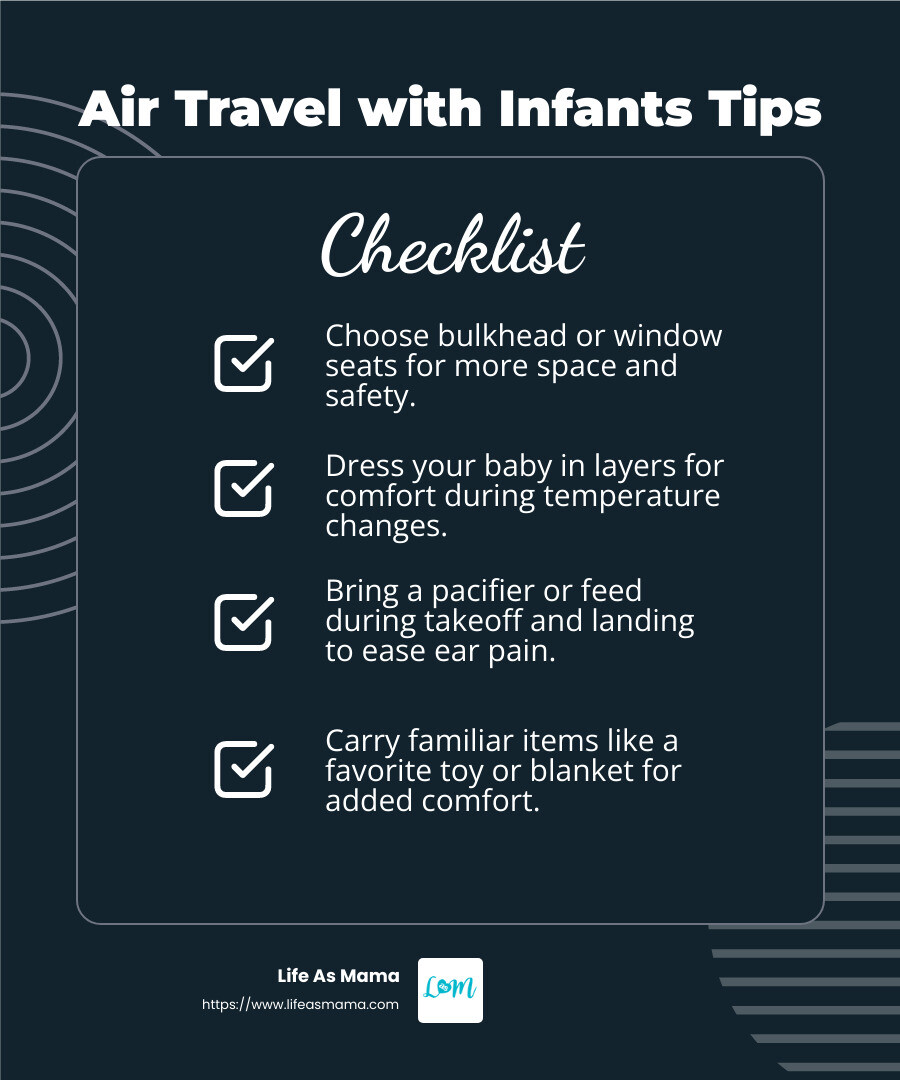
Picking the right seat is crucial for a comfortable flight. If possible, opt for bulkhead seats. These seats are at the front of each section and offer more legroom. Some airlines even provide a pull-out bassinet in this area. However, bulkhead seats often have fixed armrests, which can limit your movement.
If bulkhead seats aren’t available, consider a window seat. This seat keeps your baby away from the aisle, reducing the risk of getting bumped by passing carts or hot drinks. Plus, the view can be a great distraction for your little one!
Keeping Your Baby Comfortable
Comfort is key to a happy baby on a flight. Dress your baby in layered clothing to easily adjust to the plane’s temperature changes. Layers allow you to add or remove clothing as needed.
Bring along familiar items like a favorite blanket or toy. These items provide comfort and a sense of security in an unfamiliar setting.
Managing Ear Pain
Ear pain during takeoff and landing is common for babies due to pressure changes. To help manage this, use a pacifier or nurse your baby during these times. The sucking motion helps relieve pressure in the ears.
Feeding your baby during takeoff and landing can also be effective. A bottle or breastfeeding can ease discomfort and keep your baby calm.
With these strategies, you’re well on your way to a stress-free flight with your infant. Let’s move on to what you need to pack for your journey.
Packing Essentials for a Flight with an Infant
Traveling with a baby requires a bit of preparation, especially when it comes to packing. Here’s a quick guide to ensure you have everything you need for a smooth flight.
Must-Have Items
Diaper Bag: Your diaper bag is your best friend during the flight. Pack it with essentials like diapers, wipes, a changing pad, and extra clothes for both you and your baby. Don’t forget to include a few plastic bags for any messy emergencies.
Car Seat: If you have purchased a seat for your baby, consider bringing an FAA-approved car seat. It’s the safest way for a baby to fly and ensures they have a familiar and secure place to sit.
Stroller: A stroller can be a lifesaver in the airport. You can often gate-check your stroller, which means you can use it until you board the plane and retrieve it as you deplane.
Baby Carrier: A baby carrier is perfect for keeping your hands free while navigating the airport. It’s also helpful if your little one needs a nap or some extra comfort.
Noise-Canceling Headphones: These can be a great investment if your baby is sensitive to noise. They help block out the roar of the plane and other loud sounds, making it easier for your baby to relax and sleep.
Navigating Security with Baby Supplies
Going through security with a baby can be challenging, but knowing the TSA guidelines can help streamline the process.
TSA Guidelines: When traveling with an infant, you’re allowed to bring breast milk, formula, and baby food in quantities greater than 3.4 ounces in your carry-on. These items are subject to additional screening, so keep them together in a separate bag for easier access.
Liquid Allowances: Inform the TSA agent if you have liquids over the usual limit. It’s a good idea to place these liquids in a separate tray during screening. If you’re carrying an ice pack, ensure it’s completely frozen to avoid it being confiscated.
Stroller and Car Seat: Both need to go through the scanner, so be prepared to fold them up. You’ll need to carry your baby through the scanner, as they can’t stay in the stroller or car seat during this process.
With these packing essentials and security tips, you’ll be well-prepared for your flight. Up next, let’s explore in-flight tips to keep your journey smooth and stress-free.
In-Flight Tips for a Smooth Journey
Traveling with an infant can be a unique trip. With the right approach, you can make the journey enjoyable for both you and your baby. Here are some tips for air travel with infant to ensure a smooth experience.
Keeping Your Baby Entertained
Babies can get restless during flights, so having a variety of entertainment options is essential.
- Toys: Pack a few of your baby’s favorite toys. Introduce them one at a time to keep your baby interested. Soft toys or rattles are great options as they are quiet and easy to pack.
- Books: Small, colorful books can capture your baby’s attention. Choose ones with different textures or flaps to keep them engaged.
- Walks: If the seatbelt sign is off, take a stroll down the aisle to change the scenery and give your baby a new perspective. This can be a good distraction and a chance for them to stretch a bit.
Feeding and Diapering
Feeding and changing your baby on a plane requires a bit of planning. Here’s how to handle it smoothly.
- Bottle Feeding: Bring enough formula or breast milk for the flight duration, plus some extra in case of delays. Feeding during takeoff and landing can help alleviate ear pressure discomfort.
- Changing Tables: Airplane bathrooms usually have small changing tables. Bring a portable changing pad to make diaper changes more sanitary. Remember to pack extra diapers and wipes in your carry-on.
- Diaper Changes: Try to change your baby’s diaper before boarding to minimize the need in-flight. If you must change them on the plane, be prepared for tight spaces and possible turbulence. Ask flight attendants for assistance if needed, as they may have tips for the best time to use the restroom.
By keeping these tips in mind, you can help ensure that your flight is as comfortable and stress-free as possible for both you and your baby. Next, we’ll tackle frequently asked questions about air travel with infants.
Frequently Asked Questions about Air Travel with Infants
What is the Safest Way for a Baby to Fly?
The safest way for your baby to fly is in a child safety restraint. This means using an FAA-approved car seat or an airplane harness device. These are designed to keep your baby secure during the flight, especially in the event of turbulence.
- Car Seats: Ensure the car seat is certified for air travel. Look for a label that says, “This restraint is certified for use in motor vehicles and aircraft.” Infants under 20 pounds should be in a rear-facing car seat.
- Airplane Harness Devices: These are alternatives to car seats, like the Child Aviation Restraint System (CARES), but they are not suitable for infants. They are designed for toddlers weighing 22 to 44 pounds.
Can I Bring Baby Formula or Breast Milk on the Plane?
Yes, you can bring baby formula or breast milk on the plane. The TSA has special allowances for these items:
- TSA Regulations: You can carry breast milk, formula, and baby food in quantities greater than 3.4 ounces in your carry-on. These items will undergo additional screening, so keep them together in a separate bag for easy access.
- Reasonable Quantities: Bring enough for the flight duration, plus a little extra in case of delays. Cooling accessories like ice packs are allowed but must be completely frozen when going through security.
How Can I Protect My Baby’s Ears During the Flight?
Ear pressure changes during takeoff and landing can be uncomfortable for babies. Here are some ways to help:
- Pacifiers and Feeding: Sucking on a pacifier, bottle, or during breastfeeding can help relieve ear pressure. Start just as the plane begins to ascend or descend.
- Cotton Balls and Earplugs: While not as effective as sucking, some parents use cotton balls for added comfort. However, earplugs are generally not recommended for infants.
By understanding these essentials, you can ensure a safer and more comfortable flight for your baby. Now, let’s explore what to pack for your journey.
Conclusion
Traveling with your baby can be a rewarding experience, and at Life As Mama, we’re here to help make your journey as stress-free as possible. Our mission is to provide you with practical, family-friendly travel tips that ensure memorable experiences for you and your little one.
Air travel with infants can seem daunting, but with the right preparation and mindset, it can be smooth and enjoyable. It’s all about keeping calm and being prepared. From choosing the right seat to managing ear pain, every detail counts.
Don’t forget to pack those essentials like a well-stocked diaper bag and familiar comfort items. This will help keep your baby comfortable and entertained throughout the flight.
Finally, accept the journey. Take photos, enjoy the experience, and don’t hesitate to ask for help from flight attendants or fellow passengers. This trip is not just about getting to your destination—it’s about creating beautiful memories along the way.
For more family-friendly travel tips and to explore family-friendly experiences, visit our Ultimate Guide to Family-Friendly Experiences in Scottsdale, AZ.
Safe travels and happy flying from all of us at Life As Mama!
Related Images:

Amanda Schmitt
Latest posts by Amanda Schmitt (see all)
- 20+ First Day of School Traditions to Make the Day Special - August 23, 2026
- Fruit Infused Waters That Make Summer Hydration Fun - July 1, 2025
- Light Up Your Life: Home Lighting Decoration Ideas - June 30, 2025