Beef Tallow for Cooking: 7 Powerful Benefits in 2025
Refinding a Traditional Kitchen Fat
Remember when grandma’s fried chicken had that incredible flavor that modern versions just can’t seem to match? The secret might have been beef tallow for cooking – a traditional fat that’s making a delicious comeback in kitchens across America.
Before the mid-20th century, beef tallow was a kitchen staple in nearly every home. Then came the vegetable oil revolution, and this nutrient-dense traditional fat was largely forgotten. But as more of us seek connection with time-tested cooking methods and whole foods, tallow is reclaiming its rightful place in our pantries.
What makes tallow so special? For starters, it’s remarkably stable at high temperatures, with a smoke point around 400°F that puts many vegetable oils to shame. When you sear a steak or fry potatoes in beef tallow for cooking, you’ll notice a beautiful crisp texture and a subtle depth of flavor that improves rather than overwhelms your food.
The versatility of tallow might surprise you. It creates the flakiest pie crusts, the most tender biscuits, and adds richness to cornbread that butter alone can’t achieve. Roasted vegetables take on a caramelized exterior that’s absolutely crave-worthy, and don’t even get me started on tallow-fried chicken – it’s a game-changer!
From a nutritional standpoint, quality matters tremendously. Tallow from grass-fed beef contains valuable fat-soluble vitamins A, D, E, and K, plus a healthier balance of omega fatty acids compared to conventional versions. While it does contain saturated fat (about 6.4g per tablespoon), many nutrition experts now recognize that natural animal fats can be part of a wholesome diet when enjoyed in moderation.
I’m Amanda Schmitt, and my journey with beef tallow for cooking began when I transitioned from healthcare to full-time homemaking with two small children. Looking for ways to prepare nourishing, delicious meals for my family, I finded that traditional fats like tallow not only improved the taste of our favorite dishes but aligned with my whole-food approach to feeding my family.
Want to learn more about this traditional cooking fat? Explore our helpful guides:
– beef tallow benefits
– beef tallow for acne
– how to make beef tallow
What Is Beef Tallow and How Is It Made?
Ever wondered what gives those old-fashioned French fries their irresistible flavor? The secret might be beef tallow for cooking. This traditional fat isn’t just another cooking oil—it’s a connection to our culinary heritage.
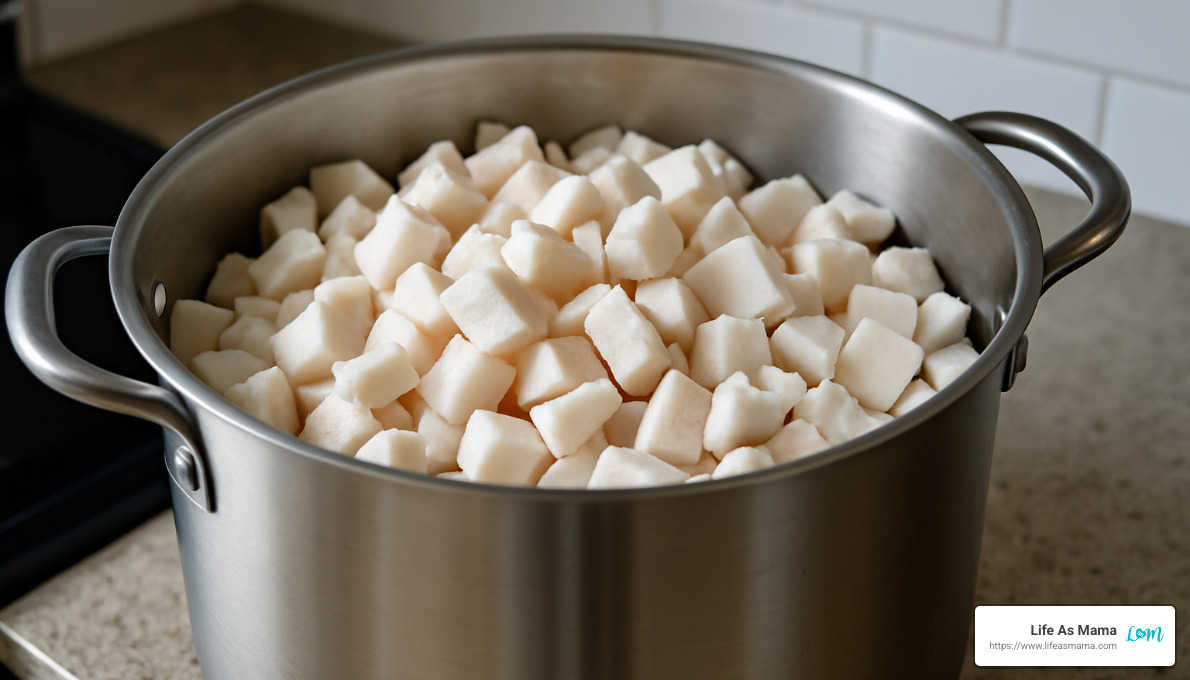
Beef tallow is simply rendered beef fat, primarily from suet—the firm, white fat found around cattle kidneys and loins. While any beef fat can become tallow, suet is the gold standard because it creates the cleanest-tasting, most stable cooking fat.
“‘Tallow’ might sound fancy, but it’s really just a term for rendered fat,” as culinary expert Susie Bulloch puts it. “Our great-grandparents used it daily not just for cooking, but for making everything from candles to soap.”
The rendering process is a bit like magic—it transforms raw, waxy suet into a shelf-stable golden treasure by gently separating pure fat from any meat bits, connective tissue, and moisture. This purification doesn’t just extend shelf life; it creates a versatile cooking medium that can handle serious heat without smoking.
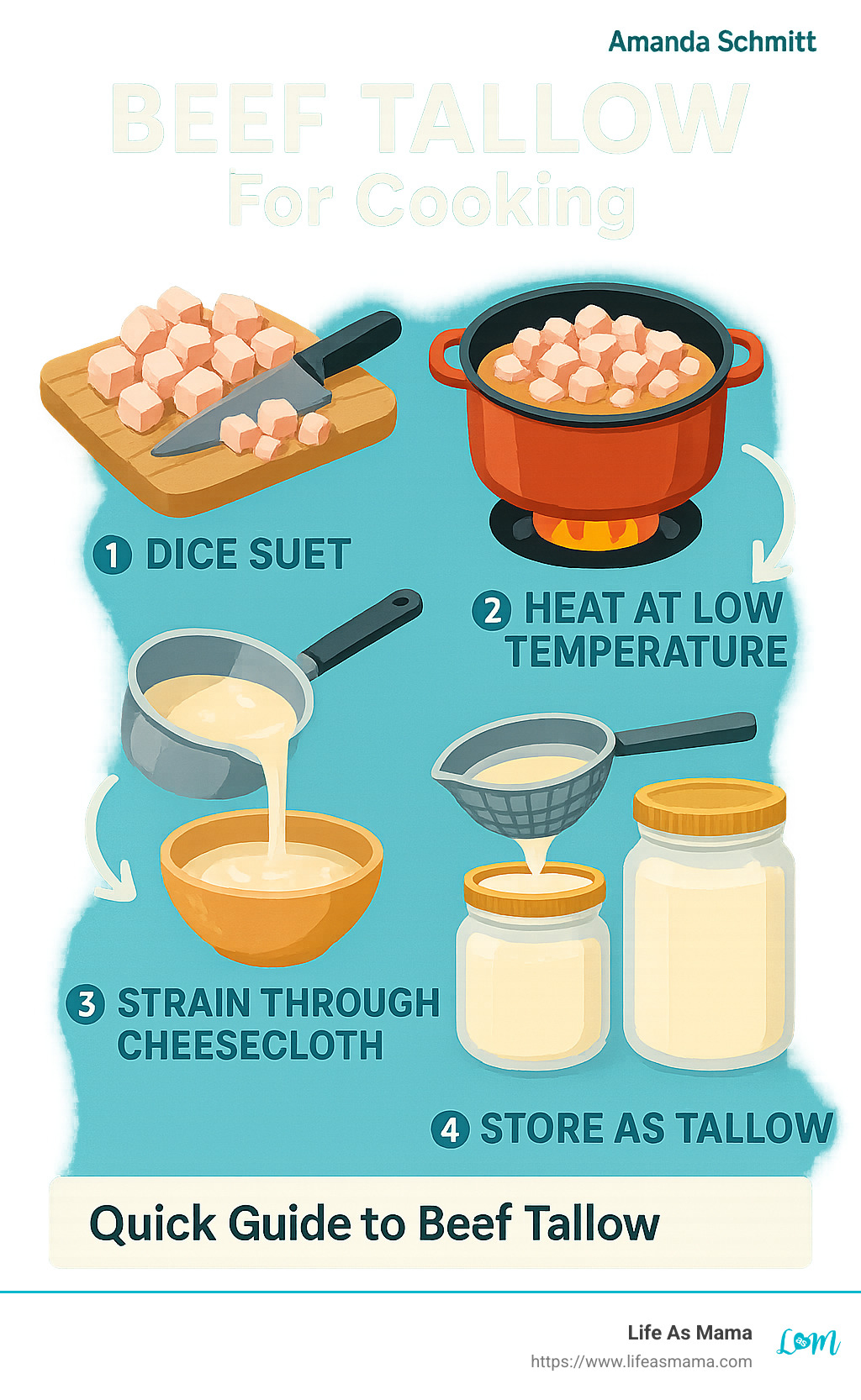
Most home cooks use one of two rendering methods:
Dry rendering involves slowly melting the fat without added water until it separates from tissue, while wet rendering simmers the fat with water to regulate temperature and often results in a purer end product. Both work beautifully for kitchen use, though wet rendering tends to produce cleaner tallow that’s particularly nice for non-cooking uses like skincare.
One of the beautiful aspects of making beef tallow for cooking is how it connects to nose-to-tail eating principles. By changing what might otherwise be discarded, you’re practicing a sustainable approach that honors the whole animal—reducing waste while gaining a superior cooking fat. It’s a small but meaningful way to participate in more mindful food practices.
Home Rendering Basics
Don’t let the idea of rendering your own tallow intimidate you—it’s surprisingly straightforward, though it does require patience. The cardinal rule is low-and-slow heat, which prevents burning and off-flavors from developing in your beautiful tallow.
As the culinary team at Hey Grill Hey advises, “You’ll notice a gentle simmer with small bubbles forming, but you never want to see a rolling boil.” This gentle approach preserves the clean, mild flavor that makes tallow so versatile.
For best results, start by cutting your suet into small, one-inch cubes to increase surface area and speed the process. Set your stove to low or medium-low (around 200–215°F) and settle in for 3-4 hours of rendering time. The patience pays off—rushing with higher heat often results in tallow with burnt undertones.
Once rendered, strain your liquid gold first through a fine-mesh strainer to catch large particles, then through cheesecloth for those finer impurities. Allow it to cool slightly before transferring to storage containers, where it will solidify into a creamy white fat perfect for your next cooking trip.
Safety matters when working with hot fat, so never leave your rendering pot unattended. Keep a lid nearby (but not on the pot) in case of flare-ups, avoid splashing the hot fat which can cause serious burns, and keep little hands and paws away from the stove during the process.
Equipment Checklist
Setting yourself up for tallow-making success starts with having the right tools on hand. You’ll need:
Large stockpot: A 16-quart stainless steel pot gives plenty of room for rendering without overcrowding.
Fine-mesh strainer: Essential for the first straining to remove larger particles.
Cheesecloth or coffee filters: These catch the finer impurities during the second straining.
Heat-resistant funnel: Makes transferring hot tallow to storage containers safer and less messy.
Mason jars or glass containers: Wide-mouth jars are particularly convenient for scooping out the solidified tallow later.
Metal or wooden spoon: For occasional gentle stirring during rendering.
Meat thermometer: Optional but helpful for monitoring that your temperature stays in the ideal range.
With these simple tools and a little patience, you’ll transform humble beef fat into beautiful, creamy beef tallow for cooking that’s ready to lift everything from crispy potatoes to flaky pie crusts. The process connects you to generations of cooks who understood that sometimes, the old ways are the best ways.
Beef Tallow vs. Other Cooking Fats: Nutrition & Health
When I first started using beef tallow for cooking in my family’s meals, I was amazed at how differently it performed compared to the vegetable oils I’d been using for years. But beyond performance, I wanted to understand what I was actually feeding my family. Let’s take a closer look at how tallow stacks up nutritionally against other kitchen fats.
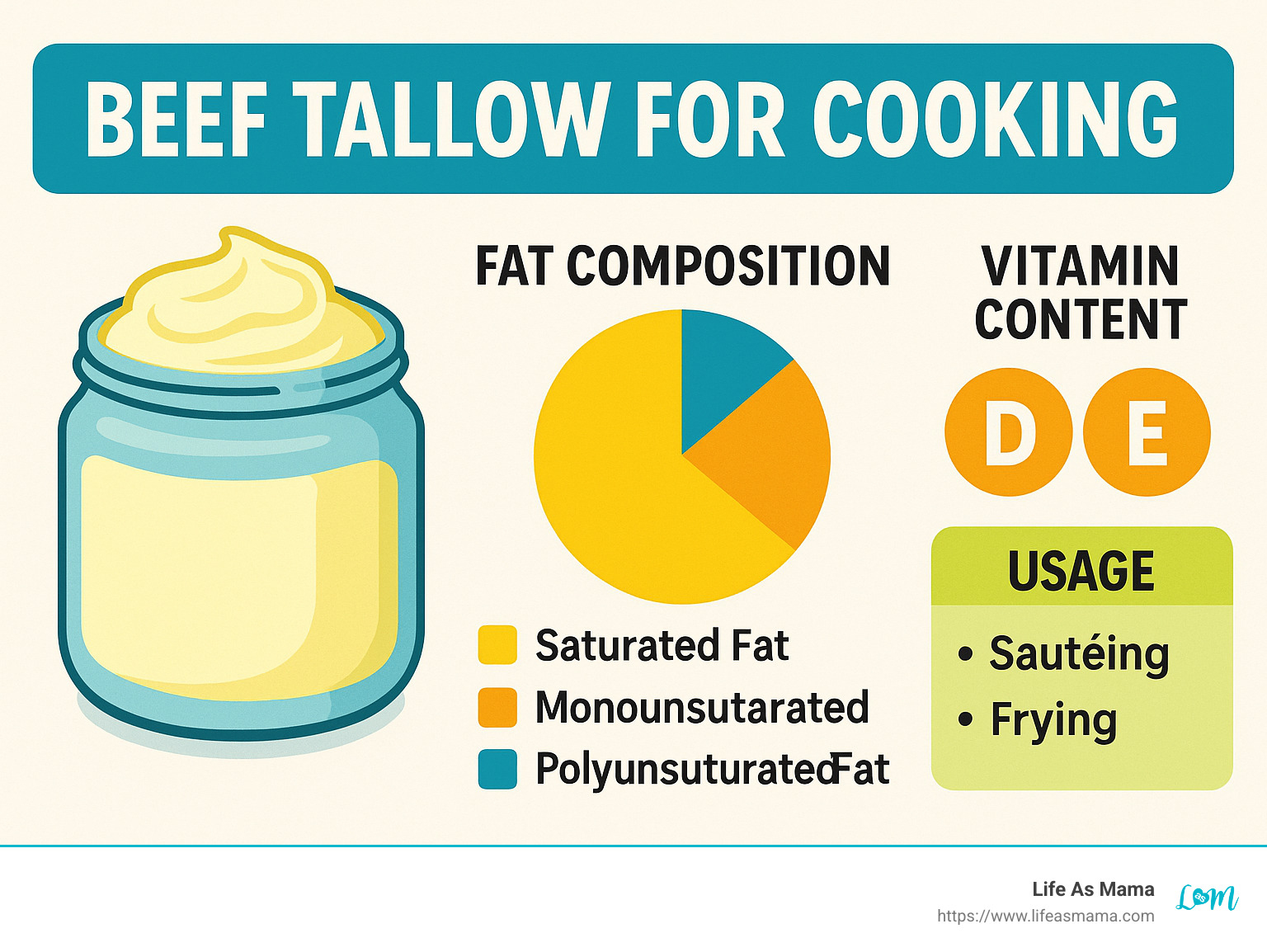
A tablespoon of beef tallow (about 12.8g) contains around 115 calories and 12.8g of total fat. What’s interesting is how that fat breaks down: about 6.4g of saturated fat, 5.4g of monounsaturated fat, and just 0.5g of polyunsaturated fat. This balance is actually what gives tallow its remarkable stability when heated.
Here’s how tallow compares to other common cooking fats:
| Fat Type | Saturated Fat (g) | Monounsaturated Fat (g) | Polyunsaturated Fat (g) | Smoke Point (°F) |
|---|---|---|---|---|
| Beef Tallow | 6.4 | 5.4 | 0.5 | 400-420 |
| Butter | 7.2 | 3.0 | 0.4 | 350 |
| Olive Oil | 1.9 | 10.0 | 1.4 | 375-420 |
| Vegetable Oil | 1.7 | 2.2 | 8.6 | 400-450 |
| Coconut Oil | 11.2 | 0.8 | 0.2 | 350 |
I was surprised to learn that one tablespoon of beef tallow for cooking provides nearly the full daily amount of saturated fat recommended by the American Heart Association for a 2,000-calorie diet. They suggest limiting saturated fat to about 6% of daily calories. But it’s worth noting that our understanding of saturated fat is evolving.
As Drake, a respected culinary expert, points out: “There is no scientific evidence other than observational study linking animal fats or eggs for that matter to heart disease or clogged arteries.”
The Cleveland Clinic offers more information on the complex relationship between saturated fat and heart health, showing that the science continues to develop in this area.
What seems most important is quality. Grass-fed beef tallow generally contains a healthier fatty acid profile than conventional tallow, with higher levels of beneficial omega-3 fatty acids and something called conjugated linoleic acid (CLA).
Potential Benefits
When I incorporated beef tallow for cooking into our family meals, I was pleased to find its many potential benefits.
Grass-fed tallow is surprisingly rich in fat-soluble vitamins A, D, E, and K. These nutrients support everything from immune function to bone health, and they’re often lacking in modern diets.
The CLA (Conjugated Linoleic Acid) content in tallow particularly interested me. Some research suggests this fatty acid may have anti-inflammatory properties and other health benefits, especially when sourced from grass-fed animals.
I’ve also come to appreciate tallow’s remarkable stability. Unlike many vegetable oils that can oxidize and form harmful compounds when heated, tallow remains stable at high temperatures. This makes it a potentially safer option for high-heat cooking methods like frying and searing.
Some nutrition experts point out that the fatty acid profile of tallow actually resembles our own cell membranes, which might make it more compatible with our bodies. And the stearic acid in tallow doesn’t seem to raise cholesterol levels the way some other saturated fats might.
Angela L Schmitt, another tallow user, shares my enthusiasm: “This is a great dairy-free butter substitute. I find the flavor very mild and can be used in both baking and cooking.”
Potential Risks
Balance has become my watchword when using beef tallow for cooking. Despite evolving perspectives on saturated fat, major health organizations still recommend moderation.
The saturated fat content is something to be mindful of. Just one tablespoon contains about half the daily recommended limit according to current guidelines. For families with specific health concerns or genetic predispositions to heart disease, this is worth considering.
At 115 calories per tablespoon, tallow is also quite calorie-dense. I’ve learned to use it judiciously, especially when preparing meals for family members watching their caloric intake.
Some research suggests beef tallow may raise LDL (“bad”) cholesterol levels when consumed in large amounts, though this effect varies widely among individuals.
Registered Dietitian Michelle Dodd offers advice I’ve found practical: “If you’re using beef tallow here and there to cook special dishes, that’s fine, but it’s not something that should be part of your daily cooking routine.”
In our home, we’ve found that beef tallow for cooking works beautifully as part of a varied approach to healthy eating. We enjoy its rich flavor and cooking properties for special dishes, while balancing it with other fats like olive oil for everyday cooking. Like many traditional foods, moderation seems to be the key to enjoying its benefits while minimizing potential downsides.
Beef Tallow for Cooking: From Frying to Baking
The magic of beef tallow for cooking lies in its incredible versatility in the kitchen. With a high smoke point of about 400-420°F, this traditional fat handles intense heat beautifully without breaking down—something that makes it special among cooking fats.
“Once a staple in your grandparent’s or great-grandparent’s savory roasts, buttery-flaky pastries and greasing pans, beef tallow is making an unexpected return to households — marketed as a wellness superstar,” notes one culinary historian.
Whether you’re searing a steak, creating the perfect crispy fries, or baking a flaky pie crust, tallow brings something special to nearly every cooking method. Let’s explore how this comeback fat can transform your favorite dishes.
Beef Tallow for Cooking in High-Heat Frying
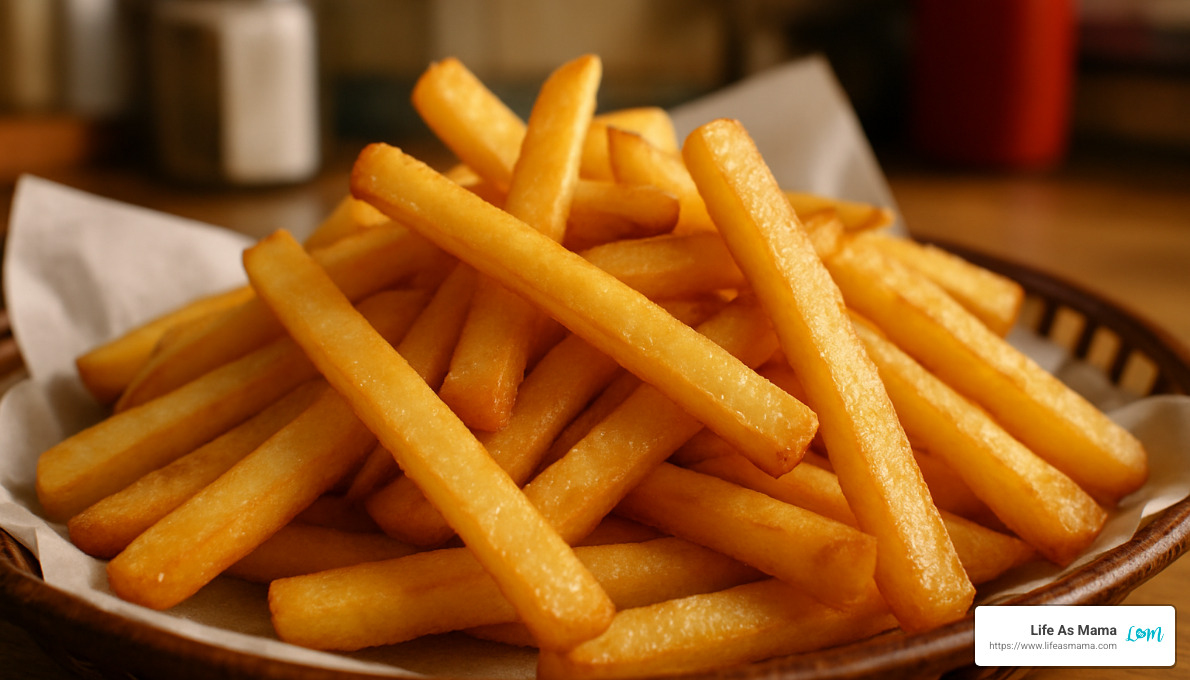
When it comes to frying, beef tallow for cooking truly shines. Did you know McDonald’s originally used beef tallow for their iconic French fries until the early 1990s? Many food lovers still talk about those original tallow-fried potatoes with a wistful sigh.
The magic happens because tallow creates an exceptional crispness that vegetable oils just can’t match. Foods develop a beautiful golden exterior while maintaining moisture inside. Plus, tallow imparts a subtle richness that complements fried foods without overwhelming their natural flavors.
For home cooks, tallow is surprisingly economical for frying since you can reuse it multiple times. After cooking, simply let it cool, strain out any food particles, and store it for your next frying trip. Unlike polyunsaturated oils, tallow remains stable at high temperatures, potentially creating fewer harmful compounds when heated repeatedly.
Want to make spectacular French fries? Cut potatoes into your preferred shape, soak them in cold water for 30 minutes to remove excess starch, and dry thoroughly. Then fry them in tallow at 325°F until soft (about 5 minutes), remove and cool for 15 minutes, and fry again at 375°F until golden and crispy. As one tallow enthusiast puts it: “Oh, baby, are these the best potatoes you’ll ever have.”
For chicken that’s moist on the inside and deliciously crispy outside, check out our detailed guide to frying chicken in beef tallow.
Beef Tallow for Cooking in Roasting & Sautéing
Roasting and sautéing with beef tallow for cooking adds a depth that transforms ordinary vegetables and meats into something special. The high smoke point means you can get a beautiful sear without worrying about burning your fat.
For roasting vegetables, simply toss your cut veggies in melted tallow (about 1-2 tablespoons per pound), season with salt, pepper, and herbs, then roast at 425°F until caramelized. The results? Vegetables with irresistibly crispy exteriors and creamy interiors, each bite improved by tallow’s subtle savory notes.
Cast-iron cooking becomes even more magical with tallow. When searing steaks or chops, the tallow creates the perfect crust while adding a richness that vegetable oils simply can’t match. For the best results, heat your skillet until very hot, add a tablespoon of tallow, and once melted, add your well-dried, seasoned meat. The key is patience—let that beautiful crust develop before flipping.
You can also use melted tallow for basting during cooking. Try spooning it over proteins to add flavor and moisture—this works wonders with steaks, chops, and roasts.
“Amazing Tallow. So rich in flavor and makes everything you cook in it taste that much richer and flavorful,” shares one home cook who made the switch.
Beef Tallow for Cooking in Baking & Pastry
Surprisingly, beef tallow for cooking shines brilliantly in baking applications. Because it’s solid at room temperature (similar to butter or shortening), it creates wonderful texture in baked goods.
Pie crusts become exceptionally flaky when you replace shortening or part of the butter with chilled, solid tallow. The fat creates distinct layers in the dough that separate during baking, resulting in that coveted flaky texture. The subtle richness complements both sweet and savory fillings without tasting “beefy.”
Biscuits made with tallow develop beautiful layers and a tender crumb that practically melts in your mouth. The key is keeping the tallow cold, just as you would with butter, to create those distinct pockets of fat that make biscuits so delicious.
Cornbread takes on a whole new dimension when baked with tallow. Place a tablespoon in a cast-iron skillet, heat it in the oven until melted and hot, then pour in your cornbread batter. The hot tallow creates a crispy bottom crust while adding a depth of flavor that vegetable oil simply can’t match.
“I find the flavor very mild and can be used in both baking and cooking,” notes one baker, highlighting tallow’s versatility across culinary applications.
For families looking to incorporate more traditional fats into their cooking, beef tallow for cooking offers a flavorful connection to culinary heritage while creating dishes your loved ones will remember. Whether you’re frying up a batch of crispy potatoes or baking the flakiest pie crust your family has ever tasted, this comeback fat deserves a spot in your kitchen.
How to Render, Store, and Source Quality Tallow
There’s something incredibly satisfying about making your own beef tallow for cooking at home. Beyond saving money, you’ll experience the deep connection to traditional food preparation that our grandparents knew well. Let me walk you through the process I use in my own kitchen:
Ingredients:
– 4-5 pounds beef suet (the kidney fat works best)
– 1/4 cup water (optional, if you prefer wet rendering)
When I first started rendering tallow, I was intimidated, but the process is actually quite simple. Begin by cutting your suet into small 1-inch cubes – smaller pieces render more quickly and evenly. Place these in a heavy-bottomed pot with plenty of room above (at least 4 inches of clearance to prevent boiling over).
For beginners, I recommend adding that quarter cup of water, which helps regulate the temperature and prevents scorching. Set your heat to low – we’re talking barely a simmer at 200-215°F. This isn’t a process you can rush! The fat should gently melt over the course of 3-4 hours, with occasional stirring to check progress.
You’ll know you’re done when those solid bits (affectionately called “cracklins”) have shrunk considerably and turned a beautiful golden brown. Strain everything through a fine-mesh strainer lined with cheesecloth, then pour the liquid gold into clean glass containers while it’s still warm and fluid.
From about 4 pounds of raw fat, you can expect roughly 3 cups of rendered tallow – a treasure that will lift your cooking for months to come.
Storage Best Practices
The way you store your precious beef tallow for cooking makes all the difference in how long it remains fresh and usable. I’ve tried all the common storage methods and can share what works best.
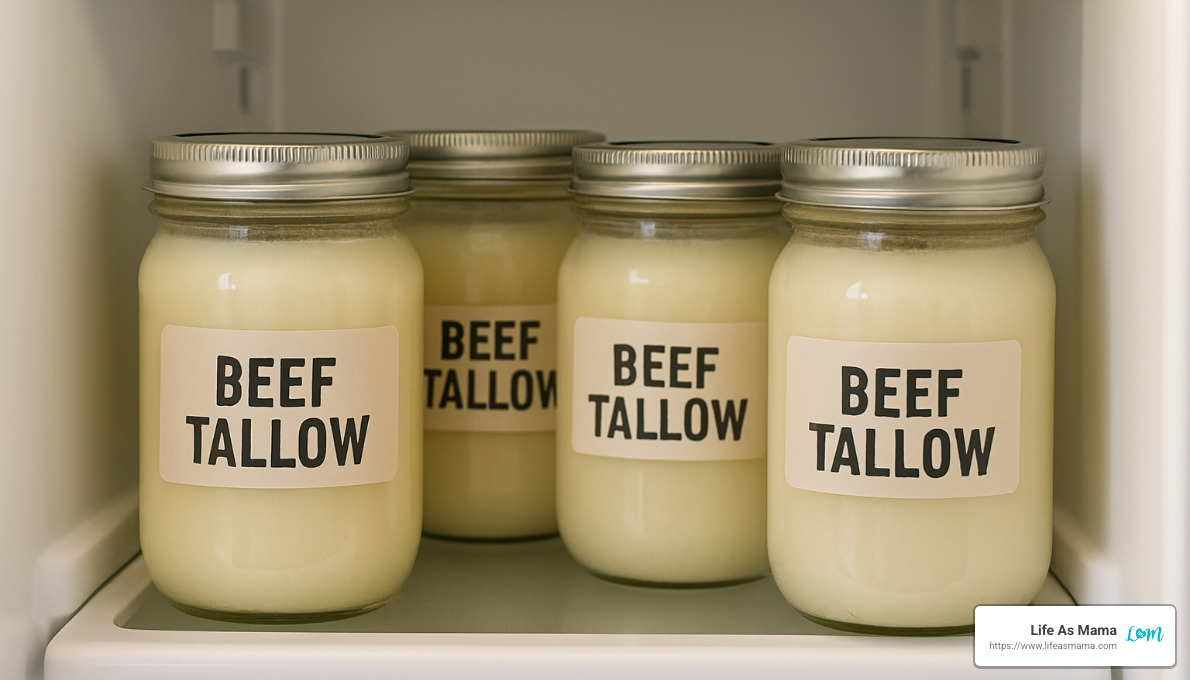
In the refrigerator, tallow stays fresh for about 3 months when kept in airtight glass containers. I prefer wide-mouth mason jars that make it easy to scoop out what I need. The texture remains firm but scoopable – perfect for daily cooking needs.
For longer storage, the freezer is your friend. Well-sealed in freezer-safe containers, tallow will keep for up to a year with no loss of quality. You can either thaw a container in the refrigerator before use or simply scoop what you need directly from the freezer.
Some folks even store tallow in their pantry, which works in cooler climates if you use airtight containers and keep them away from light and heat. However, I find refrigeration more reliable, especially during warmer months.
How do you know if your tallow has gone bad? Trust your senses. Fresh tallow has a clean, mild scent. If you detect a sour or “off” smell, notice yellow discoloration, or taste anything unpleasant, it’s time to discard it and render a fresh batch.
“Store tallow in a sealed container. It can last for months in the fridge or indefinitely in the freezer,” one culinary expert advised me when I first started working with this traditional fat.
I’ve found it helpful to portion some tallow into ice cube trays before freezing – each cube equals about a tablespoon, making measuring a breeze for recipes.
Grass-Fed Advantage
When it comes to beef tallow for cooking, the source truly matters. After experimenting with both conventional and grass-fed options, I’ve become a devoted advocate for grass-fed tallow whenever possible.
Grass-fed beef tallow contains noticeably higher levels of omega-3 fatty acids and CLA (conjugated linoleic acid), creating a better balance of fats that more closely aligns with what our bodies need. It’s also richer in fat-soluble vitamins, which improve both nutritional value and flavor.
One tallow expert explained it to me this way: “Many consider the best-quality beef tallow to come from the fat around the kidneys.” This kidney fat (suet) produces the cleanest-tasting, most stable cooking fat.
Finding quality beef fat for rendering isn’t as difficult as you might think. I’ve built relationships with local butchers who often set aside suet for me at minimal cost – many butchers are happy to see this traditional fat being used rather than discarded. Farmers markets are another excellent source, where you can connect directly with farmers raising grass-fed cattle.
If rendering your own tallow feels overwhelming right now, you can purchase ready-made versions at health food stores, specialty butcher shops, and through numerous online retailers. Just check the labels to confirm you’re getting pure, unadulterated tallow, preferably from grass-fed sources.
For the budget-conscious home cook, here’s my best tip: call butchers ahead to reserve suet that might otherwise be thrown away. You’ll often get it at a significant discount or even free. Then, set aside a Sunday afternoon to render a large batch that will last for months in your freezer.
The flavor difference between grass-fed and conventional tallow is subtle but noticeable – grass-fed offers more complex, earthy notes that add remarkable depth to everything from roasted vegetables to baked goods. Once you try it, you’ll understand why so many culinary traditions treasured this cooking fat for generations.
Frequently Asked Questions about Beef Tallow
What is the smoke point and why does it matter?
When you’re cooking with beef tallow, one of its standout features is its impressive smoke point of 400-420°F (204-215°C). But what exactly does this mean for your cooking trips?
The smoke point is that critical temperature where your cooking fat starts breaking down, smoking up your kitchen, and potentially releasing compounds that aren’t so friendly to your health. It’s like the fat’s way of saying, “Whoa there, things are getting too hot for comfort!”
This high smoke point is why beef tallow for cooking shines in so many high-heat applications. When you’re searing a steak to perfection or aiming for that golden crispiness on your homemade French fries, tallow remains stable while other fats might already be breaking down and imparting bitter flavors to your food.
For comparison, butter taps out at around 350°F, while extra virgin olive oil usually can’t handle temperatures above 375°F without smoking. Even vegetable shortening, often used for frying, only ranges from 360-410°F. This makes tallow a remarkably versatile fat that can handle nearly any cooking method you throw at it.
How long does homemade tallow last?
One of the beautiful things about beef tallow for cooking is its impressive shelf life, especially compared to many other natural fats. When you take the time to render your own tallow at home, you’re creating a cooking fat that can serve your kitchen for months to come.
At room temperature, properly stored tallow can last 1-3 months when kept in a cool, dark place in an airtight container. Move it to the refrigerator, and you’re looking at 3-6 months of freshness. For the longest storage, your freezer will keep tallow good for a year or even longer.
“Yes it is. Place in an airtight container and place in your freezer. It will stay good up to a year,” confirms one tallow expert when asked about freezing this traditional fat.
The secret to maximizing your tallow’s freshness comes down to a few simple factors. The purer your rendering (meaning you’ve strained out all those little bits), the longer it will last. Keeping it away from its three enemies—oxygen, light, and heat fluctuations—will preserve its quality.
For best results, store your beef tallow for cooking in glass jars rather than plastic, fill them as full as possible to minimize air exposure, and consider adding a small pinch of dried rosemary or a drop of vitamin E oil as natural preservatives if you’re planning long-term storage.
Who should limit beef tallow intake?
While many of us can enjoy beef tallow for cooking as part of a varied diet, there are some folks who might want to approach it with a bit more caution.
If you’re managing cardiovascular concerns like established heart disease or high cholesterol, or if heart issues run in your family, you might need to be mindful of your saturated fat intake, including tallow. Similarly, certain medical conditions come with dietary guidelines that might suggest limiting saturated fats.
Those with gallbladder issues might also find that high-fat foods, including tallow, can sometimes trigger uncomfortable symptoms. Your body will usually let you know if something isn’t working well for you.
As Registered Dietitian Michelle Dodd puts it: “Beef tallow is so high in saturated fat that it’s a waxy solid at room temperature. Think of what that sort of substance does once it gets inside of you. It’s not good for your cardiovascular system. It’s not something you want to regularly use and consume.”
That said, nutrition science continues to evolve, and many experts now recognize that the context of your overall diet matters more than any single ingredient. For most healthy individuals, moderate use of beef tallow for cooking can absolutely be part of a nutrient-rich, varied diet that celebrates traditional foods.
As with any significant dietary change, it’s always wise to check in with your healthcare provider, especially if you’re managing existing health conditions. They can help you determine the right balance for your unique needs.
Conclusion
Beef tallow for cooking brings a delicious taste of the past into our modern kitchens, offering both nostalgic connections and practical benefits that many home cooks have refinded. From creating the crispiest, most flavorful French fries to producing pastries with that perfect flaky texture, this traditional fat has earned its comeback in today’s culinary world.
Throughout this guide, we’ve seen how this remarkable cooking fat:
– Stands up beautifully to high cooking temperatures without breaking down
– Imparts a rich, subtle depth that improves rather than overwhelms your dishes
– Provides valuable nutrients, especially when sourced from grass-fed animals
– Creates textures in both fried and baked goods that vegetable oils simply can’t match
While beef tallow for cooking contains more saturated fat than some alternatives, using it thoughtfully within a varied diet allows your family to enjoy its unique properties without concern. The secret lies in balance—choosing high-quality, grass-fed sources when possible and viewing tallow as one of several fats in your cooking toolkit rather than your only option.
Here at Life As Mama, we believe there’s room in family cooking for both traditional wisdom and modern nutrition. Adding a spoonful of tallow to roast those Sunday dinner potatoes to golden perfection or incorporating it into your holiday biscuit recipe connects us to generations of home cooks who relied on these simple, natural ingredients.
Think of tallow as your secret weapon for special occasions—the ingredient that makes guests ask, “What did you do to make these taste so amazing?” Its subtle richness lifts everyday ingredients in a way that creates memorable family meals.
For those looking to explore more crowd-pleasing meat-centered dishes for your next family gathering, our ultimate BBQ meatball guide offers another delicious option your loved ones will request again and again.
Whether you’re feeling adventurous enough to render your own tallow from quality beef fat or you’re starting with a ready-made product, we hope this guide gives you the confidence to experiment with this versatile traditional ingredient. From our family to yours, happy cooking!
Related Images:

Amanda Schmitt
Latest posts by Amanda Schmitt (see all)
- 20+ First Day of School Traditions to Make the Day Special - August 23, 2026
- Fruit Infused Waters That Make Summer Hydration Fun - July 1, 2025
- Light Up Your Life: Home Lighting Decoration Ideas - June 30, 2025