Why Fall Gardening Matters
Gardening in Fall offers unique opportunities for both new and seasoned gardeners. With cooler temperatures and fewer pests, fall is the ideal time to plant vegetables and flowers and prepare your garden for the colder months ahead.
To jump right in, here are some quick tips for a successful fall garden:
- Start early: Begin preparing your garden in late summer or early September.
- Clear out space: Harvest summer vegetables and remove weeds and non-blooming annuals.
- Amend your soil: Add compost or manure for extra nutrients.
Fall gardening isn’t just about aesthetics. It allows plants to establish healthy root systems before the first frost and can lead to more robust growth in the spring.
I’m Amanda Schmitt. With over 13 years of experience in gardening and expert advice from plant specialists, I’m here to guide you through the ins and outs of Gardening in Fall. Let’s explore the upcoming sections to ensure your garden thrives during the autumn season.
Gardening in Fall definitions:
– fall bedding plants
– fall plants for porch
– what plants do exciting gardens ship in fall
When to Start Your Fall Garden
Timing is everything when it comes to Gardening in Fall. Knowing when to plant can make the difference between a bountiful harvest and a garden that falls short. Here’s how to get your timing just right:
Frost Dates and USDA Zones
Start by identifying your region’s first fall frost date. You can use tools like the Frost Dates Calculator to find this information.
For example, if you live in USDA zones 4 to 8, you can often plant into November and December. In colder climates, some vegetables like spinach and kale are frost-tolerant and even taste better after a frost.
Seed Starting and Transplanting
Once you know your frost date, work backward to decide when to start seeds and transplant seedlings. Here’s a simple guide:
- Early August: Start seeds for cool-season vegetables like broccoli, Brussels sprouts, and cauliflower indoors.
- Late August to Early September: Direct sow seeds for fast-growing greens like spinach, arugula, and mustard greens.
- Mid-September: Transplant seedlings of slower-growing crops like kale and Swiss chard.
Quick Tips for Timing
- Warm Soil: Even though days are shorter, the soil is still warm, which helps seeds germinate faster.
- Fall Factor: Add an extra two weeks to your planting schedule to account for cooler, shorter days.
- Insulation: As temperatures drop, use insulating fabric or row covers to protect young plants.

With these tips, you’ll be well on your way to a thriving fall garden. Next, let’s discuss what to plant to make the most of this season.
What to Plant in Your Fall Garden
Top Vegetables for Fall Gardening
Cool-season vegetables are the stars of fall gardening. These veggies thrive in cooler temperatures and can withstand light frosts. Here are some top choices:
- Arugula: This peppery green is quick to mature, making it perfect for fall. Sow seeds in late August for a continuous harvest.
- Spinach: A classic fall crop, spinach can survive a couple of frosts. Priming spinach seeds can help with germination.
- Mustard Greens: These are fast-growing and add a spicy kick to salads. Plant them in early September.
- Turnips: Both the roots and greens are edible. Plant turnips in mid-August for a fall harvest.
- Radishes: These are some of the quickest-growing vegetables. You can start harvesting radishes within a month of planting.
- Broccoli: Start broccoli seeds indoors in early August and transplant them in September.
- Carrots: Plant carrot seeds in late August for a sweet, fall-harvested root.
- Beets: Both the roots and greens are delicious. Plant beets in early September.
- Kale: Kale is incredibly frost-tolerant and even tastes better after a frost. Start seeds in mid-August.
- Swiss Chard: This colorful green can be planted in late August and will keep producing until the first hard frost.
- Peas: Sow peas in late August for a fall crop. They love the cooler weather.
- Lettuce: Plant lettuce seeds in early September for fresh salads into the fall.
- Brussels Sprouts: These need a long growing season, so start seeds indoors in early August.
- Cabbage: Like Brussels sprouts, cabbage should be started indoors in early August and transplanted in September.
- Cauliflower: Start seeds indoors in early August and transplant them in September for a fall harvest.
Flowers and Perennials for Fall Planting
Fall is also a great time to plant flowers and perennials. The cooler temperatures and still-warm soil make it ideal for root growth.
- Pansies: These hardy flowers can brighten up your garden well into the fall. Plant them in early September.
- Chrysanthemums: Known as “mums,” these are fall favorites. Plant them in late August for a burst of color.
- Heleniums: These daisy-like flowers add vibrant hues to your garden. Plant them in early September.
- Marigolds: Marigolds can be planted in late August and will bloom until the first frost.
- Asters: These perennials are perfect for fall planting and will come back year after year. Plant them in early September.

Planting these vegetables and flowers will ensure that your garden remains productive and beautiful throughout the fall. Next, let’s dive into how to prepare your garden for these new additions.
How to Prepare Your Garden for Fall Planting
Soil Preparation Tips
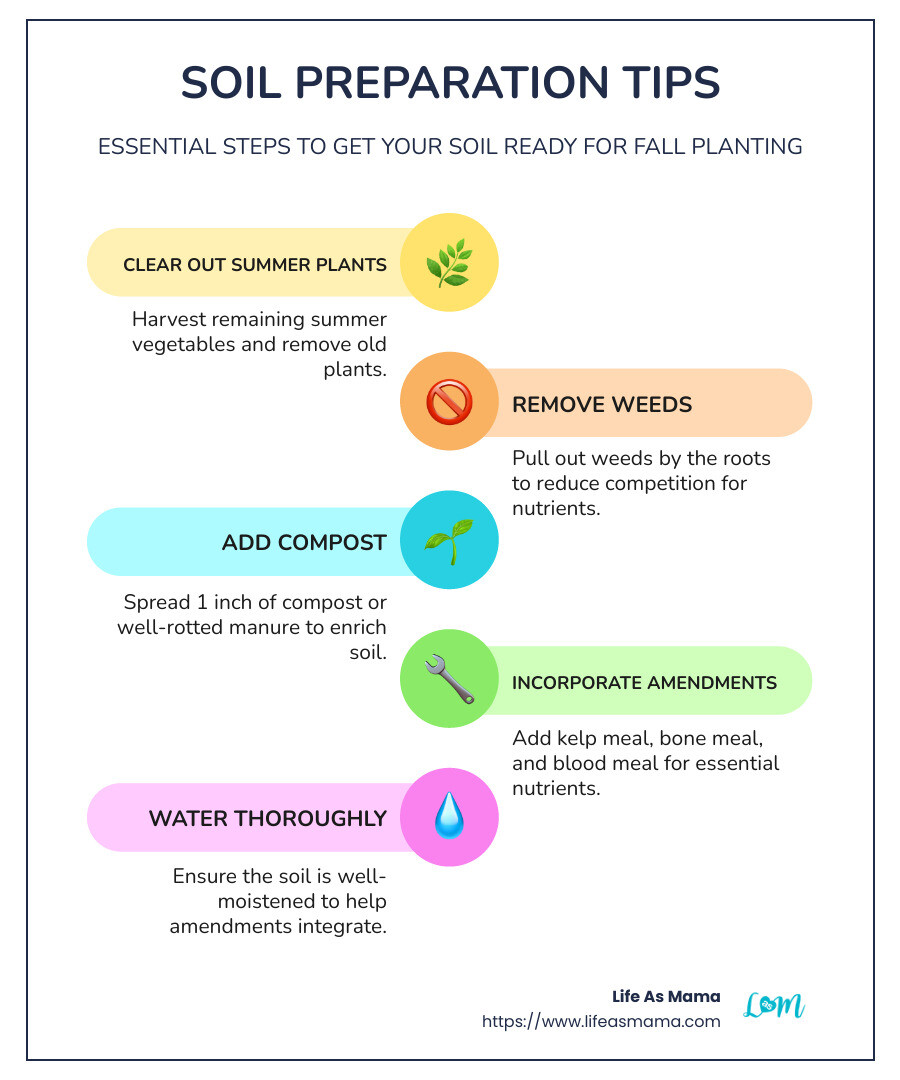
Preparing your soil is the first step to a successful fall garden. Good soil provides the nutrients your plants need to grow strong and healthy. Here’s how to get started:
-
Clear Out Summer Plants: Before you begin, make sure to harvest any remaining summer vegetables. Removing these plants will make room for your fall crops.
-
Remove Weeds: Weeds can compete with your new plants for nutrients. Pull them out by the roots, especially biennial weeds that are easier to remove in their rosette stage. Avoid using pesticides; instead, soak the ground with water and use a hand weeder.
-
Add Compost: Spread a layer of compost or well-rotted manure over your garden bed. Rich Christakes, founder of Ship My Plants, recommends adding about 1 inch of compost to enrich the soil and provide extra nutrients.
-
Incorporate Soil Amendments: Depending on your soil type, you may need to add other amendments. Kelp meal, bone meal, and blood meal are excellent choices for adding essential nutrients. Mix these into the top few inches of soil.
Mulching and Watering
Once your soil is ready, it’s time to focus on mulching and watering. These practices help retain moisture and protect your plants.
-
Choose the Right Mulch: Mulch helps keep weeds at bay and retains soil moisture. Use organic mulches like shredded leaves, straw, or wood chips. According to Jennifer Miller from Denver Botanic Gardens, finely textured leaves from willow trees or honey locusts degrade easily and can be left on the ground.
-
Watering Schedules: Newly planted perennials and shrubs need consistent moisture to establish their roots. Water deeply at least once a week, especially if you live in an area with unreliable rainfall. Evergreen perennials and anything you’ve recently planted will need watering until the ground starts to freeze.
-
Set Up Irrigation Systems: If you have a large garden, consider installing a drip irrigation system. This method delivers water directly to the roots, reducing waste and ensuring your plants get the moisture they need.
-
Shredding and Spreading Leaves: Rake up broad leaves from maple, sycamore, and oak trees. Shred these leaves and spread them as mulch over your garden beds. This practice insulates your plants over winter and enriches the soil as the leaves decompose.
-
Shade and Cool Down Soil: Before planting, cool down the soil by shading it for a few days. This helps seeds germinate more effectively. You can use shade cloths or even temporary structures to provide the necessary shade.
-
Fertilizing: Fall crops benefit from a balanced fertilizer. Choose a slow-release option that will feed your plants over time. This is especially important for root vegetables like carrots and beets.
By following these soil preparation and mulching tips, your garden will be ready to thrive in the fall. Next, we’ll cover the essential tasks you need to complete to ensure your garden is in top shape for the season.
10 Essential Fall Gardening Tasks
Task 1: Evaluate Your Garden
Start by taking an honest look at your garden. What worked well this year? What didn’t? Make a list of successes and failures. This will help you plan better for next year. For example, did your Supertunia Vista® Bubblegum® thrive while your Salvia Rockin’® Playin’ the Blues® struggled? Note it down. Evaluating now will save you time and effort next spring.
Task 2: Remove Annuals
It’s time to say goodbye to your annuals. Remove them from containers and garden beds. Healthy plants can be composted, but any diseased ones should be bagged and disposed of. This helps prevent the spread of disease in your garden. Don’t wait for frost to kill them off; doing it now makes the task easier.
Task 3: Plant Spring Bulbs
Fall is the best time to plant spring-blooming bulbs like tulips, daffodils, and crocuses. These bulbs need time to establish roots before winter. If you have issues with squirrels or voles, spray the bulbs with an animal repellent or cover them with chicken wire before planting. This keeps critters from digging them up.
Task 4: Cut Back Perennials
Once perennials go dormant, cut back their foliage to the ground. This is especially important for plants like hostas that suffer from slug damage. Removing the dormant foliage reduces slug problems next year. However, don’t cut back perennials like coneflowers and coral bells in the fall; they prefer to be pruned in spring.
Task 5: Dispose of Diseased Plants
If any of your plants have diseased foliage, do not compost them. Most compost piles don’t get hot enough to kill diseases. Instead, bag and seal the diseased foliage and dispose of it in the trash. This helps keep your garden healthy for next year.
Task 6: Indoor Decorating
Bring the beauty of your garden indoors. Cut branches and dried flowers like hydrangea flowers, berried branches, and ornamental grass plumes for indoor decorations. These natural elements add a touch of fall to your home and make for beautiful, seasonal decor.
Task 7: Continue Watering
Even though temperatures are dropping, your plants still need water. Evergreen perennials and newly planted shrubs should be watered until the ground freezes. If you live in an area with unreliable rainfall, water deeply at least once a week. This helps the plants establish strong roots.
Task 8: Mulch with Leaves
Nature provides natural mulch in the form of fallen leaves. Rake and shred broad leaves from trees like maple and oak. Spread this mulch over your garden beds to insulate plants over winter and enrich the soil as the leaves decompose. This also helps keep weeds at bay.
Task 9: Protect Sensitive Plants
If you have plants that are sensitive to cold, protect them with shredded leaves or evergreen boughs. This helps them survive winter. Mulch newly planted perennials and shrubs to prevent the root ball from heaving out of the ground during freeze/thaw cycles. Mulch keeps the soil temperature more consistent.
Task 10: Plan for Next Year
Start dreaming about next year’s garden. Look through seed catalogs and jot down new ideas. Planning now helps you hit the ground running when spring arrives. This is also a good time to think about any changes you want to make based on this year’s evaluation.
By completing these essential fall gardening tasks, you’ll set the stage for a beautiful and productive garden next spring.
How to Extend Your Growing Season
Want to keep your garden producing longer? It’s possible with some simple techniques. Let’s dive into cold frames, row covers, and hoop houses to protect your plants from frost and extend your growing season.
DIY Cold Frames
Cold frames are like mini-greenhouses. They trap heat and protect plants from the cold. You can easily build one yourself.
Materials:
– Old windows or clear plastic sheets
– Wooden boards or bricks
– Hinges (if using windows)
Construction:
1. Build a Frame: Use wood or bricks to create a box without a bottom.
2. Add the Cover: Attach an old window or clear plastic sheet to the top. Use hinges if you want it to open and close easily.
3. Position: Place the frame over your plants. Make sure it’s tilted slightly to catch more sunlight.
Usage:
– Ventilation: Open the cover on sunny days to prevent overheating.
– Watering: Water your plants as needed, but be careful not to overwater.
Cold frames can help you grow greens like lettuce and spinach well into the fall.
Using Row Covers
Row covers are lightweight fabrics that protect plants from frost, pests, and wind. They are easy to use and very effective.
Types:
1. Floating Row Covers: These are laid directly over plants and secured with soil or rocks.
2. Hoop-supported Row Covers: These are draped over hoops to create a mini-tunnel.
Installation:
1. Measure and Cut: Cut the fabric to fit the length of your garden rows.
2. Support (if needed): Use wire hoops to support the fabric above the plants.
3. Secure: Anchor the edges with soil, rocks, or pins.
Benefits:
– Frost Protection: Row covers can protect plants from light frosts, extending the growing season by a few weeks.
– Pest Control: They also keep out insects and other pests.
– Ease of Use: Simply remove the covers when the weather warms up.
Hoop Houses
Hoop houses are larger structures that can cover whole garden beds. They are like small greenhouses, providing excellent frost protection.
Materials:
– PVC pipes or metal rods
– Clear plastic sheeting
– Clips or ties
Construction:
1. Create Hoops: Bend the PVC pipes or metal rods into arches and insert the ends into the ground.
2. Cover: Drape the clear plastic sheeting over the hoops.
3. Secure: Use clips or ties to secure the plastic to the hoops.
Usage:
– Ventilation: Open the ends on sunny days to let in fresh air.
– Watering: Water plants regularly, as hoop houses can dry out quickly.
Benefits:
– Extended Growing Season: Hoop houses can keep your garden producing well into the winter.
– Versatile: They can be used for a wide range of plants, from vegetables to flowers.
By using cold frames, row covers, and hoop houses, you can enjoy fresh produce from your garden even when the weather turns chilly. These simple tools can make a big difference in your fall gardening success.
Frequently Asked Questions about Gardening in Fall
When should I start my fall garden?
The best time to start your fall garden is in mid-to-late summer. This timing allows your plants to establish themselves before the first frost hits.
Steps to follow:
– Check Frost Dates: Know your area’s average first frost date. You can find this information from local extension services or online resources.
– Work Backwards: Count back from the frost date to determine when to start seeds. Add an extra two weeks to account for cooler, shorter days. This is often called the “fall factor.”
Example: If your first frost date is October 15, start seeds for crops like broccoli and kale around mid-August.
What should you not plant in the fall?
Not all plants thrive in fall conditions. Avoid planting the following:
- Broadleaf Evergreens: These plants need more time to establish roots and are better planted in spring.
- Fruits: Most fruit trees and bushes require a full growing season to establish and fruit.
- Roses: These are best planted in spring to give them time to grow strong before winter.
- Summer Bulbs: Plants like dahlias and gladiolus are sensitive to cold and should be planted in spring.
- Cold-sensitive Shrubs: Avoid planting shrubs that can’t handle even a light frost.
How do I winterize my garden in the fall?
Winterizing your garden prepares it for the cold months and ensures a healthier start in spring. Here are the key steps:
- Remove Annuals: Pull out any annual plants that have finished their lifecycle. Compost healthy plants, but dispose of any diseased ones in the trash to prevent spreading diseases.
- Pull Weeds: Clear out any weeds to prevent them from taking over during the winter.
- Divide Perennials: Some perennials benefit from being divided in fall. This helps them grow more vigorously next season.
- Mulch: Apply a layer of mulch to protect plant roots from freezing temperatures. Shredded leaves work well as mulch and also enrich the soil as they decompose.
- Drain Irrigation Systems: Empty and store hoses and irrigation equipment to prevent damage from freezing water.
By following these steps, you can ensure your garden is well-prepared for winter and ready to thrive again in the spring.
Next, we’ll dive into the benefits of fall gardening and how it can lead to a more productive and enjoyable garden year-round.
Conclusion: Key Takeaways for Successful Fall Gardening
Gardening in fall offers numerous benefits for both your garden and your gardening experience. Cooler temperatures make it more enjoyable to spend time outdoors, and the mild weather provides an ideal environment for new plant growth. By following our comprehensive guide, you can ensure your garden is well-prepared for the colder months and ready to bloom beautifully in the spring.
Benefits of Fall Gardening
- Extended Growing Season: Fall gardening allows you to extend your harvest by planting cool-season crops like kale, spinach, and carrots.
- Healthier Plants: Planting in fall gives plants time to establish strong root systems before the first frost, leading to healthier growth.
- Weed and Pest Control: Removing summer plants and weeds in fall helps reduce the risk of pests and diseases overwintering in your garden.
- Soil Improvement: Adding compost and mulch in the fall enriches the soil, making it more fertile for spring planting.
Life As Mama’s Gardening Guides
At Life As Mama, we specialize in providing practical, family-friendly guides to make your gardening journey easier and more enjoyable. Our expert tips and step-by-step instructions are designed to help you achieve a thriving garden with minimal effort.
Check out our various gardening guides to help you plan and grow your garden successfully. From raised bed soil options to garlic planting cheat sheets, we have resources to support you every step of the way.
Planning for Spring
Fall is also an excellent time to start dreaming about next year’s garden. Take note of what worked well this year and what you might want to change. Consider:
- Evaluating Successes and Failures: Make a list of plants that thrived and those that didn’t, so you can make better choices next year.
- Exploring New Ideas: Look through seed catalogs and gardening books for inspiration. Think about trying new plant varieties or garden designs.
- Preparing for Early Planting: Order seeds and supplies in advance to ensure you’re ready to start planting as soon as the weather warms up.
By planning ahead, you can set yourself up for a successful and enjoyable gardening season next year.
Gardening is a journey, not a destination. Each season offers new opportunities to learn and grow. Happy gardening!
Stay connected with Life As Mama for more tips and resources to help you create a beautiful and productive garden year-round.
Related Images:

Amanda Schmitt
Latest posts by Amanda Schmitt (see all)
- Healthy and Quick Back to School Breakfast Ideas - August 27, 2026
- 20 DIY Easter Centerpieces That Aren’t Just for Kids - October 9, 2025
- 18 Adult Birthday Party Themes for a Sophisticated Celebration - October 3, 2025